Skip to content

Tag: capitalism

You Cannot Redistribute Wisdom: The Human Problems Behind Economic Inequality

Wealth, Philanthropy, and Institutional Power

There’s no shortage of people willing to tell us what’s wrong with the world, who’s responsible, and what should be done about it. Economic inequality, wealth accumulation, philanthropy, and the familiar refrain that we should simply tax the rich are recurring subjects, often presented with a degree of moral certainty that leaves little room for meaningful examination. But beneath these arguments are some rather fundamental questions about human nature, personal responsibility, individual freedom, and the institutions we trust to manage our affairs. Perhaps it’s time we looked beyond the slogans and considered what we’re actually trying to accomplish.

The Earth We Are Shown: Narrative, Evidence, and Omission

Documentary, Persuasion, and Truth

There’s something particularly frustrating about watching a beautifully made documentary and realizing how much of what you’re seeing has been selected, arranged, compressed, and framed before it ever reaches you. The production may be polished, the narrator credible, the imagery extraordinary, and the message carefully constructed, but none of that removes the need to question what lies beneath the presentation. What is being shown, what is being omitted, and what assumptions are quietly carrying the entire narrative?

Claims Upon Tomorrow: Debt, Growth, and the Limits of the System

Consciousness and the Economic Machine

There is something deeply strange about the world we have constructed around ourselves. We have become so accustomed to its language, its mechanisms, its abstractions, and its endless explanations that we rarely stop to ask whether any of it still corresponds to the reality it claims to describe. Perhaps the deeper correction begins not in the financial system at all, but in our relationship to the structures we have mistaken for reality.

Mercantilism to Technocracy: Cycles of Power and Control

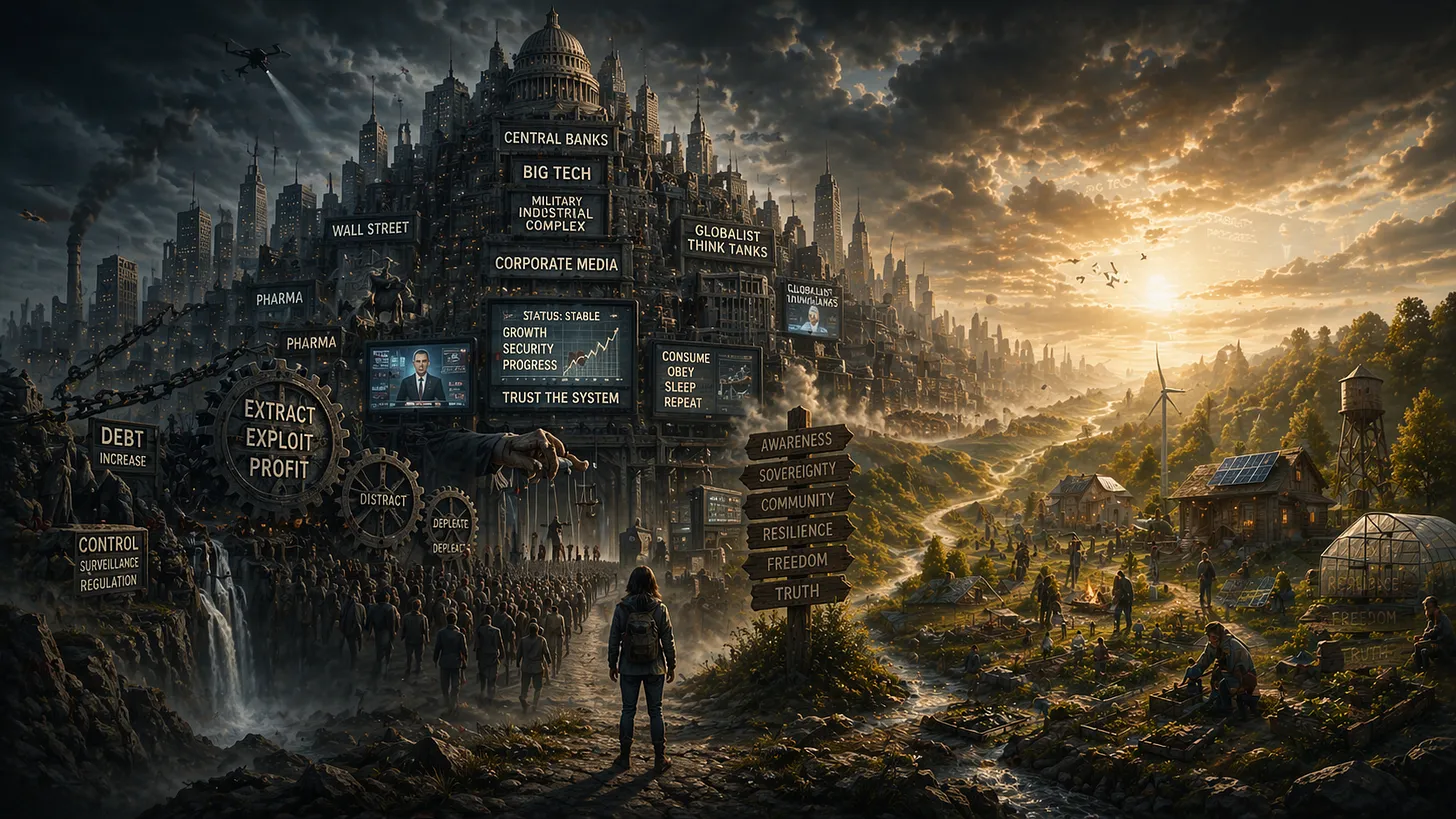
There’s a strange clarity that comes when one steps far enough back from the noise to observe the machinery itself. Not merely politics or economics in isolation, but the layered systems, narratives, incentives, and abstractions through which modern societies attempt to organize human life. We inherit these structures, participate in them, resist them, and are shaped by them in equal measure. Yet beneath the endless rhetoric and ideological branding remains a quieter and more enduring question: what kind of life is actually worth building, sustaining, and passing on?

The Shape of Modern Systems: Incentives and the Drift of Institutions

A recurring sense of tension sits just beneath the surface of modern systems, where scale and abstraction begin to blur the line between what is intentional and what simply emerges. The conversation moves through that threshold space where structure, incentive, and perception start to fold into one another, not as certainty, but as a pattern that keeps reappearing in different forms.