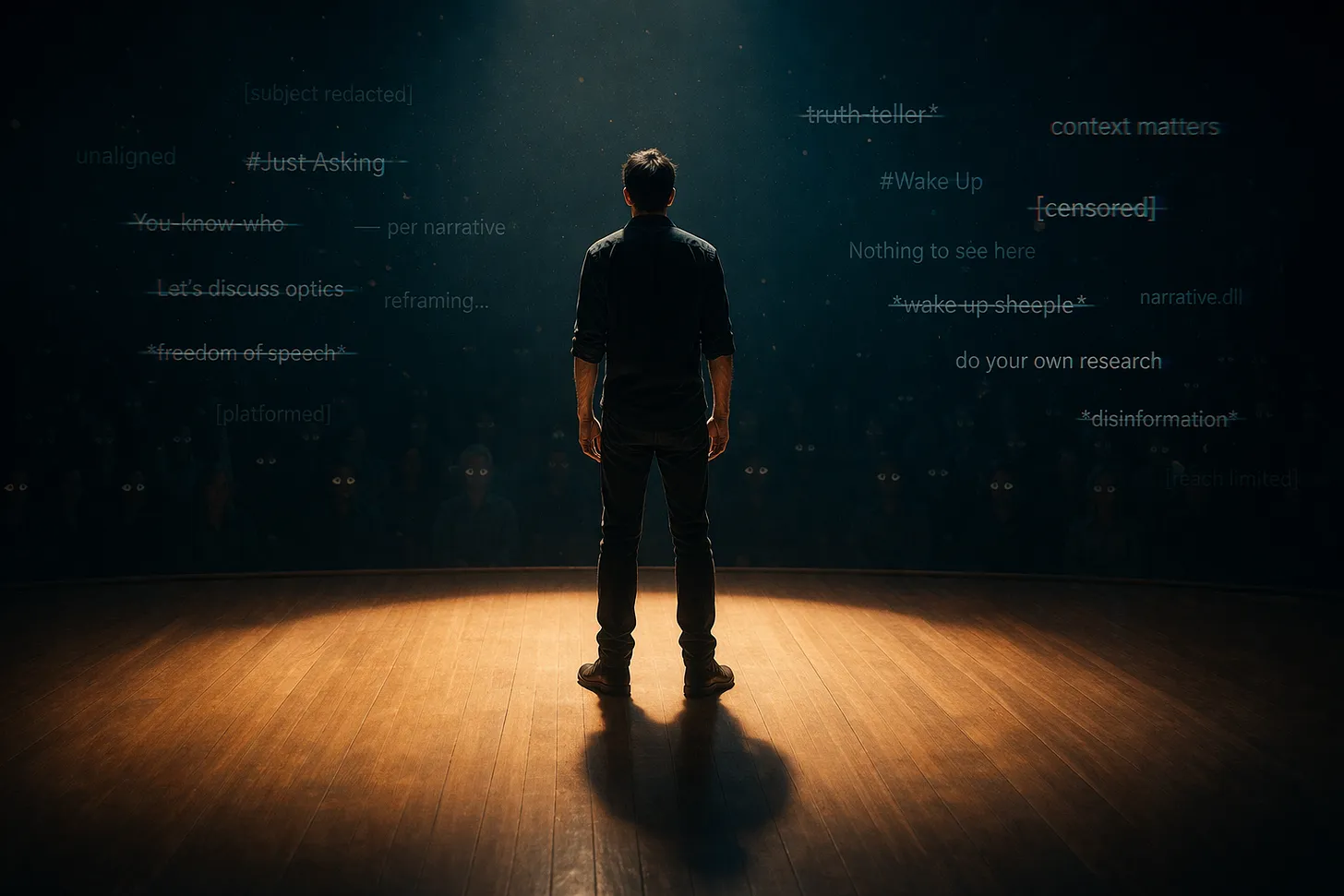
We rarely speak as freely as we think we do. Beneath our words sits a quiet negotiation between what is true, what is permitted, and what is rewarded. Over time, that negotiation begins to shape not only how we communicate, but who we become when we do.
Tag: censorship
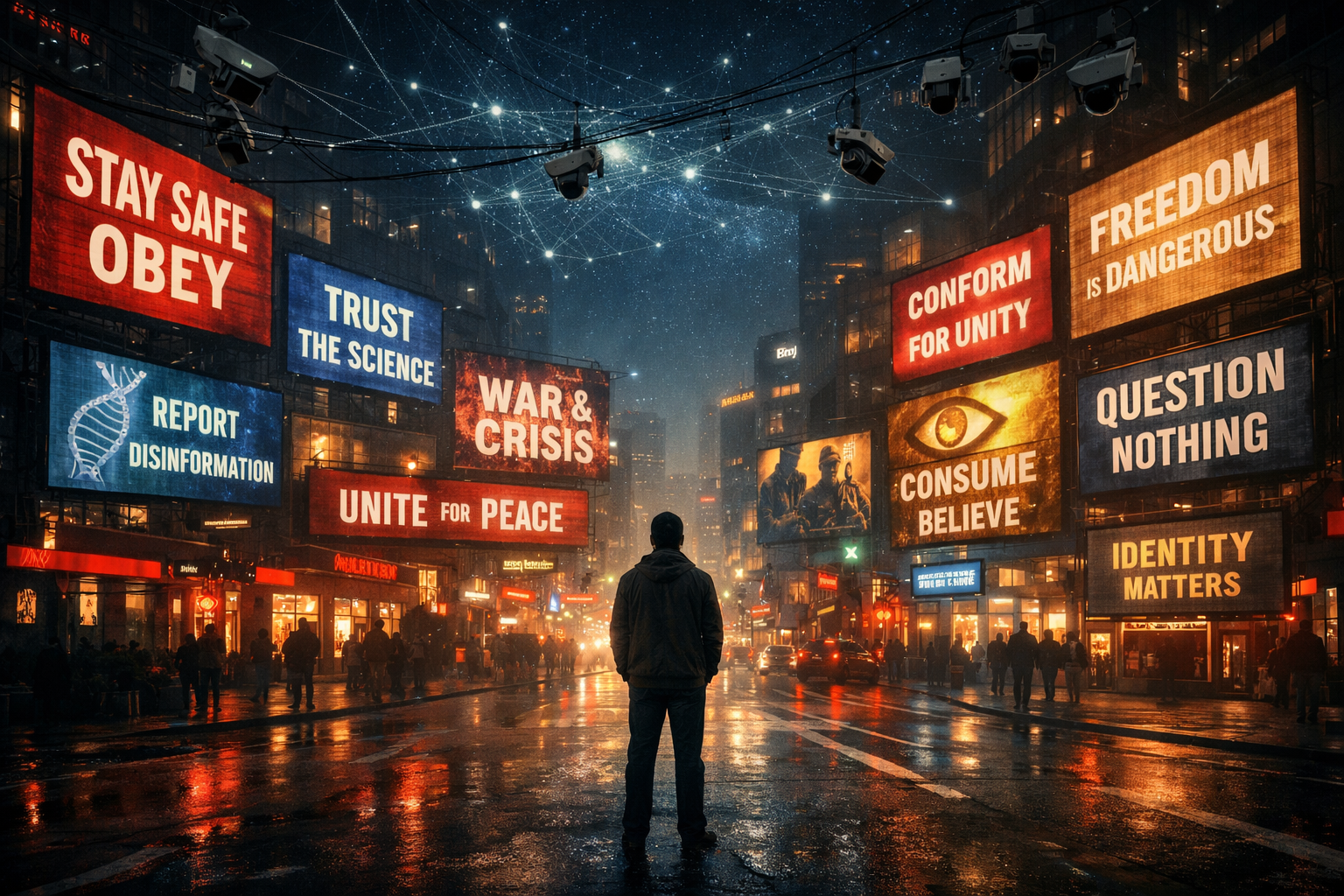
We are no longer merely debating politics, censorship, or technology. The deeper conflict concerns reality itself — who defines it and how its boundaries are enforced. Different societies justify it in different ways, yet the pattern is consistent: shape perception and behavior follows. When the story of the world is curated, the people within it can be guided. What follows is not a comparison of nations or ideologies, but an inquiry into influence, belief, and the growing necessity of discernment.

We live in a time where silence doesn’t fall by accident — it’s engineered. The voices that once stirred, questioned, and disrupted are now managed by algorithms and hidden behind claims of “fairness” or “safety.” What looks like protection is often just control in disguise, and the weight of it falls not on corporations but on individuals who dare to speak, create, or critique.
The story they give us is neat, clean, uniform — but reality is nothing of the sort. Nature bends, history breaks, memory distorts, and yet the official chronologies march on as if untouched by chaos. What we inherit is a curated illusion, a scaffolding of narratives that conceal more than they reveal. And the deeper we look, the more obvious it becomes that the “truth” on offer is not truth at all, but a managed performance.
History is written not just by those in power but by those who dare to observe, question, and document events as they unfold. Writers, like Orwell, act as both record keepers and truth tellers — capturing moments that might otherwise be lost to manipulation and distortion. But what happens when the truth itself becomes a battleground? In an era where deception is refined into an art form, the role of the writer has never been more crucial.