
We live amid an extraordinary amount of noise, much of it carefully arranged to keep our attention somewhere outside ourselves. The machinery grows more sophisticated, the stories more elaborate, and the demands upon our attention more constant, but the underlying question remains much the same: what happens when we surrender too much of our perception, our authority, and our agency to systems that claim to know what is best for us?
Tag: consciousness

The Architecture of Knowing: Evidence, Secrecy, and Consensus
Archives, Narratives, and the Limits of Certainty
There is a certain tension in trying to make sense of a world where so much of what we know comes to us secondhand. We inherit histories, narratives, assumptions, and interpretations, then build upon them as though the foundations have already been settled. But the further you look, the more complicated that picture can become, and the harder it is to separate what is known from what is simply accepted.
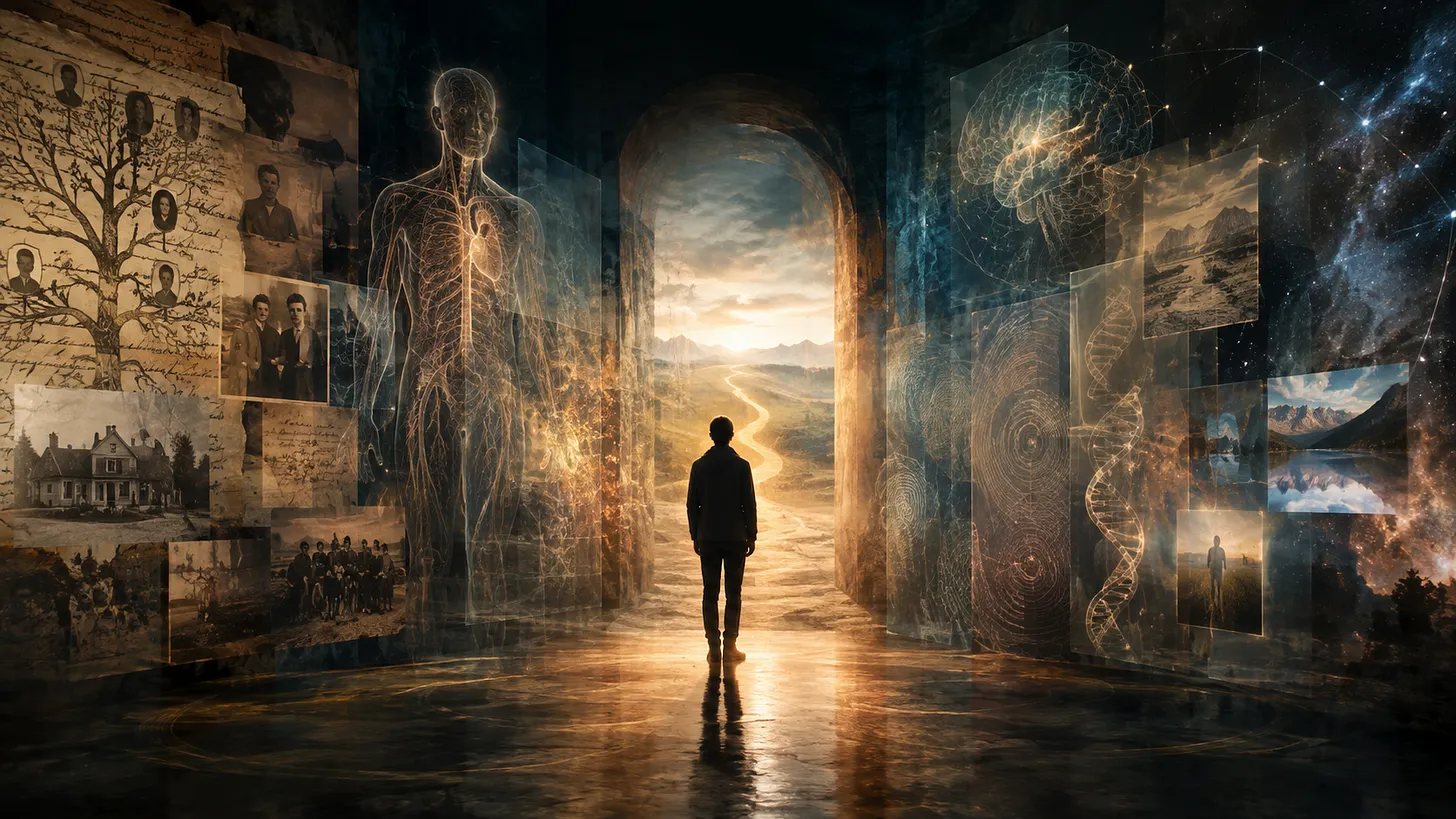
Patterns Beneath the Surface: Healing, History, and the Human Story
Trauma, Memory, and Generational Patterns
There are certain questions that seem to keep opening into larger ones, especially when we begin looking beneath the surface of what we’ve been taught to accept. A symptom, a family story, a recurring pattern, an unresolved experience: each can become another doorway into understanding ourselves, provided we’re willing to stay curious without rushing to conclusions. That tension between investigation and belief is where this discourse begins.

There is a tendency, particularly in health discussions, to reduce everything to a simple question of what is good and what is bad. Parasites belong firmly in the latter category, at least according to the conventional story. But the deeper I get into the terrain model, microbial ecology, fasting, and the strange adaptability of living systems, the less satisfying that binary becomes. What if the organism we are calling the problem is sometimes part of a much larger process? And what happens when we start asking not simply what an organism is, but what it is doing, and why?

It’s Plausible: Truth, Repetition, and the Manufacture of Belief
Disinformation in the Age of AI
Somewhere along the way, “truth-seeking” on the internet became its own strange ecosystem, complete with its own language, symbols, authorities, personalities, and recurring narratives. What begins as a reasonable question can quickly become something much harder to disentangle, particularly when genuine facts are mixed with speculation, technical language, and claims that seem to explain everything at once. This discussion started with one such story and ended somewhere considerably more interesting.