
There are threads of thought that don’t sit comfortably in the daylight of consensus reality, yet refuse to disappear. They surface in fragments, in conversations, in late-night audio streams where symbolism, history, and perception blur into one another. What emerges is not a fixed doctrine, but a way of seeing patterns beneath the surface of events, and a growing sensitivity to how attention itself is shaped, directed, and absorbed.
Tag: empowerment

There are patterns we inherit before we ever have language for them. Ways of seeing, reacting, contracting — all woven quietly into the nervous system long before reflection ever enters the room. And yet there comes a point where the pattern becomes visible to itself. Not as an enemy to be defeated, but as a momentum to be questioned. This is where the inquiry begins: not whether we can become different in theory, but whether the act of seeing clearly is already the beginning of movement.
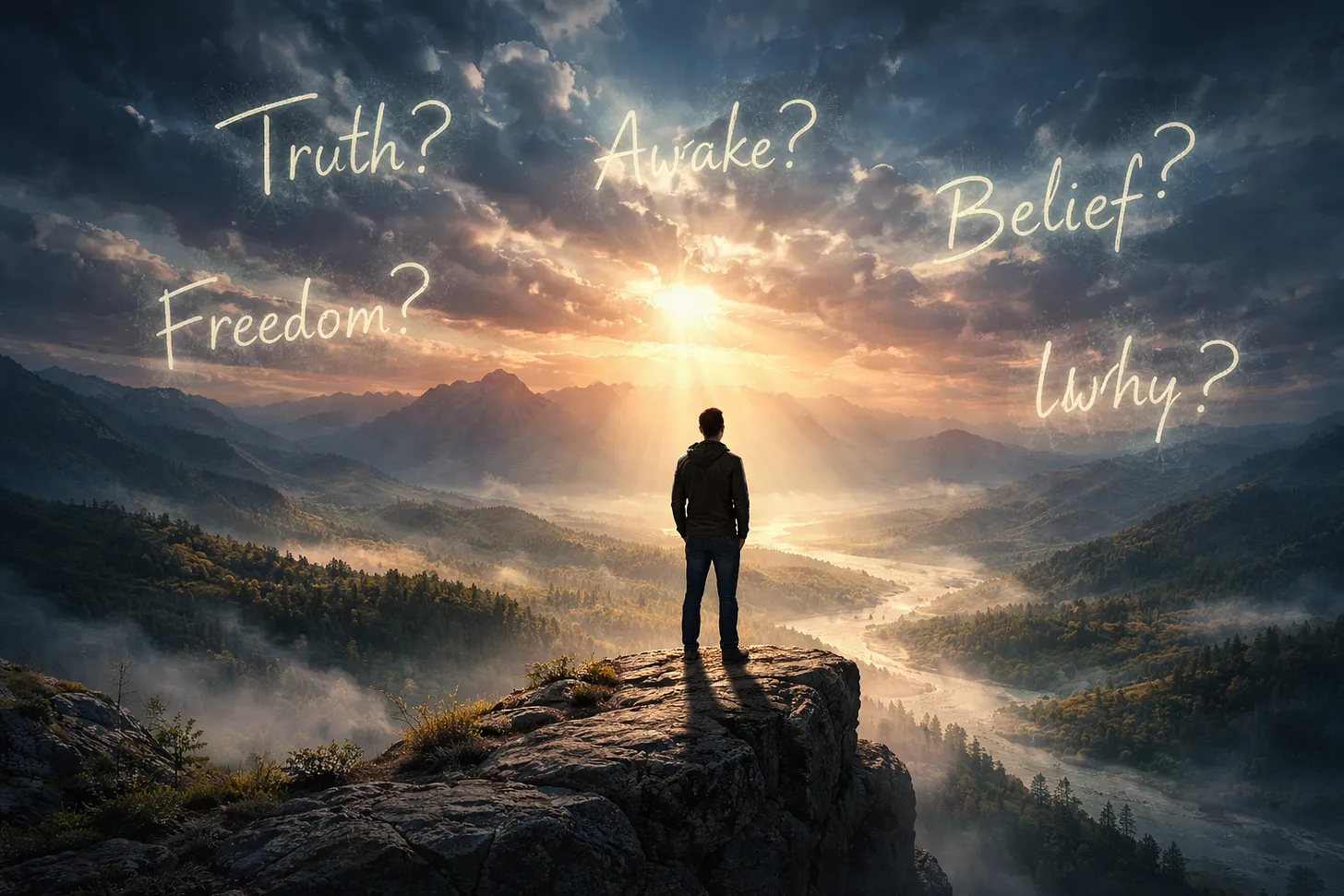
We live in an age that seduces us with packaged clarity, rehearsed emotion, and the illusion of transformation on demand. Somewhere beneath the polished stages and motivational scripts, something essential is being overlooked: the raw, unscripted space where truth shows itself. To notice this, we must step aside from the loop, pause at the impulse to reach, and see clearly without the need for affirmation.

There’s a subtle rhythm to knowledge — a pulse that runs beneath the surface of what we’re told and what we assume. In the spaces outside the mainstream, where voices persist despite ridicule, ostracization, and platform collapse, we find threads of insight that ripple quietly through time. What I aim to do here isn’t to canonize, but to illuminate: to trace the currents of thought that stretch across decades, connecting minds who dared to look deeper, to see through the veil, and to preserve what matters before it vanishes.

In this world, there are layers beneath layers, currents moving unseen, shaping what we see, hear, and believe. Some of it is obvious, some subtle, some deliberately hidden. What we call “truth” is often a moving target, framed by forces we may never fully name — yet it is there, and it affects us all. To navigate it requires curiosity, courage, and a willingness to stand in tension without collapsing to certainty.