Skip to content

Tag: freedom

Wealth, Manifestation, and the Question of Inner Sovereignty

There is a tendency to assume that wealth sits outside of us, as something to be acquired, measured, or finally solved. Yet much of what shapes our experience of it appears to operate beneath the surface, in quieter patterns of attention, belief, and emotional conditioning that repeat themselves until they are no longer noticed. What follows is an attempt to trace those patterns as they present themselves, without rushing to resolve them into certainty, but instead to observe how they move through perception, choice, and the way we relate to value itself.

The Earthbound Dance

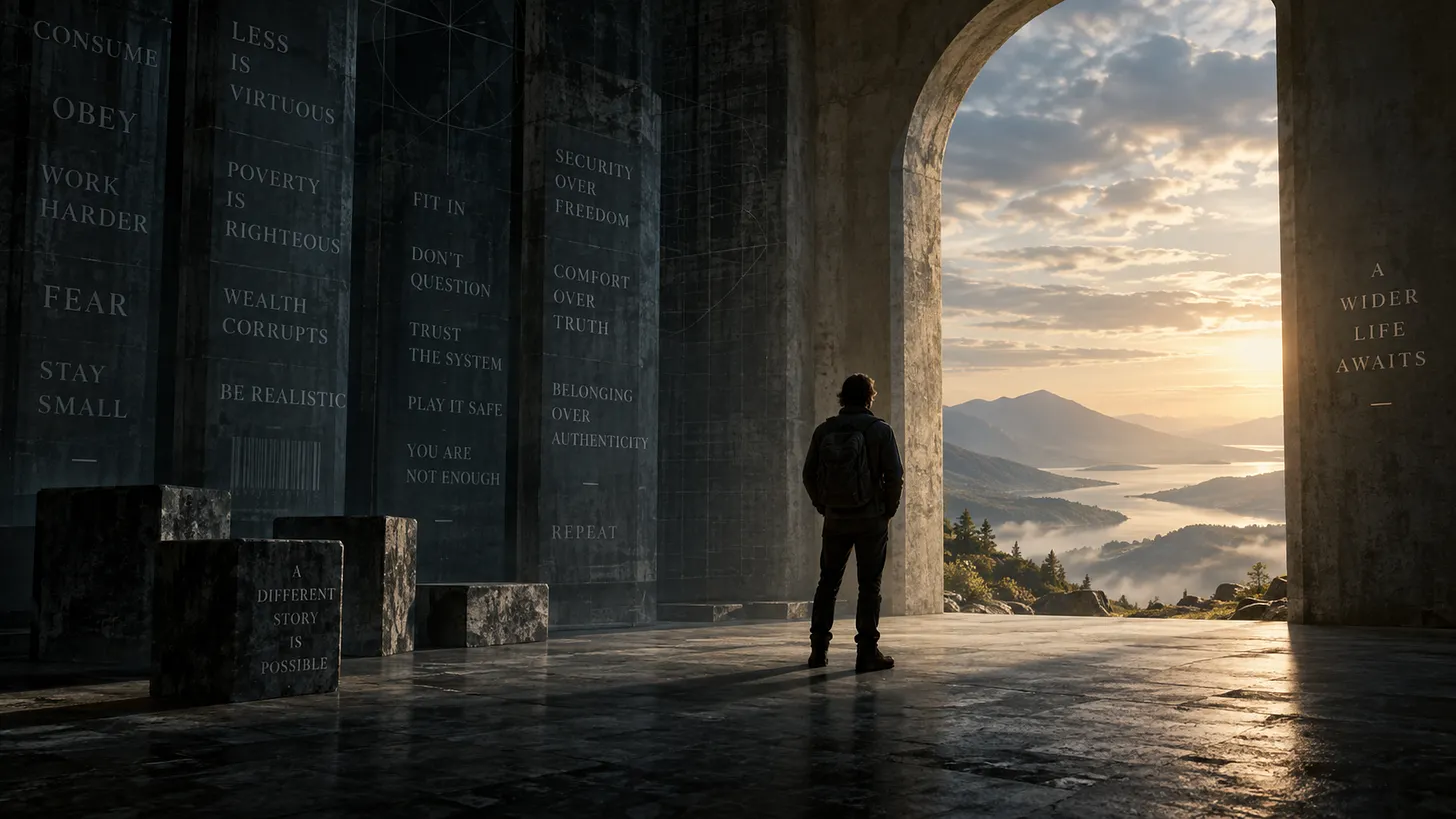
There is a strange exhaustion that settles over a civilization when too much noise, too much urgency, and too many competing narratives begin pulling at the mind all at once. Beneath the surface of daily life, beneath the routines, ambitions, distractions, and endless streams of information, many of us sense that something deeper is being shaped around us and through us. Not always by force, and not always with malice, but through the slow conditioning of perception, habit, fear, convenience, and consent.

Immorality as Infrastructure

There is a growing inability, or perhaps unwillingness, to recognize how deeply modern culture shapes the moral and psychological condition of society. Most people move within systems they neither question nor fully perceive, absorbing values, incentives, behaviors, and narratives as though they emerged naturally rather than being carefully cultivated through institutions, markets, media, and governance itself. Yet beneath the spectacle of progress, inclusion, convenience, and endless consumption lies a deeper erosion, one that gradually disconnects human beings from responsibility, discernment, self-reliance, and ultimately from what is real and true.

Mercantilism to Technocracy: Cycles of Power and Control

There’s a strange clarity that comes when one steps far enough back from the noise to observe the machinery itself. Not merely politics or economics in isolation, but the layered systems, narratives, incentives, and abstractions through which modern societies attempt to organize human life. We inherit these structures, participate in them, resist them, and are shaped by them in equal measure. Yet beneath the endless rhetoric and ideological branding remains a quieter and more enduring question: what kind of life is actually worth building, sustaining, and passing on?

Property, Law, and Perceived Legitimacy: The Quiet Tension of Property Tax

There’s a particular tension that arises when everyday structures, in this case taxation, begin to feel both invisible and unavoidable, as though they’ve grown around the edges of ordinary life without ever being fully examined. Property, law, obligation, and consent blur together in that space where most people are simply trying to live without friction. It’s here that questions about legitimacy, fairness, and participation begin to surface, not as abstractions, but as lived pressure felt through systems that rarely pause to explain themselves.