
There comes a point, after enough observation and enough inward wrestling, when the appetite for grand explanations begins to soften. Not because the questions no longer matter, but because life has a way of revealing that many of our most pressing troubles do not yield to scale, speed, or certainty. They ask something quieter of us. They ask us to look more closely at the conditions we are creating, the assumptions we’ve inherited, and the kinds of systems — inwardly and outwardly — to which we’ve given our allegiance.
. . .
There was a time when I believed that if I simply paid closer attention, read one more book, listened to one more lecture, or followed one more thread, the world would eventually begin to make sense. Every question seemed to lead toward another. Every answer hinted at a deeper layer waiting to be uncovered. It was engaging, exciting, even enthralling — until I realized that this particular path has no obvious destination. There are as many conspiracy theories and historical anomalies as there are self-professed prognosticators and purveyors of truth. After years of exploring all manner of high strangeness, systemic immorality, and a litany of mainstream narrative fabrications, I gradually arrived at an uncomfortable conclusion. Resolution isn’t found by collecting ever more explanations. Politics, economics, history, religion, philosophy, empire, and psychology all become vessels for the countless stories we tell ourselves to explain who we are and why the world has become what it is.
I don’t regret that pursuit. It needed to happen in just the way it played out. It taught me to become more cautious and discerning than I was when I began. It also made me suspicious of certainty, particularly the kind that arrives fully formed, wrapped neatly in a worldview that appears capable of explaining everything. Totalizing and generalizing may momentarily dispel the angst or epistemic frustration, but they also dull our capacity for discernment. They offer a fleeting sense of comprehension, yet when it comes to uncovering what is real, there are rarely shortcuts. So we lean toward trusting those who claim to have done the deep dive, accepting their interpretations because certainty itself can be comforting.
Over the years I’ve listened to people from every conceivable camp. Some called themselves historians or chronologists, others economists, philosophers, futurists, theologians, scientists, skeptics, conspiracy theorists, truth seekers, or simply independent thinkers. Many were intelligent. Many were sincere. Some undoubtedly still are. Yet over time I found that even the brightest minds carry their own lenses, biases, blind spots, wounds, and often a quiet momentum that gently bends every observation toward the conclusions they already expect to find.
I’m no different. My own experiences have shaped the way I see the world just as surely as yours have shaped the way you see it. I have no privileged access to reality. I cannot claim to have escaped the filters through which every human being interprets existence. What I can do is pay attention. I can observe. I can question. I can revise my thinking when life reveals something I had previously overlooked. If philosophy has any enduring value, perhaps it is not in arriving at certainty, but in cultivating the humility to keep asking better questions.
One question has remained with me for years now, quietly gathering weight as I watch the world continue along its present course.
What, exactly, are we trying to preserve?
We spend enormous amounts of time discussing how to improve our institutions, reform our governments, modernize our infrastructure, accelerate technological innovation, strengthen economies, increase productivity, and optimize almost every measurable aspect of civilization. We assume these things are inherently worthwhile because they represent progress. We rarely stop to ask what kind of progress we’re actually pursuing. It feels as though we’ve mistaken movement for meaning.
Our societies appear to possess an extraordinary confidence in scale. Whenever a problem presents itself, our instinct is to respond with something larger. Larger budgets. Larger bureaucracies. Larger corporations. Larger databases. Larger infrastructure projects. Larger technological ambitions. We seem convinced that if something isn’t working, it simply needs more funding, more complexity, more coordination, or more computational power. Every generation is persuaded that the next breakthrough will finally resolve the shortcomings of the last.
The latest expression of this pattern happens to be that which is marketed as artificial intelligence. Before that it was social media. Before that it was “globalization.” Before that the internet itself. Before that came countless economic models, educational reforms, political movements, industrial revolutions, and technological marvels that promised to usher humanity into an entirely new age. Each carried genuine potential. Each also carried expectations that no technology could reasonably fulfill.
Technology is a remarkable servant. It makes for a dreadful savior.
We continue searching for technical solutions to questions that seem fundamentally human. We hope another innovation will resolve loneliness, restore trust, improve education, strengthen families, eliminate corruption, reduce conflict, or somehow reconcile us with ourselves. Yet none of these problems originated because we lacked sufficient computational power. They arise from something much older and much more intimate. They arise from the human condition itself.
No machine can teach integrity to someone unwilling to cultivate it. No institution can manufacture wisdom. No government program can compel genuine community. No algorithm can love a child.
These observations aren’t criticisms of technology itself. I use technology every day, and in many respects it has enriched my life. At the same time, it has quietly taken something away. Looking back over several decades, the balance feels surprisingly close to even. Technology has brought extraordinary utility and convenience, but it has also demanded an increasing share of my attention, my time, and perhaps most importantly, my peace of mind.
I still remember the excitement surrounding each new operating system release throughout the 1990s and early 2000s. We were promised greater productivity, better performance, and a more seamless experience. What usually followed was an evening spent searching for missing files, reinstalling drivers, changing settings that nobody had asked to change, and discovering that yesterday’s perfectly capable computer had somehow become obsolete overnight. Every upgrade seemed to demand another upgrade. More memory. More storage. More processing power. More time. Eventually I stopped believing the promises.
The tools remained useful, but the surrounding ecosystem had quietly become extractive, consuming increasing amounts of money, attention, and nervous energy while offering diminishing returns.
I’ve also come to question what we now call a service-based economy. Somewhere along the way, the meaning of service itself appears to have been inverted. In the relentless pursuit of efficiency, optimization, data collection, and ever-increasing profits, countless corporations have quietly transferred more and more administrative responsibility onto their customers. Tasks once handled by an employee, a receptionist, or a simple phone call have become our responsibility instead. What is presented as “convenience” often amounts to unpaid labor.
Today, you can’t take your recycling to a collection facility without downloading an app and learning yet another digital workflow. You can’t receive sponsorship income as a content creator without signing up for another payment platform because the company managing the sponsorship no longer processes payments itself. People in their sixties and seventies are routinely told they’ll have to embrace online banking or risk losing access to everyday financial services. Again and again, the burden shifts from the institution to the individual, while the institution congratulates itself on becoming more efficient.
Efficient for whom?
This, to me, is one of the quieter expressions of an extractive system. It doesn’t simply ask for our money. It asks for our time, our attention, our patience, and our willingness to become unpaid administrators of systems we neither designed nor control. The human relationship is gradually replaced by procedures, portals, passwords, verification codes, and automated workflows. Somewhere beneath all the promised convenience, genuine service quietly disappears. Service has become self-service, but the prices hardly reflect the labor that’s been transferred, while the overall experience is becoming increasingly soulless and dehumanized.
I learned long ago that a better machine doesn’t suddenly make someone more creative, disciplined, or capable of finishing the projects they’ve been postponing. Tools remain tools, no matter how sophisticated they become. They amplify what already exists. They cannot determine what ought to exist.
Somewhere along the way I found myself becoming less interested in the latest solution being marketed to the public and more interested in the assumptions beneath the marketing itself. Every proposal, whether political, economic, technological, or ideological, seems to begin with an unspoken promise. Trust us. Invest a little more. Endure a little longer. Accept one more compromise today, and tomorrow will finally resemble the future you’ve been waiting for. Tomorrow always seems to arrive carrying another promise.
Perhaps that’s why so many of us feel perpetually suspended between hope and disappointment. Hope itself isn’t the problem. The problem is how easily it can be redirected toward promises that forever remain just beyond reach. We’ve become conditioned to believe that fulfillment lies beyond the next election, the next innovation, the next economic recovery, the next scientific breakthrough, or the next generation of intelligent machines. We remain fixated on horizons that recede as we approach them.
Meanwhile, ordinary life continues unfolding in remarkably ordinary ways. Children still need parents who are present. Friendships still require time, honesty, and staying power. Communities still depend upon trust. Gardens still reward patience. The land still responds to careful stewardship. Truth still asks more of us than opinion ever will. Meaning still emerges through responsibility rather than consumption. None of these truths have changed despite our “astonishing technological advancement.” If anything, they seem to have become easier to overlook. Perhaps that’s exactly the point.
What is quietly capturing our attention while life itself continues unfolding all around us?
This isn’t merely an observation about governments or corporations, though they certainly participate in and exacerbate the pattern. It’s something broader than politics. It’s almost civilizational. We have become captivated by systems that grow increasingly abstract while our own lives remain stubbornly rooted in tangible realities. We speak endlessly about “global” markets while forgetting the small businesses that once anchored our neighborhoods. We debate education while families spend less time together around a dinner table. We celebrate productivity while wondering why so many people feel exhausted despite possessing conveniences our grandparents could scarcely have imagined, let alone ever needed.
For much of my adult life I assumed that if enough thoughtful people paid attention, we could reform these systems from within. We could expose the flaws, remove corruption, elect better leaders, improve public discourse, and gradually redirect civilization toward something healthier. I haven’t entirely abandoned that notion, but I no longer place much faith in it either.
What I do know is that complex systems often develop incentives that become increasingly detached from the people they were originally intended to serve. Whether through bureaucracy, institutional inertia, competing interests, or countless unintended consequences, they gradually begin operating according to their own internal logic. Preserving the system becomes more important than questioning its purpose. Expansion becomes evidence of success. Budgets grow. Responsibilities multiply. New departments emerge to address the shortcomings of the old ones. The machinery continues turning because stopping it has become almost unthinkable.
And yet nothing fundamentally improves.
I don’t find this especially mysterious anymore. It’s simply what systems appear to do when left to themselves. The more interesting question, at least for me, is why we continue expecting them to provide what they seem structurally incapable of providing.
Perhaps we’ve placed too much hope in institutions because we’ve gradually lost confidence in ourselves. Or perhaps we’ve forgotten that civilization has always rested upon foundations no institution can manufacture. A healthy society doesn’t begin in parliament. It doesn’t begin in a university, a corporate boardroom, or a research laboratory. Those things may influence the direction of a culture, but they cannot generate the qualities upon which that culture ultimately depends.
Character is learned somewhere else. Trust is built somewhere else. Wisdom is cultivated somewhere else. Love is encountered somewhere else.
The deeper I look, the more I find myself returning to places that seem rather ordinary. Families. Friendships. Small communities. Shared meals. Meaningful work. Time spent in nature. Conversations that unfold without an audience. Acts of generosity that never become content for public consumption.
These things rarely make headlines because they resist measurement. They don’t scale particularly well. They cannot be optimized by algorithms or accelerated through venture capital. They unfold at the pace of human life itself. Perhaps that is precisely why they matter.
Living systems and extractive systems may appear remarkably similar for a time. Both grow. Both consume resources. Both organize themselves. Both can become immensely complex. Yet they differ in one profound respect. A living system leaves behind more life than it consumes. An extractive system leaves behind less. Everything else seems to follow from there.
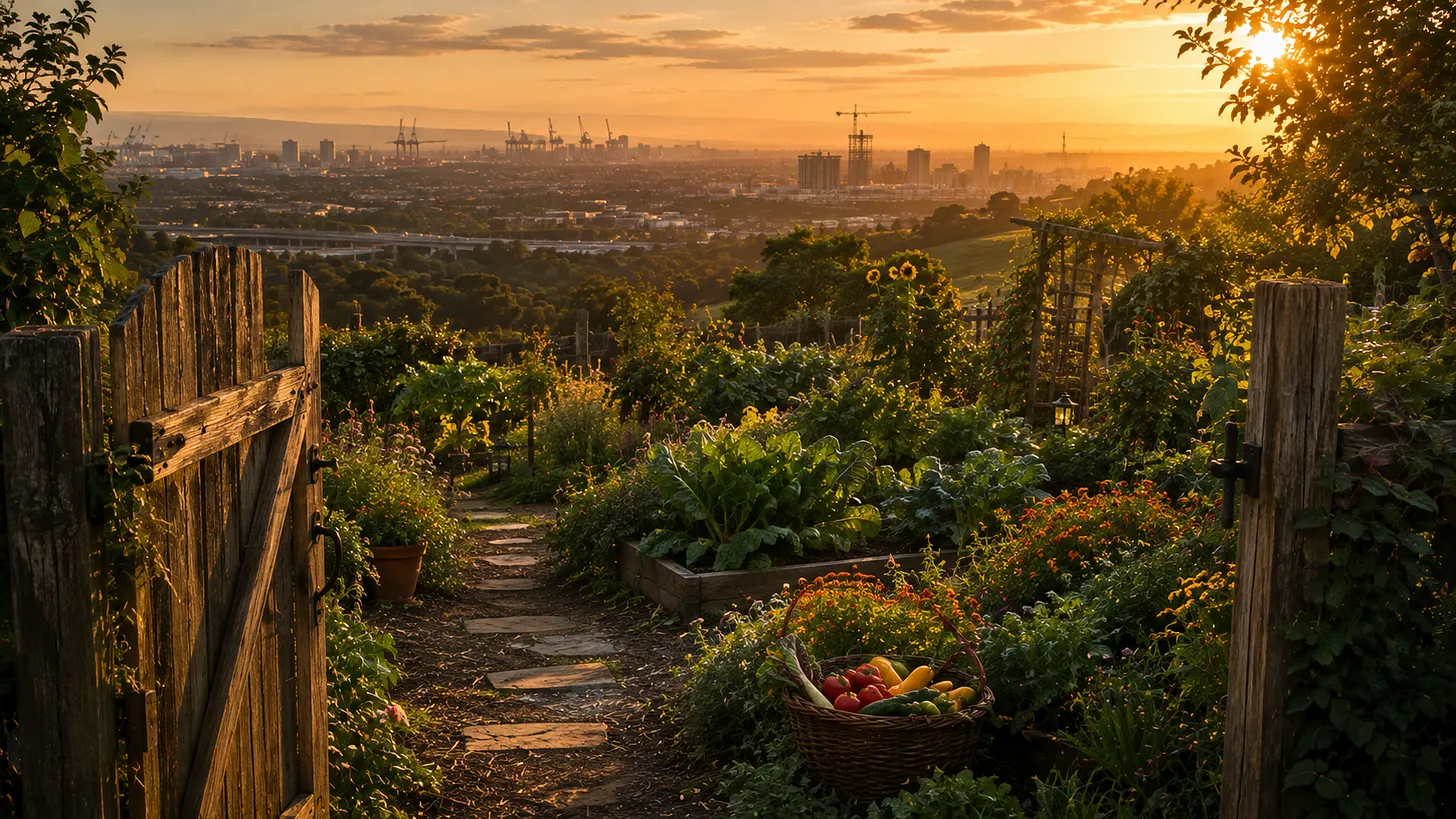 I find myself asking whether a particular way of living leaves people more capable than it found them. More grounded. More generous. More resilient. More connected to reality. More willing to shoulder responsibility without demanding recognition for doing so. If it instead leaves people increasingly dependent upon external systems while gradually eroding their confidence, competence, and agency, then it has become extractive, regardless of how noble its stated intentions may be.
We’ve learned to confuse the appearance of progress with progress itself. We celebrate announcements more readily than results. We admire ambition more than wisdom. We have become captivated by renderings of the future — polished animations, compelling presentations, immaculate marketing campaigns, and carefully crafted narratives inviting us to imagine ourselves standing on the threshold of something unprecedented. There is always another breakthrough waiting to transform the human experience. And who wouldn’t want to be part of something presented as important, innovative, and progressive?
Take infrastructure, for example. Every few days, another article or video appears showcasing some colossal undertaking somewhere in the world. A tunnel beneath a strait. A bridge spanning impossible distances. A city rising from the desert. A hydroelectric project capable of powering millions of homes. The scale is undeniably impressive, and I confess there is still a part of me that marvels at what human beings can accomplish when we decide to build something together.
There are certainly projects that improve people’s lives in tangible ways. Roads need maintenance. Water systems matter. Electricity matters. Civilization depends upon a great deal of infrastructure that most of us rarely think about until it fails.
But somewhere beyond necessity, another impulse seems to emerge. We begin building not because something genuinely needs to exist, but because building itself has become a measure of success — a desperate and superficial means of maintaining the illusion of forward movement, resilience, or stability. Scale becomes its own justification. Cost becomes almost irrelevant because the financial burden is dispersed among millions of people over decades, sometimes generations, while the prestige and profits are concentrated among the relatively few who conceived the project, approved it, financed it, or cut the ceremonial ribbon upon its completion.
The risks are socialized. The profits are privatized.
Meanwhile, those preoccupied with meeting the basic demands of daily life are repeatedly sold grand solutions and sweeping remedies that have little to do with the realities they actually face. Most people do not have the time, energy, or access required to investigate every proposal, trace every financial interest, or question every optimistic projection. They are asked to trust that the undertaking is necessary, that the costs are justified, and that the eventual benefits will somehow find their way back to them.
Often, the costs remain long after the speeches have been forgotten. And they’re not all financial, as we know all too well, though it’s often best not to bring that up in conversation, lest you be labeled privileged, spoiled, conspiratorial, or ungrateful. Regardless, we adapt. Expectations shift. So-called advancements are quickly subsumed into the collective, and somehow we’re left with less free time, less joy, less inner peace, less overall satisfaction, and an ever more elusive sense of deeper fulfillment.
As The Visual Philosopher put it:
“You own more time-saving technology than any human being in history. So why do you feel like you have no time at all?”
I struggle to see how these increasingly ambitious undertakings address the questions that seem to matter most to ordinary people. Can a young couple afford to begin a family? Can a single income reasonably support a household? Do neighbors know one another? Do children spend enough time with their parents? Can someone work honestly without sacrificing their health in the process? Is there still enough room in life for contemplation, friendship, creativity, and rest?
These don’t appear to be the questions driving much of modern civilization. Perhaps more importantly, why do they seem to be the only questions on the menu? Isn’t there more to life? What if all this complexity is part of the trap? What if we’re chasing shadows and ghosts of times past, carrying the missed opportunities and regrets of our parents and grandparents, only to discover that we’ve fallen into many of the same ontological and epistemological traps they did?
We remain preoccupied with increasing throughput, accelerating production, optimizing efficiency, reducing friction, capturing market share, expanding influence, and maintaining growth. Even the language reveals something about the assumptions beneath it. Everything must become faster, larger, smarter, more scalable, more connected, and more automated.
Again, why? To what end?
The ordinary person seems increasingly overwhelmed. Not merely financially, though that certainly plays a role. Emotionally. Mentally. Spiritually. Ontologically. We carry an extraordinary cognitive burden simply to navigate everyday life. And while we’ve allegedly created astonishing convenience, we have not created simplicity. Simplicity, after all, is not merely the absence of complexity.
A simple life can contain difficult work, profound responsibility, and deep sacrifice. What makes it simple is that its purpose remains visible. You know why you’re doing what you’re doing. You know who benefits from your effort. You know the names of the people whose lives intersect your own.
Complexity, by contrast, often obscures consequence. Decisions become increasingly abstract. Responsibility becomes diffuse. Cause and effect drift farther apart until it becomes difficult to identify where one ends and the other begins.
Perhaps that is why, in addition to becoming increasingly frustrated, distracted, and occupied with extractive trivialities, so many people feel powerless. Not because they lack intelligence or compassion, but because they inhabit systems so vast that individual agency begins to feel almost imaginary.
The relentless offloading of labor and administrative complexity onto the general population certainly hasn’t helped. In fact, I find it rather insulting how readily decision-makers have embraced this practice under the guise of streamlining services and cutting costs, only to drop more responsibility into the laps of customers and consumers. Not long ago, people didn’t need to spend so much of their time installing apps, registering accounts, scanning QR codes, navigating automated systems, and adapting to increasingly depersonalized processes merely to access ordinary services. These are burdens they should never have been expected to assume in the first place.
As mentioned earlier, there have been periods in my own life when I became almost consumed by trying to understand the machinery behind the world. I wanted to know who benefited, who influenced whom, where the money flowed, which stories were true, and which were carefully constructed narratives designed to steer public perception. Like many others, I followed countless threads. Some proved worthwhile. Others dissolved into speculation. Still others revealed sincere people who had mistaken conviction for certainty.
Belief, as we eventually discover, is the enemy of knowing.
Over time, I found myself growing less interested in proving any particular theory and more interested in recognizing recurring patterns. Whether history unfolds according to deliberate design or through the accumulated consequences of millions, even billions, of individual decisions is a question I suspect I’ll never answer with confidence. Perhaps it’s some measure of both.
The micro and the macro appear mirrored and echoed across time and space, expanding and contracting like cosmic breaths of consciousness, while our greater existence remains in perpetual motion. What we experience here is so very brief and transient. It behooves us to step back and recalibrate our senses and perspectives more often than we likely do — not to escape, defer, or dissociate, but to reconnect with the deeper conduit of conscious awareness and bring it to the fore. The system around us has a nasty habit of suppressing our better knowing.
My sphere of meaningful influence is much smaller than I once imagined. After all these years, far from finding that discouraging, I’ve begun finding it rather liberating. I cannot reform civilization, untangle every institution, expose every deception, or correct every misunderstanding. I’m not here to save anyone, not even myself. There is nothing to be saved from, in my opinion, regardless of all the doom and gloom found in either mainstream narratives or the prognostications of truthers and spiritual leaders. Those stories are as old as time, and none of their tellers possess all the information or experience necessary to know truly what they’re talking about.
Even if I devoted the remainder of my life to such pursuits, the world would almost certainly continue along its own course, largely indifferent to my conclusions.
But like anyone else, I can become more attentive, honest, and generous. I can cultivate friendships worth preserving, care for the places and people immediately entrusted to me, and step more fully into the most authentic expression of my story that I presently have the capacity to embody. I can resist the inertia that arrives in countless forms, from countless directions, for every minute I exist in this earthly realm.
These efforts may appear insignificant beside the ambitions of governments or multinational corporations, but nature would seem to disagree. A forest never begins as a forest. It begins with living things quietly doing what living things have always done, each contributing in ways almost invisible when viewed in isolation. No tree grows because another tree commanded it to do so. No ecosystem requires a strategic planning committee to determine whether cooperation serves the collective interest. Life simply participates in life.
Perhaps civilization has become so fascinated with constructing systems that we’ve neglected the more demanding work of cultivating the conditions from which healthy systems emerge naturally.
 Perhaps that’s also why I’ve become less interested in the endless debate over whether this institution or that industry can be saved. I don’t know which systems are beyond repair and which might yet surprise us, but I’m not holding my breath, either. History has a way of humbling those who predict its future with too much certainty. What I do know is that I have only so much attention to give, only so much time to invest, and only so much energy with which to participate in the world. Those things are finite, and how I choose to spend them matters.
For a long time, I believed awareness alone was enough. If more people simply understood what was happening around them, surely things would begin to change. But awareness has a curious way of becoming its own burden. Once you begin seeing patterns, it’s difficult to stop seeing them. Every headline appears connected to another. Every institution seems influenced by incentives that rarely, if ever, align with the interests of ordinary people. Every proposed solution arrives carrying a familiar scent, as though we’ve read the script before and merely changed the names of the characters.
I suspect many thoughtful people eventually arrive at a similar crossroads. One path leads toward obsession. Every waking hour becomes another attempt to expose what others refuse to see. Every conversation circles back to politics, finance, media, corruption, or power. The search itself gradually consumes the searcher. Ironically, a person seeking freedom can become just as captive to the system they’re trying to comprehend as someone who never questioned it in the first place.
Now that you’ve seen what you’ve seen, how will you live?
That question has become far more interesting to me than who secretly controls what, or which ideology happens to be ascendant this week, year, or decade. Those questions may have value, but only up to a point, and are perhaps best pursued when they lead us toward the next, better question. Either way, they rarely change how I conduct myself on a Tuesday afternoon. They don’t tell me how to become more patient or more present with a friend, more attentive to a neighbor, more generous with my time, or more grateful for the ordinary gifts already present in my life. In that sense, philosophy has become less about comprehending civilization and more about locating myself within it.
Every society is composed of individuals who are themselves trying to comprehend existence. Politicians are people before they become politicians. Bureaucrats are people before they become bureaucrats. Corporate executives, journalists, academics, laborers, artists, parents, and children all carry some mixture of hope, fear, ambition, insecurity, love, and confusion. Systems don’t emerge from nowhere. They emerge through us, even when they eventually grow beyond the comprehension or control of those participating in them.
At least, that is a view I’ve come to appreciate more fully in recent months. It doesn’t always sit comfortably with me, given my longstanding pursuit of conspiracies that, in many cases, can no longer be dismissed as mere theories. Yet even when collusion, manipulation, or hidden influence becomes evident, the deeper foundations and causes still demand scrutiny. It is rarely as simple as identifying a handful of villains pulling strings from behind the curtain. People fall prey to incentives, ambitions, fears, institutional pressures, inherited structures, and forces they may only barely perceive. Some may eventually become little more than marionettes within systems older and more powerful than themselves, but they remain human beings before, during, and beneath whatever roles they come to inhabit.
This raises an uncomfortable possibility: perhaps the extractive tendencies we observe in civilization are not merely institutional. Perhaps they also exist within each of us. How often do I consume more than I create? How often do I seek recognition rather than contribution? How often do I expect others to solve problems I’ve neglected in my own life? It’s much easier to identify extraction in governments than in myself.
If living systems and extractive systems exist on every scale, then they exist within individuals as surely as they exist within civilizations. A person can live extractively, taking from relationships without nurturing them, demanding from communities without contributing to them, and expecting abundance while refusing responsibility. Conversely, a single individual can become profoundly generative, quietly leaving every place, every conversation, and every relationship a little better than they found it.
One idea I’ve returned to repeatedly over the years is that most of us have inherited a mindset of scarcity without ever realizing it. Coupled with shame, it becomes an extraordinarily potent force, one the systems around us readily exploit in ways both large and small. We worry there won’t be enough time, enough money, enough opportunity, enough security, or enough recognition. Entire economies are built upon stimulating that anxiety. Advertising depends upon it. Politics depends upon it. News media certainly profits from it. Even our educational systems often prepare us to compete long before they teach us how to cooperate — and too often, what passes for cooperation is little more than ideological conformity, indiscriminate praise, and the lowering of standards to avoid conflict, complaint, litigation, or financial consequence.
Scarcity becomes the atmosphere we breathe. Eventually, we stop noticing it. Perhaps that’s why so many promises prove irresistible. We quietly slide into a state of perpetual victimhood without recognizing the transition. We’re told that one more technological breakthrough, one more economic reform, one more election, one more investment, one more subscription, just one more innovation, will finally deliver the security, satiety, and satisfaction we’ve been seeking all along. It’s an understandable temptation. Who wouldn’t want to believe that relief lies just around the corner?
But what do we already know about belief? At its most rigid, it can become a substitute for wisdom. It can obscure direct knowing while providing the emotional reassurance of certainty. Why? Emotional attachment. We don’t merely hold certain beliefs. We identify with them, defend them, and gradually organize our perception around them. What began as one possible explanation hardens into the lens through which every subsequent experience is interpreted.
I live a relatively simple life, though not entirely by choice. There have been seasons when I’ve relied upon the generosity of friends and family while pursuing questions that many would consider impractical. I’ve spent countless hours reading, thinking, writing, and trying to comprehend and reconcile the world around me, often producing far less than I imagined I should. Under those circumstances, it’s easy to feel the familiar pull of guilt and the lingering weight of shame. I wonder whether I should have accomplished more by now. I compare my path with those whose lives appear more stable, more prosperous, or more obviously successful, while knowing very well that appearances rarely tell the whole story. Every life is complex, layered, and multidimensional, and the way we choose to present ourselves seldom conveys the fuller truth beneath the surface.
Perhaps those feelings of comparison and being lesser-than are themselves symptoms of an extractive mindset. At some point, many of us begin measuring our worth by output, productivity, income, or recognition, forgetting that some of the most meaningful transformations occur so gradually they remain almost invisible while they’re happening. Much of this likely reaches back into our formative years, when we learned that love, acceptance, or approval had to be earned by doing what others considered praiseworthy, while avoiding its apparent opposite, criticism.
“Praise and criticism are structurally identical — both are verdicts a parent pronounces on a child, and both keep the parent’s evaluation at the center of the child’s inner life. The child who is not praised does not become insecure. She becomes a person whose sense of worth does not depend on anyone else’s opinion.”
A friendship deepens over years. Trust accumulates quietly. Wisdom doesn’t announce its arrival. Character is formed through countless ordinary decisions no one else ever notices. Living systems don’t seem especially concerned with immediate results. They concern themselves with conditions. Healthy soil before abundant harvest. Deep roots before towering branches. Relationships before influence.
Responsibility before authority.
We’ve reversed that order in much of modern life. We seek outcomes without cultivating the conditions from which those outcomes naturally emerge. We want prosperous communities without investing in neighborliness. We demand unity without learning how to live honestly with those closest to us. We call for trustworthy institutions while neglecting personal integrity. We demand new leadership without examining the qualities we reward, tolerate, or embody ourselves. We long for meaningful culture while consuming entertainment that asks almost nothing of us in return and often distorts our ideas of what is real, desirable, or worthy of our attention.
It is tempting to blame governments for these things. It is equally tempting to blame corporations, financial institutions, educational systems, media organizations, or whichever group currently occupies the public imagination. In part, we blame them because, generations ago, we began increasingly to entrust them with responsibilities we no longer wished, or felt able, to carry ourselves. We voted for them, funded them, deferred to their expertise, and expected them to act on our behalf. Surely, we imagined, they would have access to better information, wiser authorities, and people who genuinely cared about the public and the earth we share.
And we handed that structure, that pattern, down to our children.
Yet the results repeatedly reveal the limitations of that faith. We see grandiosity, grandstanding, and an endless cycle of more. More funding. More authority. More technology. More intervention. More complexity. This is not how nature works. It is not what life seems to be showing us.
The moment we begin recognizing the difference between living systems and extractive systems, we acquire a question capable of accompanying us almost everywhere: Does this leave behind more life than it consumes? Does this conversation leave us more alive? Does this work nourish something worthwhile? Does this purchase strengthen the kind of world I wish to inhabit? Does this habit cultivate freedom or dependency? Does this way of thinking make me more compassionate, or merely more cynical?
Cynicism is fast becoming a collective default. It masquerades as discernment while asking very little of us. It allows us to dismiss, withdraw, and absolve ourselves of responsibility while maintaining the appearance of having seen through the illusion. In that sense, it belongs to the same framework of guilt, shame, and scarcity. It keeps us occupied, disempowered, and spinning our wheels while nothing meaningful changes.
I’ve reached the age where I no longer expect to solve civilization. I’m not even certain civilization requires solving in the ways we typically imagine, or in the ways solutions are so aggressively marketed to us. The perpetual promise of catastrophe and rescue certainly provides endless justification for unelected organizations, institutions, experts, and authorities that position themselves as necessary intermediaries between humanity and its survival.
Yet the responsibility for how we live cannot be outsourced.
We did not come here merely to find the easiest way through, nor to bypass every difficult, painful, and necessary aspect of the human experience. So when someone offers yet another singular solution, savior, or panacea, let’s try not to be so immediately accepting on the face of it. No institution, technology, ideology, or personality can assume the responsibility that belongs to each of us.
Perhaps every generation believes itself to be standing at the edge of unprecedented change. Perhaps every generation feels the tension between what is passing away and what has yet to emerge. Ours is hardly unique in that respect. What may be unique is the scale at which we’re now capable of amplifying both wisdom and folly.
At the same time, a quieter movement is emerging within the collective — a growing element of civilization that has simply had enough of these so-called astonishing advancements. More people are stepping away from lifestyles defined by technological saturation, constant connectivity, institutional dependency, and extraction. They’re choosing simpler ways of living that have always worked and will continue to work regardless of AI, the internet, the electrical grid, or even the governments of the world.
I’ve said and written many things here, and throughout more than a decade of essays and other published work. If these offerings have any purpose, it isn’t to convince anyone that I’ve uncovered the hidden machinery of history. I haven’t. The older I become, the more comfortable I am admitting how much remains beyond my comprehension. Reality is almost certainly stranger, richer, and more nuanced than any single philosophy can adequately describe.
What I aim to offer instead is something far more modest. A thread. A way of looking. An invitation to pause before accepting the next grand promise, whether it comes wrapped in politics, economics, technology, or ideology, and ask a quieter question instead:
Is this generating life, or is it merely extracting it?
Solvitur ambulando
Written by Trance Blackman. Originally published on tranceblackman.com on 01 August 2026.
Copy & share: https://tranceblackman.com/beyond-the-next-promise/