Skip to content

Tag: technology

Archives of the Future: Data, Power, and the Technocracy

We live in an age obsessed with capturing everything: every thought, every click, every breath digitized and stored. Yet beneath the hum of servers and the promise of omniscience lies a quiet question few dare ask: why? Why must every fragment of human existence be archived, and for whose benefit? This discussion unravels the machinery behind data accumulation, the illusion of progress, and what it means to reclaim human agency in a world ruled by the logic of machines.

Machines, Markets, and Mastery: How Modern Systems Shape Our Dependence

We live in a world designed to extract, distract, and pacify. Systems present themselves as inevitable, convenient, and “safe,” while quietly eroding the skills, autonomy, and judgment that make us human. This discussion is about seeing the cracks, naming the levers, and finding the small yet radical spaces where agency and competence still matter.

The Battle for Narrative Depth: How Streaming and AI Reshape Storytelling

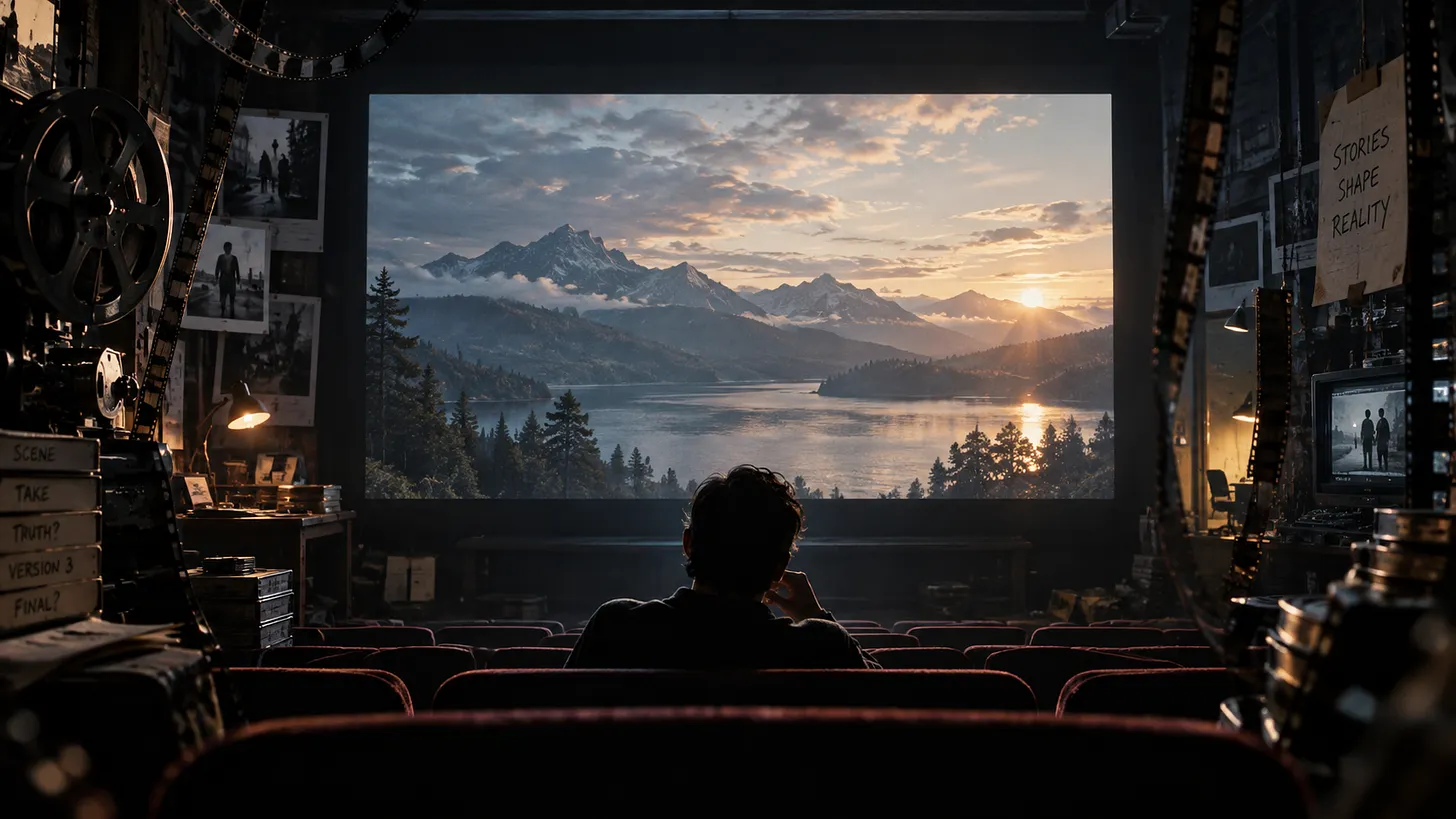
The age of streaming has transformed storytelling into a delicate balancing act between attention metrics and human meaning. What we consume is no longer just entertainment — it’s data, a signal optimized for engagement rather than resonance. In this discourse, we navigate the tension between algorithmically engineered content and the enduring need for stories that breathe, that unfold slowly, and that root themselves in human experience.

Inside the Architecture of Power: Seeing the Patterns Behind the Noise

In the quiet between headlines, between the rising and falling of markets, between the loud narratives of empires and experts, there is a deeper current. It moves unseen, persistent, shaping lives without ceremony or announcement. To look at the world from this perspective is to notice patterns, to trace the architecture behind the chaos — not to despair, but to orient oneself. This thread is about seeing clearly, tracing the mechanisms of control, and reclaiming the inner ground where human sovereignty still persists.

The Spectacle Machine: War, AI, and the Architecture of Perception

We live in a peculiar moment where the spectacle of the world increasingly resembles a poorly disguised stage production. The language of power, war, technology, and security is repeated endlessly until it begins to resemble something closer to theater than truth. Narratives are curated, crises are framed, and the public is invited to participate as spectators in a drama that feels both monumental and strangely hollow. In such a climate, the real challenge is not deciphering every detail of the spectacle — but learning to recognize the difference between the noise of the system and the quiet signal of reality itself.