
You don’t fight to win. You fight to prevent the psychopaths from destroying everything they touch.
Category: Journal Entries
thoughts, ponderings, experiences and lessons learned. or, something deep and life-changing.

There is a strange exhaustion that settles over a civilization when too much noise, too much urgency, and too many competing narratives begin pulling at the mind all at once. Beneath the surface of daily life, beneath the routines, ambitions, distractions, and endless streams of information, many of us sense that something deeper is being shaped around us and through us. Not always by force, and not always with malice, but through the slow conditioning of perception, habit, fear, convenience, and consent.

A familiar pattern is taking shape again — not loudly at first, but consistently enough to notice. Across film, television, and headlines, the same themes surface: space, contact, crisis, and revelation. The question is not whether these stories are being told, but why they are being told now, and what they are preparing us to accept.
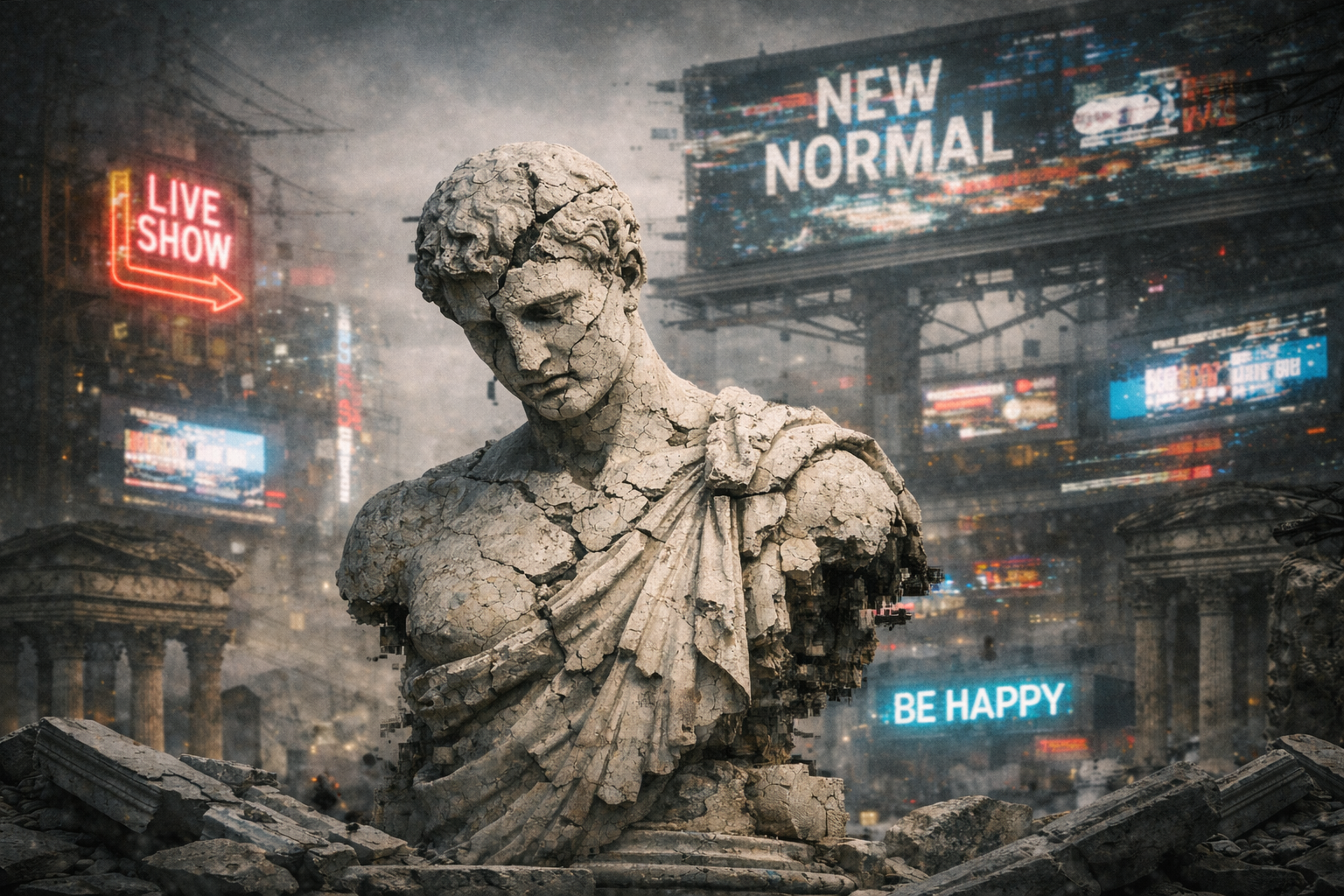
Empires don’t usually collapse from external attack. They rot from within — through comfort, corruption, and the arrogance of believing they are immune to consequence.
Forever Torn
In a world dominated by narratives of division and conflict, we often look outward for solutions while ignoring the fractures within ourselves. This short essay examines how systemic fragmentation mirrors our inner divisions and why the hope for a “golden age” is less about political structures and more about personal awareness.