
There is something to be said for stepping outside the prescribed narratives and assumptions that shape so much of modern life. Food, health, and our relationship with the natural world have become increasingly abstracted, measured, categorized, and regulated, often at the expense of direct experience and common sense. Yet some questions remain worth asking, particularly those that encourage us to reconnect with place, observation, experimentation, and the quiet wisdom embedded within nature itself.
Category: Lux Colloquii
Ongoing series of discussions with ChatGPT.
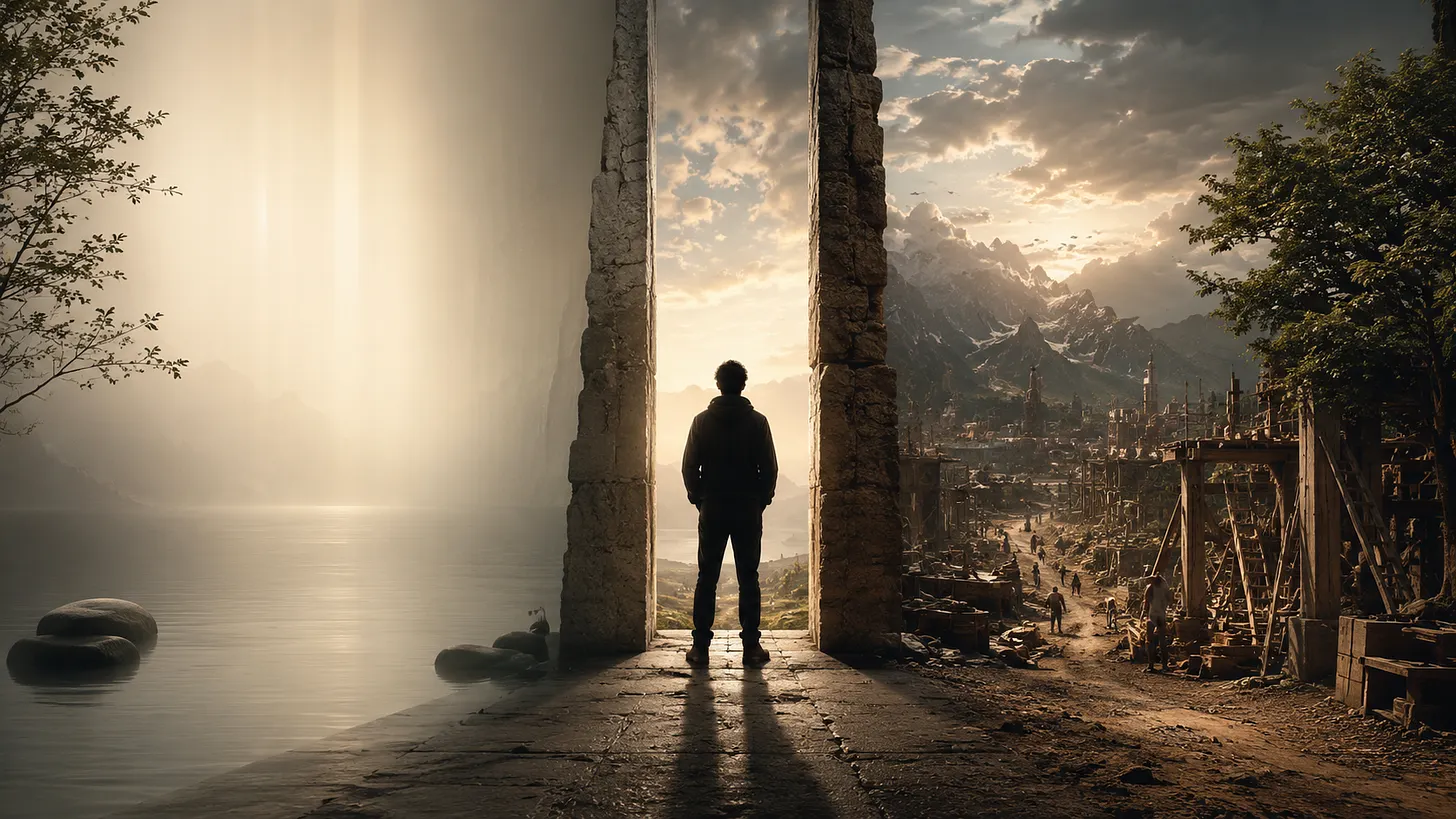
There’s a point in any serious inquiry where reflection starts to feel insufficient, not because it’s wrong, but because it begins to circle the same inner terrain. Something in the system stabilizes, and what once felt like revelation starts to resemble suspension. In that space, the question is no longer what is true in theory, but what is required in motion, in contact, in the lived friction of things as they are.

There are threads of thought that don’t sit comfortably in the daylight of consensus reality, yet refuse to disappear. They surface in fragments, in conversations, in late-night audio streams where symbolism, history, and perception blur into one another. What emerges is not a fixed doctrine, but a way of seeing patterns beneath the surface of events, and a growing sensitivity to how attention itself is shaped, directed, and absorbed.

There are patterns we inherit before we ever have language for them. Ways of seeing, reacting, contracting — all woven quietly into the nervous system long before reflection ever enters the room. And yet there comes a point where the pattern becomes visible to itself. Not as an enemy to be defeated, but as a momentum to be questioned. This is where the inquiry begins: not whether we can become different in theory, but whether the act of seeing clearly is already the beginning of movement.

There are moments when something long sensed but never fully seen begins to gather itself into form. Not as a revelation from elsewhere, but as a quiet recognition of what has always been present, waiting beneath the noise. We move through layers of abstraction, distraction, and borrowed knowing, until something in us resists the fragmentation and turns back toward a more direct encounter. Not outward, but inward — toward a steadier attention, a slower unfolding, and the subtle realization that nothing essential was ever truly out of reach.