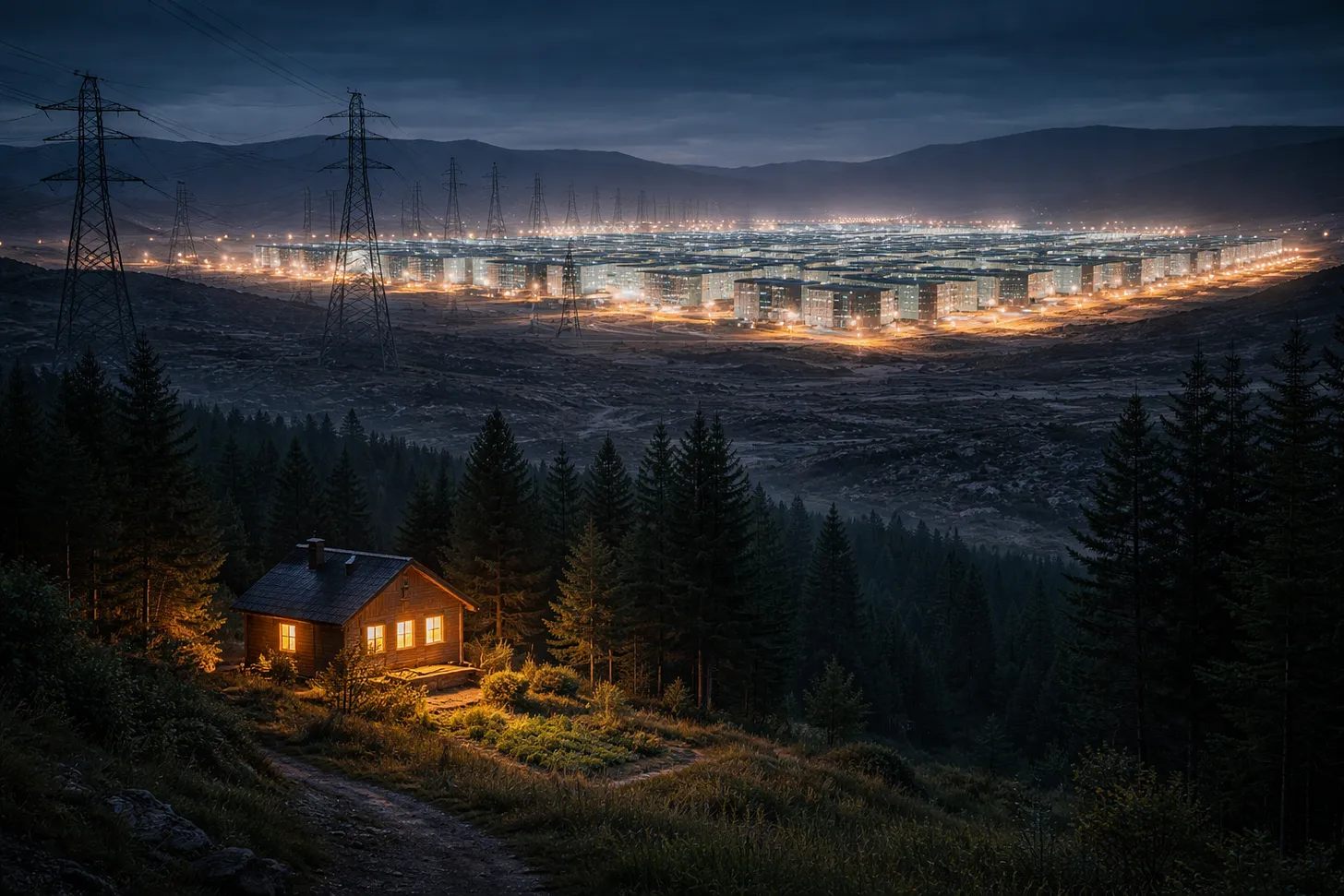
There’s a growing insistence that technological acceleration, especially AI, is not just inevitable, but necessary. Yet when you look closely, that premise begins to unravel.
. . .
Nothing currently being offered through AI, or the broader illusion of technological “progress,” arises from an observable, collective human need.
What has always worked will continue to work. What human beings have always needed — not only to survive, but to pursue their highest ideals, realize their grandest visions, and be of genuine service to others — has never been scarce. Lack and scarcity are the ontological weapons of choice for the parasite class. In many cases, what we truly need becomes more accessible through small, deliberate shifts in daily living, regardless of geography. It may simply require a shift in perspective — one that is actively captured, contained, coerced, and manipulated into a shape that hardly resonates with an awake, aware human spirit.
For those living in or around dense urban environments, where mob rule, collectivist messaging, and consensus thinking are aggressively enforced, this will likely be difficult to grasp. The psychological and emotional weight of those systems narrows perception. What appears indispensable has been framed as such through habit and a heavily curated experience of reality.
So it’s worth asking, openly and honestly: What do you truly value? Why do you want what you want? Who or what shaped those desires?
The current push toward AI and tech integration at every level reinforces a central fiction: that vast technological infrastructure is necessary for human advancement. This includes sprawling data centers, expanded energy grids, and increasing demands on land, water, and natural resources. We are already paying for this, as energy costs continue to rise while the forces behind this technological push aggressively pursue their aims. While many are focused on rising utility bills or seeking government support, these same forces are acquiring land and real estate as quickly as possible. Much of the modern world is sliding into rent-seeking and neo-feudalism, and many will remain unaware as the transformation unfolds.
But the premise does not hold. The logic fractures under scrutiny. The story collapses under its own weight. What we are seeing is an exponential rise in resource consumption driven not by genuine human necessity, but by manufactured demand. Market forces create the need, then present the solution, then scale both simultaneously. The ecological and logistical costs are immense. They are also largely obscured.
We have seen similar patterns before. Large-scale energy projects (the farce that is “big” solar, wind, and related systems), often framed as solutions, carry their own contradictions when examined beyond surface-level narratives. The issue is not innovation itself, but the assumptions driving it and who ultimately benefits.
At the center of all this is a familiar pattern: narrative control.
When corporate and technocratic interests dominate the conversation, clarity gives way to complexity. Information is filtered, delayed, or buried. A public already strained mentally, emotionally, and existentially is far easier to persuade, especially when messaging is constant and reinforced across every channel.
The most influential actors are rarely visible. Lobbyists and policy influencers shape decisions long before the public is aware those decisions are being made. By the time awareness emerges, meaningful input is no longer possible. The last recourse is often an expensive and drawn-out legal process. This is not accidental.
A truly informed and grounded population would ask different questions and have greater involvement in, and investment in, the people and lands around them. It would challenge the premises and discern the deceptions, not just the implementations. It would weigh costs against actual human benefit, rather than projected or marketed outcomes. It would likely reject much of what is currently being advanced.
Yet this kind of rooted awareness is increasingly at odds with the rise of modern nomadic lifestyles. While it can be liberating to move to places where one believes they will be treated better, a society in which anything goes and nothing truly matters — because one can simply keep moving — offers little incentive to put down roots or commit to a place long-term. Over time, this erodes continuity and investment, not only in place but in people. The effect is visible in relationships and coupling as well, as the family unit has become increasingly fragmented in recent generations, while birth rates continue to decline worldwide.
At its core, this is not a rejection of modern technology. It is a rejection of misaligned priorities — of a system that extracts from the natural world while distancing human beings from it, and aggressively pursuing parasitic and predatory practices that ultimately serve the same central entities as they always have.
What is essential to human flourishing has not changed. What sustains life, meaning, and connection remains simple, accessible, and independent of the systems now being presented as inevitable.
Take back the story. Unravel the narrative. Reclaim your autonomy.
Solvitur ambulando
A local infrastructure project threatens the privacy of a quiet residential area. This discussion explores the unexpected impact of industrial development on individual well-being.
Written by Trance Blackman. Originally published on tranceblackman.com on 19 March 2026.