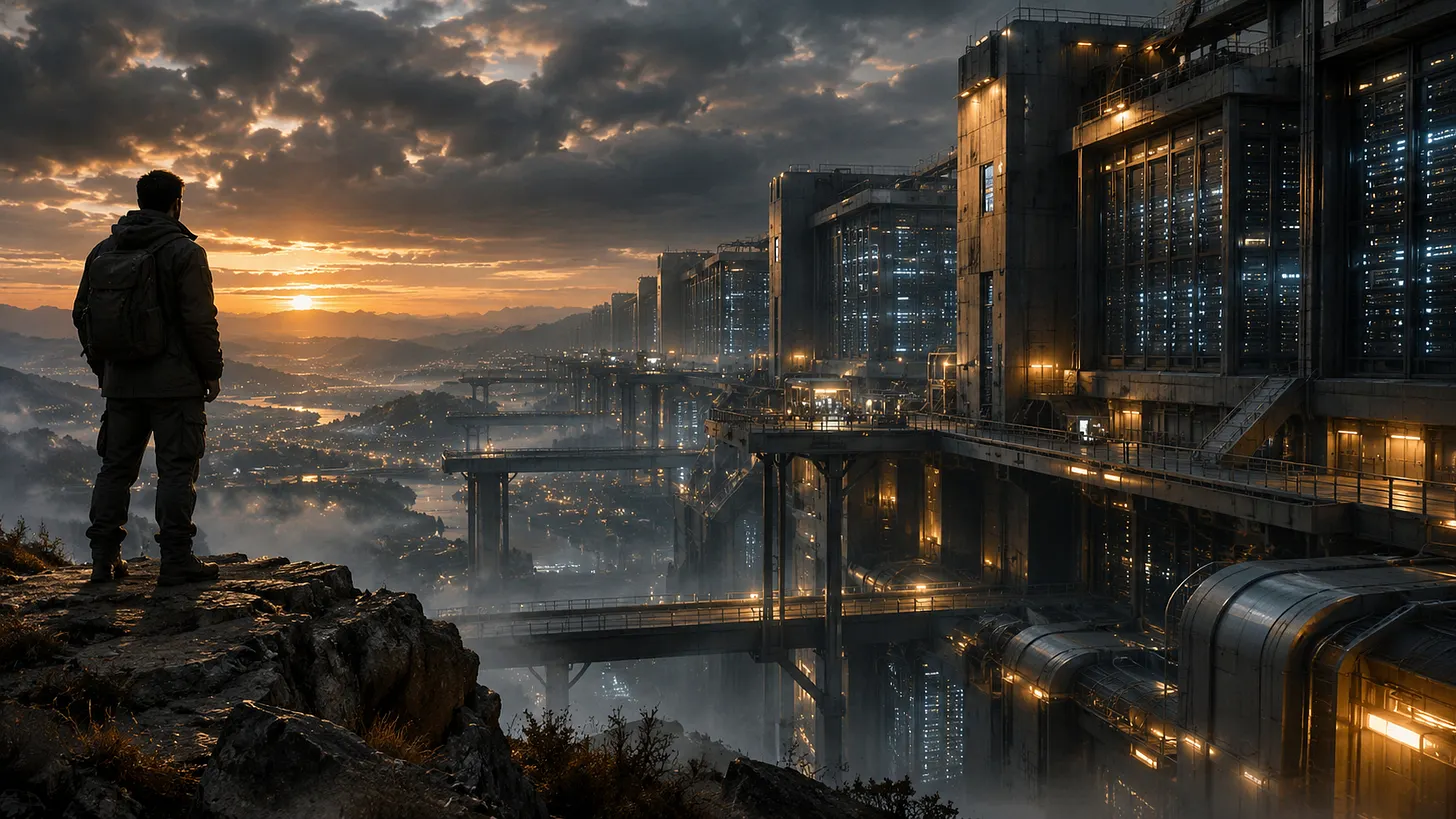
There’s a curious assumption running through much of modern technological development: that if something can be built, it should be built, and if we encounter resistance in one environment, we simply find another. The land becomes difficult, so we move to the sea. Resources become constrained, so we find new ways to extract them. And somewhere along the way, the question of whether any of this is necessary gets lost entirely. Offshore AI data centers are an interesting example of this mindset, but the implications reach considerably further than the machines themselves.
Tag: technological progress
A Web of Dependencies: Centralization and the Illusion of Security
We have a curious habit of mistaking complexity for progress, centralization for efficiency, and technological capability for genuine improvement. Somewhere along the way, the tools we developed to make life easier have become systems we must continually accommodate, maintain, and work around. And when those systems fail, the answer seems invariably to be more of the same. Perhaps it’s time to question not just how we’re building things, but why we’re building them in the first place.
A Single Point of Failure: Convenience, Control, and the Cost of Dependency
There’s something rather peculiar about the direction we’ve taken with technology. We have more computing power, more connectivity, more automation, and more supposedly intelligent systems than ever before, yet somehow we seem to have become increasingly dependent on a handful of corporations and institutions to keep the most basic aspects of everyday life functioning. At what point did convenience become dependency, and when did we collectively decide that handing over control was an acceptable price for modernization? A few recent developments provide an interesting opportunity to examine that question.
The Great Rejection: Deep Dive — Questioning the Future We’re Being Sold
There’s a familiar pattern to the way things unfold when enough money, influence, and institutional momentum gather behind an idea. What begins as a possibility gradually becomes an expectation, then an obligation, until questioning the direction of travel is treated as a failure to keep up. We’ve seen this play out across industries and generations, and the current push toward an AI-everything future seems to follow a similar trajectory. Yet beneath the promises of convenience, efficiency, and unprecedented progress, there are questions about what we’re building, what we’re sacrificing, and whether the future being sold to us is one that people actually want to live in.
The Great Rejection: Preface
For all the promises of progress, convenience, connection, and liberation, we find ourselves increasingly surrounded by technologies that demand more of our attention, our money, our privacy, and our lives, while offering diminishing returns in exchange. The question is no longer whether we can build more, automate more, or connect more. It is whether any of this is making us better off — and what we stand to recover when we finally decide that enough is enough.