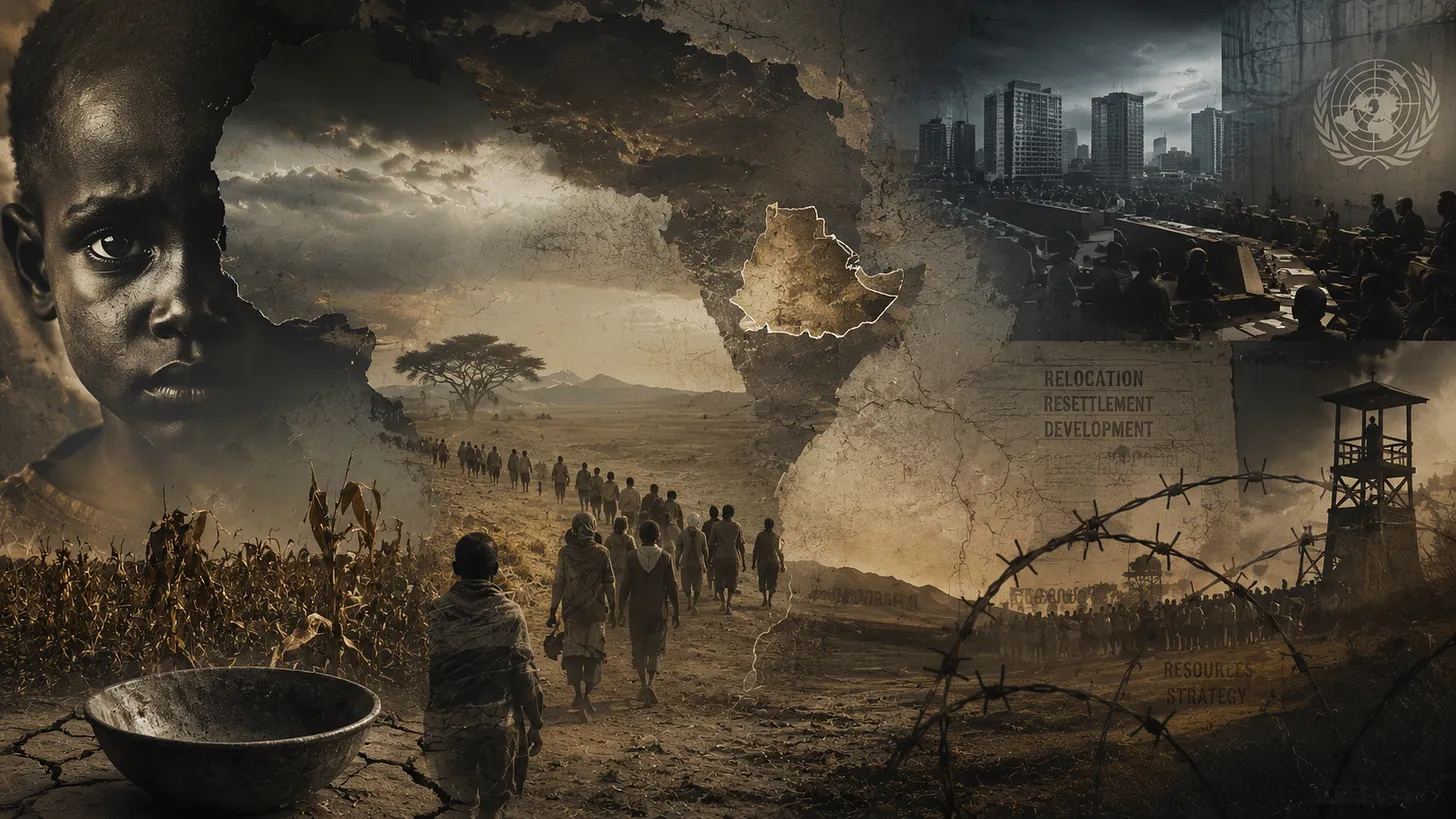
History has a peculiar way of echoing through the present. Sometimes the parallels are obvious; more often they reveal themselves through recurring patterns that transcend borders, ideologies, and generations. This discussion began with a closer look at the Ethiopian famine of the 1980s, but soon widened into a broader reflection on state power, collective memory, institutional narratives, and the enduring tension between human dignity and systems of control. Whether one agrees with every conclusion or not, the recurring questions themselves remain worthy of careful examination.
Tag: social engineering
False Progress
There’s a point where the surface narrative stops holding together. Not all at once, not in some dramatic rupture, but in a slow, accumulating recognition…
Soft Force: The Air of the Artificial
The artificial does not arrive by accident. It is invited, sold, normalized — until what once felt foreign begins to feel inevitable. But underneath the noise, something in us still knows what is real.
Govern-ment
They call it governance, but it’s really a theater of control — power masquerading as service, illusion dressed up as structure. We’re conditioned to accept the con, to mistake permission for freedom, and to forget the true cost of compliance. This isn’t a revelation. It’s a remembering. A call to look again at what’s been normalized, to question what’s been quietly killing the soul.
Minecraft, Media, and the Machinery of Influence
We live in an age where fun is the façade — where the flicker of a screen masks the fire behind the curtain. Minecraft, a beloved game for many, becomes in this exploration not just a canvas for creativity, but a crucible for conditioning — a quiet weapon in the war for hearts and minds. This isn’t about paranoia. It’s about pattern recognition. And if we’re paying attention, we can begin to trace the outlines of a reality that’s being coded around us, one block at a time.