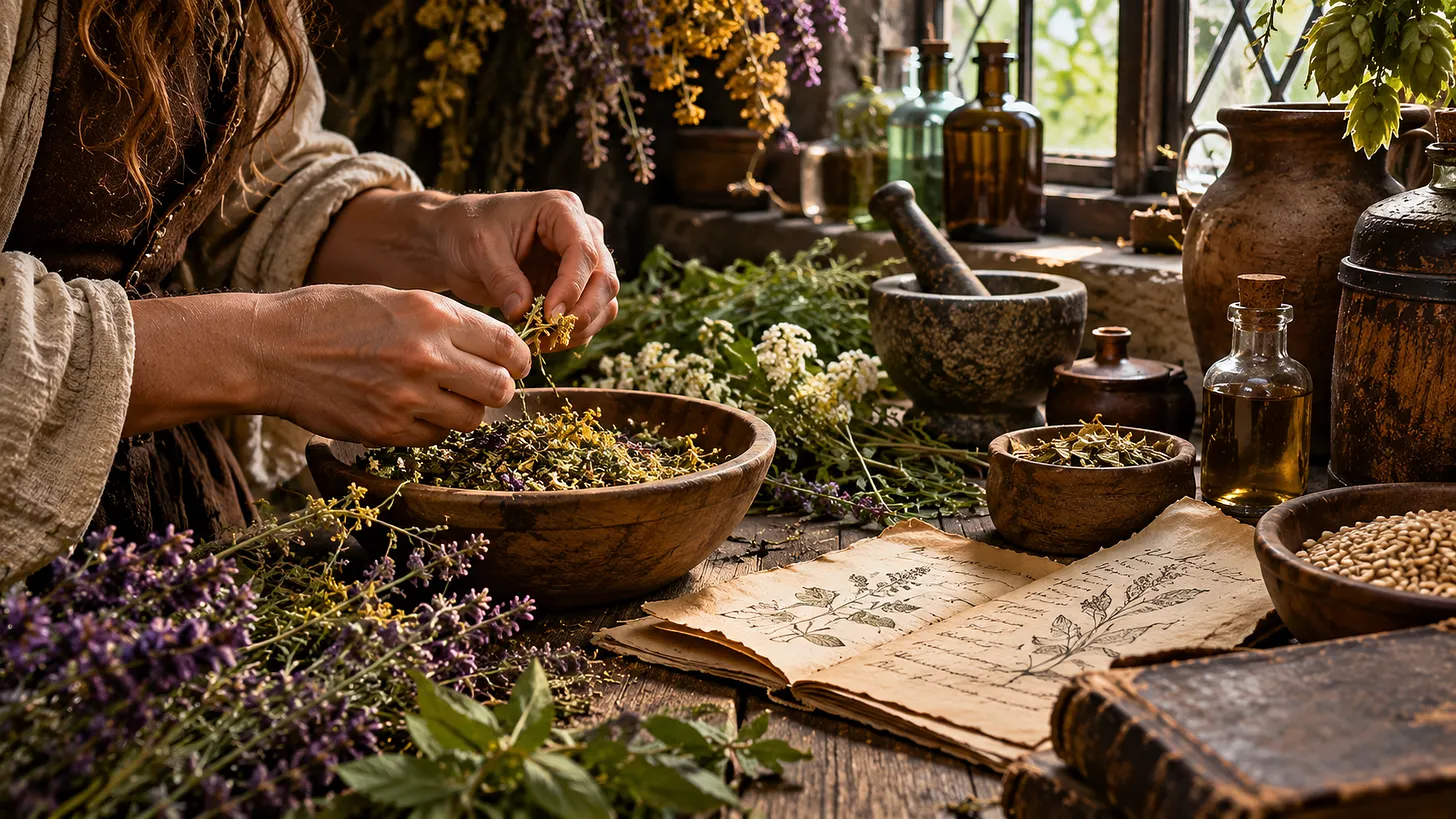
There’s often more to the history of something as ordinary as brewing a household ale than we might imagine. Behind the ingredients, recipes, and traditions are generations of accumulated knowledge, much of it passed down through observation and experience rather than written records. And as familiar practices become commercial industries, it’s worth asking what gets preserved, what gets lost, and whose knowledge survives the telling.
Category: Lux Colloquii
Ongoing series of discussions with ChatGPT.

The Seduction of the Final Answer: Salvation, Certainty, and the Human Condition
The Myth of the Diminished Human
What happened to humanity, what was taken from us, who or what is responsible, and how might we finally reclaim what was lost? It’s a familiar refrain. The language changes, the cosmologies evolve, and yesterday’s authorities become tomorrow’s false prophets. Yet beneath it all, some remarkably familiar ideas persist. I’ve spent a good deal of time exploring these subjects, and increasingly find myself less interested in another grand explanation than in examining the assumptions that hold these narratives together. Perhaps it’s time we questioned not only the answers being offered, but why we’re so compelled to find them in the first place.

Suppression and Resolution: Rethinking the Nature of Healing
Hering, Homeopathy, and the Art of Observation
We spend a great deal of time trying to understand the body, often through the lens of what we’ve been taught about disease, symptoms, and treatment. But perhaps we’ve been looking at things from the wrong direction. What if many of the things we regard as problems are actually expressions of the body’s ongoing efforts to restore itself? And what if understanding those responses requires a little less intervention and a little more observation? Exploring the work of Lies are Unbekoming and the historical principle attributed to Constantine Hering, we consider the relationship between suppression and healing, the remarkable intelligence of the organism, and the importance of understanding our own individual stories.

Creative Stewardship: Who Really Owns a Story’s Legacy?
Stargate, Star Trek, and The Future of Beloved Fictional Universes
There’s something to be said for a good science-fiction series that leaves you wanting to explore the universe rather than escape it. The kind that gives you memorable characters, interesting ideas, a little humor, and the occasional reminder that humanity might yet amount to something. Stargate and Star Trek, particularly their earlier incarnations, managed to capture something of that spirit. And perhaps that’s why their absence, and the rather curious treatment of their respective legacies, is worth discussing. There’s plenty of room for new stories, new talent, and new directions. What seems to be in shorter supply is the creative stewardship, imagination, and willingness to build upon what came before.

You Cannot Redistribute Wisdom: The Human Problems Behind Economic Inequality
Wealth, Philanthropy, and Institutional Power
There’s no shortage of people willing to tell us what’s wrong with the world, who’s responsible, and what should be done about it. Economic inequality, wealth accumulation, philanthropy, and the familiar refrain that we should simply tax the rich are recurring subjects, often presented with a degree of moral certainty that leaves little room for meaningful examination. But beneath these arguments are some rather fundamental questions about human nature, personal responsibility, individual freedom, and the institutions we trust to manage our affairs. Perhaps it’s time we looked beyond the slogans and considered what we’re actually trying to accomplish.