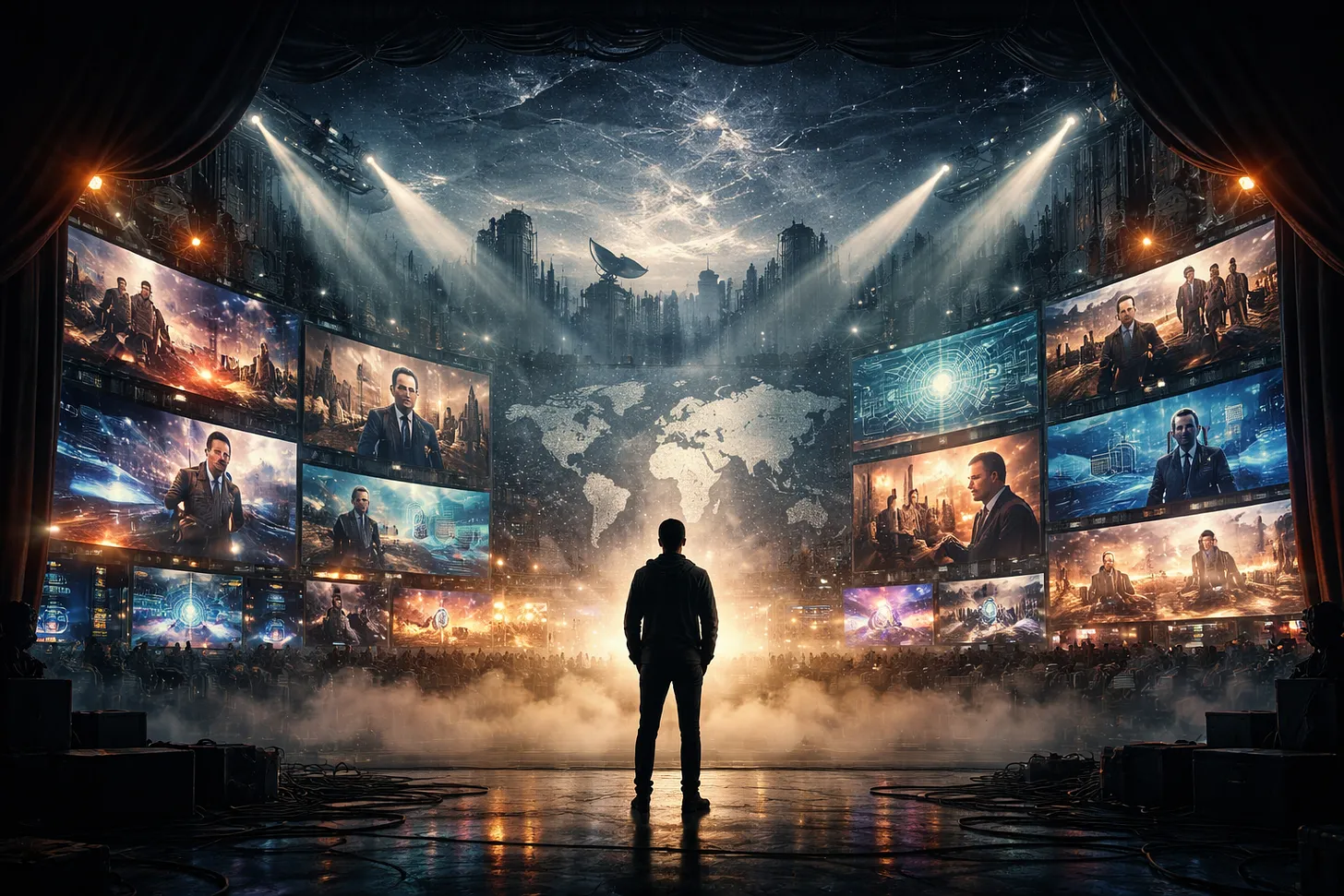
We live in a peculiar moment where the spectacle of the world increasingly resembles a poorly disguised stage production. The language of power, war, technology, and security is repeated endlessly until it begins to resemble something closer to theater than truth. Narratives are curated, crises are framed, and the public is invited to participate as spectators in a drama that feels both monumental and strangely hollow. In such a climate, the real challenge is not deciphering every detail of the spectacle — but learning to recognize the difference between the noise of the system and the quiet signal of reality itself.
Tag: media
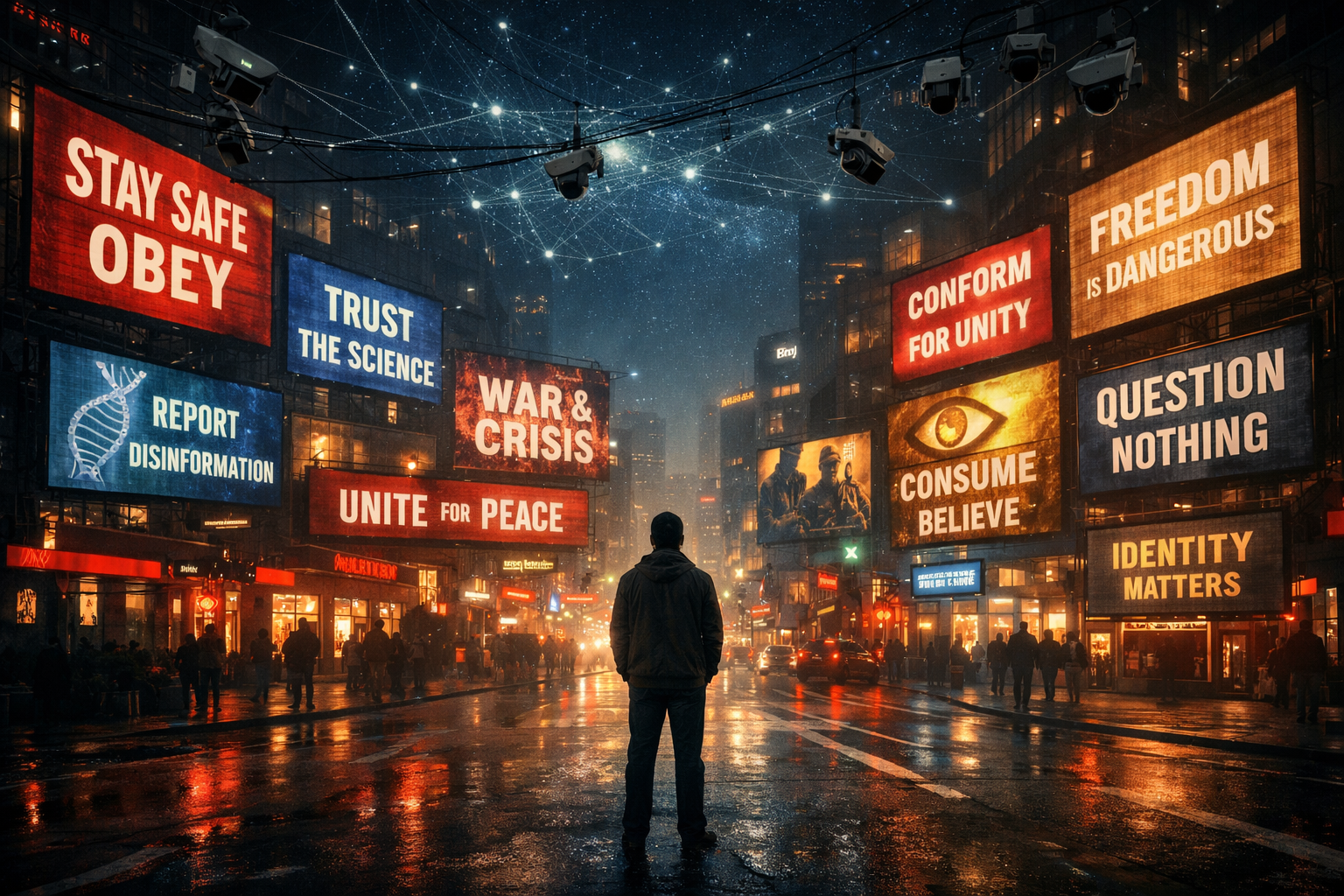
We are no longer merely debating politics, censorship, or technology. The deeper conflict concerns reality itself — who defines it and how its boundaries are enforced. Different societies justify it in different ways, yet the pattern is consistent: shape perception and behavior follows. When the story of the world is curated, the people within it can be guided. What follows is not a comparison of nations or ideologies, but an inquiry into influence, belief, and the growing necessity of discernment.

Modern life does not fail loudly — it hums. It hums with stimulation, urgency, and ritualized compensation, masking misalignment just well enough to keep the machinery turning. Coffee, caffeine, and the countless “small” stimulants threaded through daily life are rarely questioned because they feel benign, even necessary. Yet beneath their ubiquity lies a subtler function: sustaining motion in systems that no longer nourish the human nervous system, spirit, or sense of meaning. What follows is not an indictment of coffee, but an examination of what it reveals.
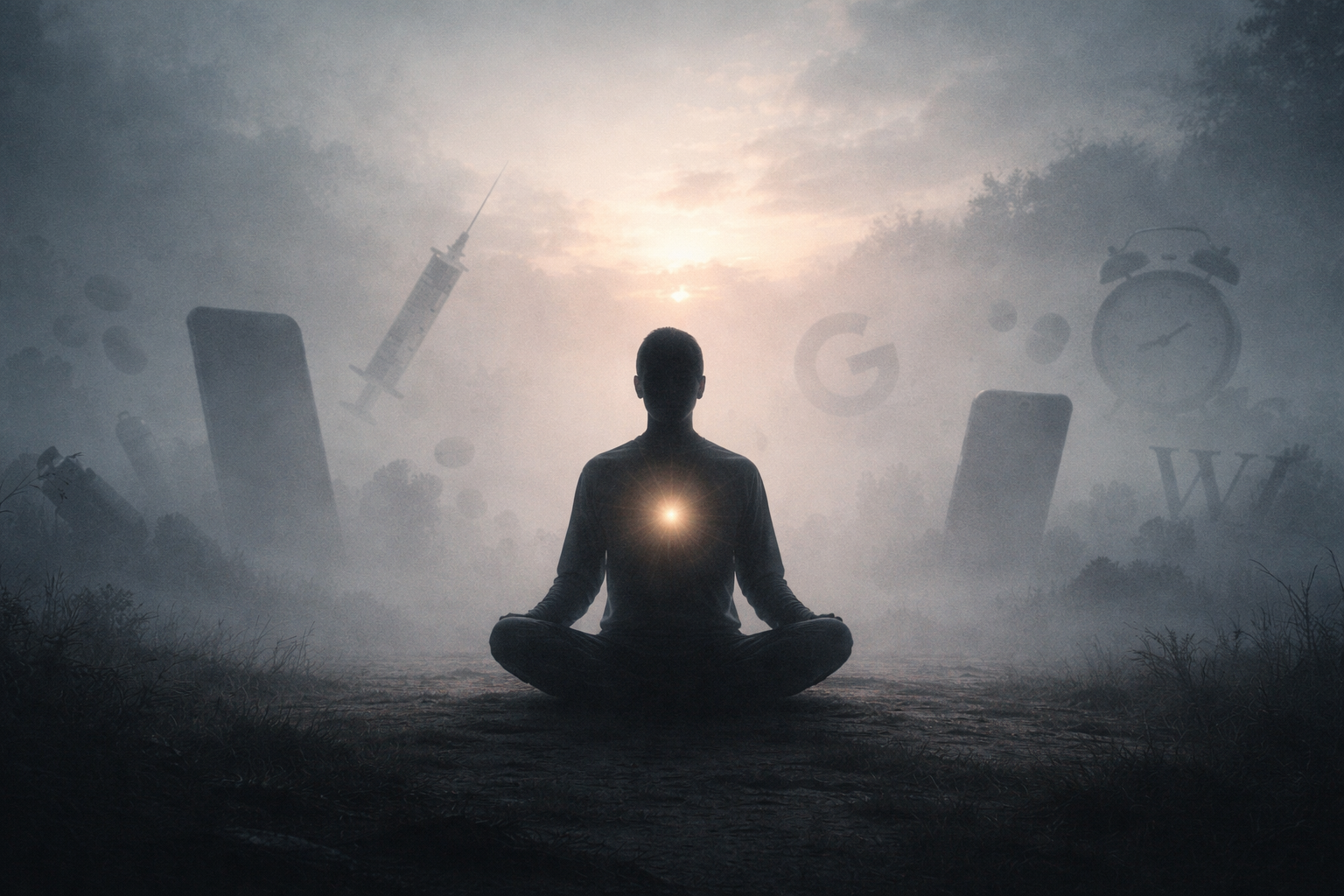
There is a particular kind of decay that does not announce itself through violence or ruin, but through forgetfulness. It is the forgetting of how to listen inwardly, how to sit with uncertainty, how to sense truth without being told what to think. Over time, this forgetting hardens into habit — reliance on systems, experts, devices, and doctrines that promise clarity while dulling discernment. The events of recent years did not create this condition; they merely revealed it. What we are facing is not a crisis of information, but a crisis of mind, spirit, and attention.
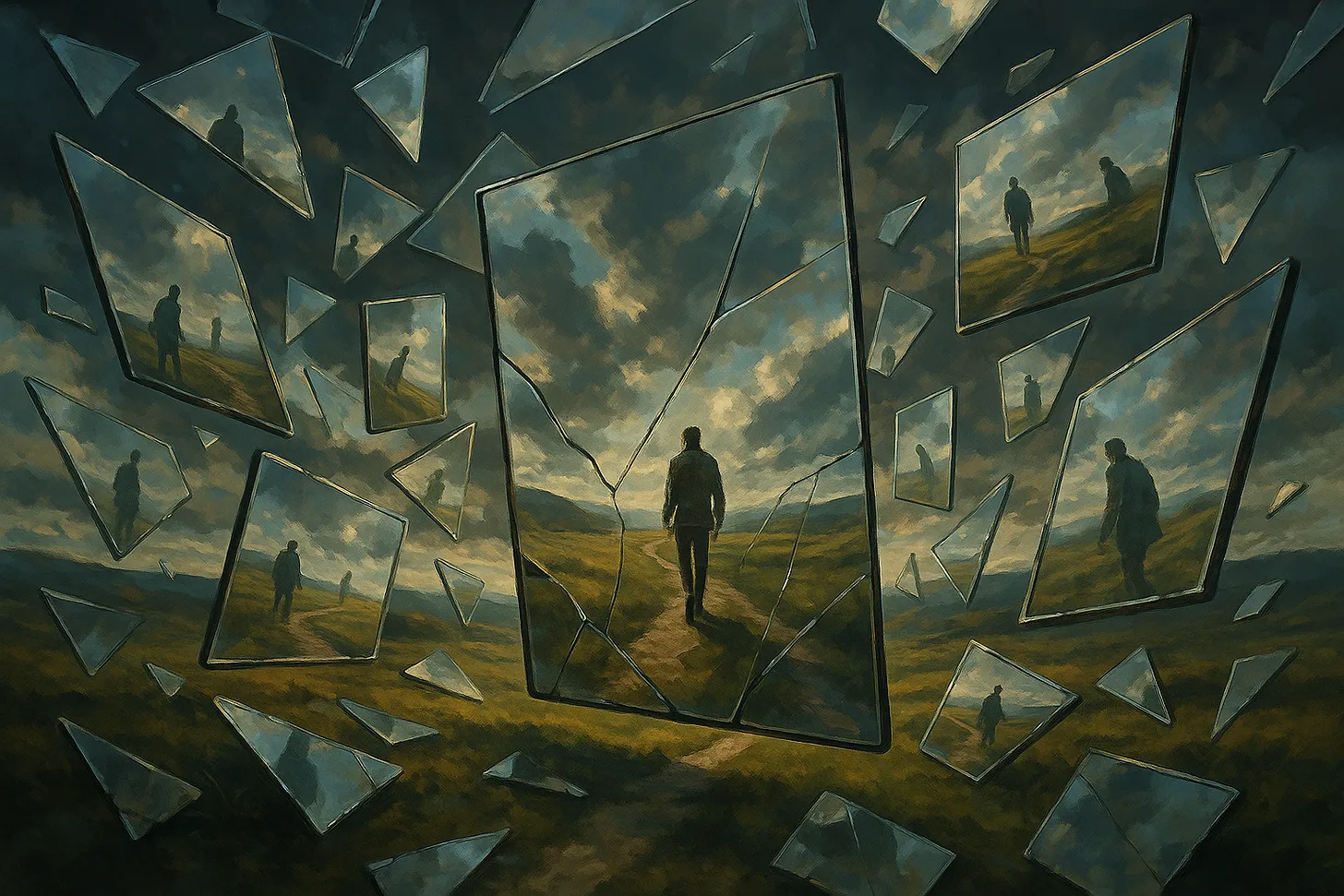
We live in an age where shock has become ritual, and narrative eclipses reality. Screens light up with the same story, the same images, the same grief — but beneath the spectacle lies a deeper machinery at work. To see it is unsettling; to name it is often branded insensitive. Yet it matters, because if nothing else, our task is to discern what is real from what is staged, and to remember that even illusions shape the world we walk through.