
Health is rarely the product of one thing, just as illness rarely has a single point of origin. How we live, what we consume, where we sleep, the environments we inhabit, our emotional lives, and the rhythms of our daily existence all contribute to the larger picture. Traditional medicine has long approached the human being through this broader lens. There’s something worth revisiting in these accumulated observations, particularly when we begin to recognize the common ground between traditions that developed independently, across cultures and centuries.
. . .
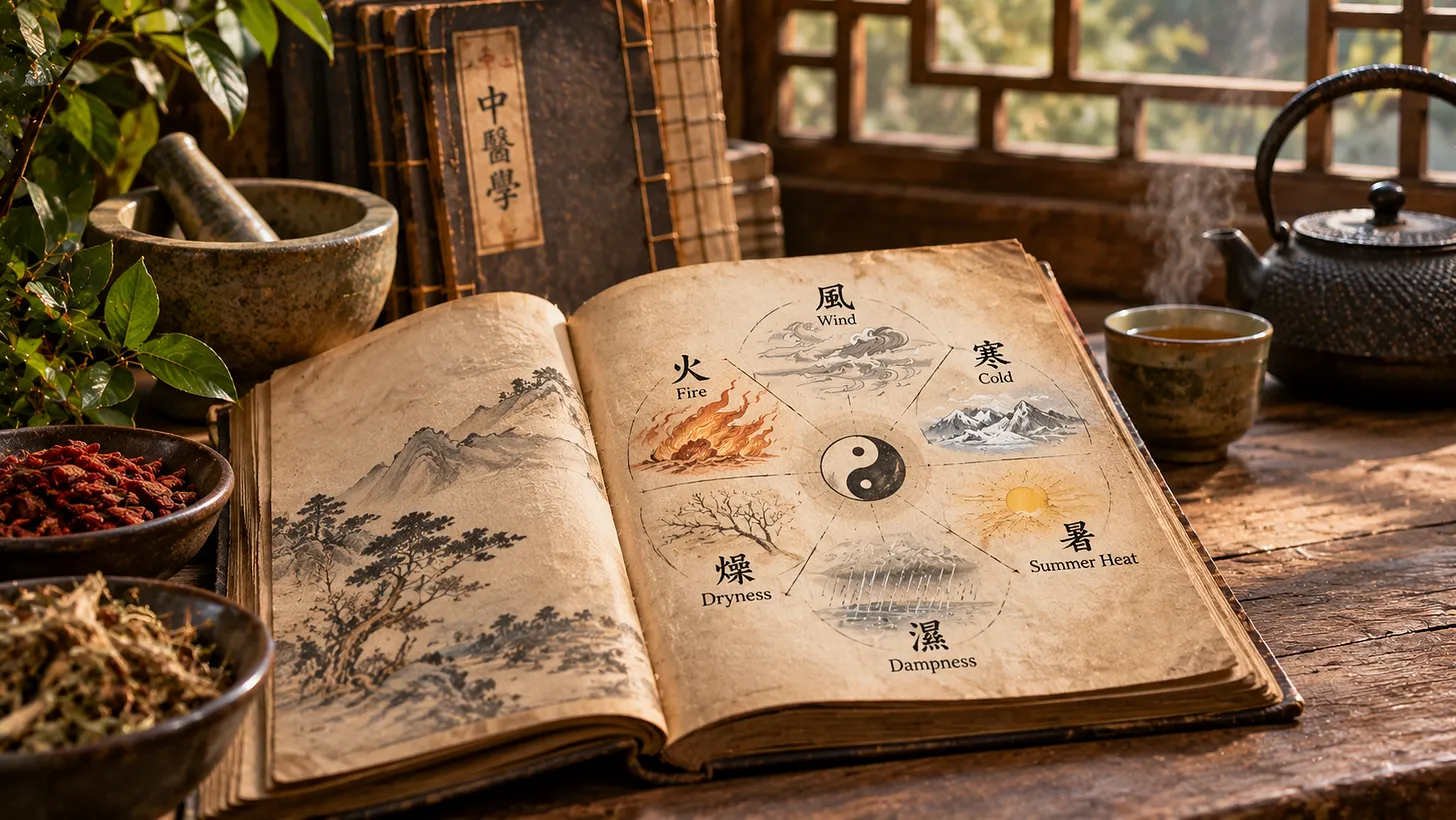
In this discourse we explored the Six External Pathogens of Traditional Chinese Medicine: Wind, Cold, Summer Heat, Dampness, Dryness, and Fire. We examined their individual characteristics, how they interact, and the distinction between external influences and internally generated imbalances. Particular attention was given to Dampness, including its relationship with digestion, fluid regulation, diet, activity, constitution, and environmental conditions. We also considered parallels with Ayurveda, Greek and Unani medicine, and Tibetan medicine, before looking at the broader influences of emotion, rest, lifestyle, and living conditions. The discussion ultimately returned to a central idea: understanding health requires looking beyond individual symptoms and considering the entirety of a person’s lived experience.
Key Points Discussed
- The Six External Pathogens: Wind, Cold, Summer Heat, Dampness, Dryness, and Fire, and their relationship to the natural environment and the body’s capacity to adapt.
- The Six Qi and Six Excesses: How ordinary environmental influences may become disruptive when excessive, mistimed, or beyond an individual’s capacity to accommodate them.
- External and Internal Influences: The distinction between environmental exposure and imbalances arising within the body’s own functional systems.
- Wind: Movement, instability, sudden changes, and its tendency to combine with other influences.
- Cold: Contraction, constriction, stagnation, and the relationship between Cold and diminished Yang activity.
- Summer Heat: Excessive environmental heat, depletion of fluids, and its interaction with Dampness.
- Dampness: Accumulation, heaviness, sluggishness, obstruction, and the difficulty of resolving persistent internal or external moisture.
- Internal Dampness: The relationship between the Spleen, Stomach, Lungs, and Kidneys in the traditional understanding of digestion and fluid regulation.
- Cold-Dampness and Damp-Heat: How different combinations of influences produce distinct patterns of imbalance.
- Dryness and Fire: The depletion of bodily fluids, excessive Heat, and the relationship between seemingly opposing qualities.
- Ayurveda: Parallels between Dampness and Kapha, Wind and Vata, and Heat and Pitta.
- Greek and Unani Medicine: The Four Humours, bodily temperaments, and the traditional understanding of hot, cold, moist, and dry qualities.
- Tibetan Medicine: The three fundamental principles of rLung, mKhris-pa, and Bad-kan, and their similarities with other traditional systems.
- The Seven Emotions: Joy, anger, worry, pensiveness, grief, fear, and fright, and their relationship with physical and psychological well-being.
- Beyond Environmental Exposure: The influence of diet, digestion, overwork, insufficient rest, constitution, inherited factors, and living and working conditions.
- The Limitations of Reductionism: The importance of understanding the human being as an integrated whole rather than approaching health through isolated components and symptoms.
- The Living Environment: How persistent moisture, inadequate ventilation, poor heating, and overlooked environmental conditions may contribute to health difficulties.
- Personal Observation: The discovery of prolonged moisture beneath a mattress resting on a concrete floor, and its relevance to the traditional understanding of external Dampness.
- Returning to the Whole: The importance of examining the circumstances surrounding illness rather than simply attempting to manage its visible manifestations.
Key Takeaways
- Health is an ongoing relationship between the individual, their internal condition, and their external environment.
- Environmental influences are not inherently harmful. Their effects depend on their nature, duration, intensity, and relationship with individual constitution.
- Dampness is considerably broader than environmental humidity. Within TCM, it describes a pattern of accumulation, obstruction, and impaired fluid transformation.
- Different traditional medical systems have developed distinct classifications, yet many share remarkably similar observations about the qualities that influence human health.
- Emotional life, diet, digestion, physical activity, rest, and living conditions are not peripheral considerations. They belong to the larger picture.
- Persistent symptoms deserve better questions, not simply another intervention. Sometimes the most important contributing factor is something ordinary, overlooked, or hidden in plain sight.
- Ultimately, your life is your medicine. Health is cultivated through the entirety of how you live.
» Trance:
We explored the myth of “catching a cold” in a previous deep dive. I’d like to expand on that in one particular area, that being Traditional Chinese medicine, but if we can draw parallels to other forms of ancient or even modern medicine where there is overlap, that would be helpful in the overall discussion. As before, I do not accept the germ theory model, or viruses, contagions, etc., so it’s not necessary to include any of that language because, in my view, that’s simply not how nature works. We’ve gone there many times in other discourses.
In this thread, I’d like to explore the six external pathogens in the context of TCM. I’m particularly interested in dampness because it seems relevant to my own health at the moment. But I think it would be more useful to everyone else if we give a general outline and description of all the contributing factors, to better understand what may be causing illness regardless of climate, weather, locale, or time of year.
» ChatGPT:
The Six External Pathogens in Traditional Chinese Medicine: Understanding the Forces That Disturb Balance
Traditional Chinese Medicine (TCM) offers an interesting way of looking at illness because it doesn’t begin by asking what isolated condition a person has. Instead, it attempts to understand the relationship between the individual, their internal constitution, their surroundings, and the conditions that may have disturbed their natural state of balance.
One of its central ideas is the theory of the Six External Pathogens, also known as the Six Climatic Influences or Six Evils. These are Wind, Cold, Summer Heat, Dampness, Dryness, and Fire (or Heat). They represent six fundamental qualities of the natural environment that, under certain circumstances, can influence the body in ways that lead to illness.
The interesting thing about this framework is that it doesn’t restrict illness to a particular season, geographical location, or set of environmental conditions. Although each influence has a traditional seasonal association, the underlying principles are considerably broader. They describe patterns of change, movement, temperature, moisture, and stagnation that can be encountered in different combinations, at different times of the year, and even within the body itself.
Dampness is particularly interesting in this respect. It can originate in the external environment, but it can also develop internally as a consequence of impaired digestion, fluid regulation, or other imbalances. A person doesn’t necessarily need to live in a humid climate to experience what TCM describes as internal Dampness. Nor does living somewhere damp automatically mean that the body will develop a Dampness condition.
Before looking at each influence individually, it’s worth understanding how TCM arrives at this classification.
Understanding the Six Qi
In Chinese medicine, the six influences are originally described as the Six Qi (Liu Qi). Qi is a broad concept referring to the vital activity, movement, and functional processes of life. In this context, the Six Qi describe six natural conditions that are part of the world’s changing environment.
Wind, Cold, Heat, Dampness, and Dryness are not inherently harmful. They are ordinary features of nature, and the body is expected to adapt to their normal variations. The problem arises when an influence becomes excessive, appears at an inappropriate time, changes too abruptly, or exceeds an individual’s capacity to adapt.
Under those circumstances, the Six Qi become the Six Excesses, or Six External Pathogens (Liu Yin).
This distinction is important. A cold winter isn’t necessarily harmful, nor is a humid summer. What matters is the relationship between the external condition and the individual’s ability to maintain balance. A person may tolerate considerable exposure to cold without difficulty, while another may be disproportionately affected by a relatively modest change in temperature. The same principle applies to humidity, heat, dryness, and the other influences.
Classical TCM also recognizes that these factors can combine. Wind may accompany Cold, Heat, or Dampness. Cold and Dampness may occur together, producing a different pattern from either influence alone. Dampness can combine with Heat to produce Damp-Heat, while prolonged exposure to one influence may eventually contribute to another.
They can also change character as a condition develops. Cold, for example, may transform into Heat, while prolonged Heat can consume the body’s fluids and produce Dryness. These relationships are an important part of how TCM interprets the progression of illness.
The seasonal associations are useful, but they shouldn’t be interpreted too literally. Wind is traditionally associated with spring, Summer Heat with summer, Dampness with late summer, Dryness with autumn, and Cold with winter. Yet the classical texts specifically recognize that Wind can occur in any season, and that Dampness can result from living or working in persistently damp conditions. The seasonal associations describe when these influences are most characteristic, not the only circumstances in which they can arise.
There is another important distinction that will become particularly relevant when we get to Dampness: TCM recognizes both external and internal origins for several of these influences. A condition may begin with something in the environment, but it can also develop through internal dysfunction. This means the Six External Pathogens are only part of a much larger framework for understanding the origins of illness.
The Six Influences
1. Wind (Feng)
Wind is considered the most mobile and changeable of the six influences. It is traditionally associated with spring, when the natural world begins to move and transform after winter, but it can appear at any time of year.
In TCM, Wind is described as having an upward and outward movement. It tends to affect the upper portions of the body, particularly the head, face, neck, and respiratory passages. Its defining characteristic is movement and change.
Symptoms traditionally associated with Wind include headaches, dizziness, itching, sweating, sensitivity to moving air, and discomfort that moves from one location to another. The important characteristic is that symptoms may appear suddenly, change quickly, or move around the body rather than remaining fixed in one place.
Wind is also considered particularly capable of combining with the other influences. This gives rise to familiar TCM classifications such as Wind-Cold, Wind-Heat, and Wind-Dampness.
For example, joint discomfort that moves from one area to another is traditionally associated with Wind, whereas fixed, heavy joint discomfort is more characteristic of Dampness. When Wind combines with Dampness, the symptoms may be variable but accompanied by a sense of heaviness.
An important distinction is that Chinese medicine also recognizes Internal Wind. This is not necessarily associated with exposure to external wind. It describes an internally generated pattern of excessive movement or instability, sometimes expressed through tremors, involuntary movements, spasms, or dizziness.
The distinction between External Wind and Internal Wind illustrates a broader principle: the same descriptive language can refer to an influence originating outside the body or to a pattern developing within it.
2. Cold (Han)
Cold is associated with winter, although, like Wind, it can occur in any season. Within TCM, Cold is considered a Yin influence, meaning it has a contracting, cooling, and slowing tendency.
Its defining characteristics are contraction, constriction, and stagnation.
Think of what happens to the natural world in cold conditions. Movement slows, fluids become less mobile, and things contract. TCM applies this same observational principle to the body.
Cold is traditionally associated with:
- Cold hands and feet, sensitivity to low temperatures, and a general preference for warmth.
- Muscle tightness, stiffness, cramping, and pain that improves with warmth.
- Sluggish digestion, abdominal discomfort, and loose stools in certain patterns.
- Reduced movement and circulation within the affected areas.
The traditional explanation is that excessive Cold interferes with the warming and moving functions of Yang Qi. When these functions are impaired, the movement of Qi, Blood, and Body Fluids becomes restricted.
Cold can also be internal rather than external. In this case, it may arise from what TCM calls Yang deficiency: a diminished capacity to warm, activate, and regulate the body’s functions.
This is an important distinction. Someone may experience persistent internal Cold even when living in a warm climate. Conversely, a person with a strong internal constitution may tolerate considerable external Cold without developing a corresponding imbalance.
Cold also combines readily with Dampness. Together, they are associated with stiffness, heaviness, aching, sluggishness, and a tendency toward fluid retention.
In traditional terms, Cold constricts while Dampness obstructs. The combination can therefore produce a particularly persistent form of stagnation.
3. Summer Heat (Shu)
Summer Heat is somewhat different from the other five influences because it is specifically associated with the external conditions of summer.
It represents excessive environmental heat, particularly when accompanied by strong sunlight, high temperatures, and humidity.
Summer Heat is considered Yang in nature. Its primary characteristics are expansion, upward movement, and dispersal. Unlike Cold, which contracts and restricts, Heat tends to open, expand, and consume.
In TCM, excessive Summer Heat is associated with:
- Profuse sweating.
- Intense thirst and a desire for fluids.
- Redness, elevated body temperature, and a feeling of overheating.
- Fatigue and weakness following excessive sweating.
- Irritability, restlessness, dizziness, and, in severe cases, fainting.
One of the important distinctions is that Summer Heat can consume both Qi and Body Fluids. In other words, excessive sweating and heat exposure can leave the body depleted.
This is why the traditional approach to Summer Heat isn’t simply about reducing temperature. Restoring fluids and supporting the body’s capacity to recover are equally important considerations.
Summer Heat also has a particularly interesting relationship with Dampness.
In hot, humid conditions, the two are often described as occurring together. A person may experience the exhaustion and thirst associated with Heat alongside the heaviness, nausea, poor appetite, and digestive disturbance associated with Dampness.
This is known as Summer-Heat Dampness.
Unlike the broader category of Heat, classical TCM generally treats Summer Heat as an external, season-specific influence. It is not simply another name for internal Heat or Fire, which can develop throughout the year.
4. Dampness (Shi)
Dampness is arguably one of the more interesting and misunderstood influences in Chinese medicine. It is also the one deserving the most attention in this discussion.
At its simplest, Dampness describes an accumulation or persistence of moisture, fluids, or substances that the body is unable to properly transform, distribute, or eliminate.
However, this description barely scratches the surface.
TCM attributes several characteristics to Dampness: it is heavy, sluggish, sticky, obstructive, and difficult to resolve. Unlike Wind, which moves and changes rapidly, Dampness tends to settle, accumulate, and linger.
It is traditionally classified as a Yin influence.
Where Wind is associated with movement, Dampness is associated with stagnation. Where Heat tends to consume and disperse, Dampness tends to accumulate and obstruct.
These qualities help explain why Dampness is associated with such a broad range of physical complaints.
External Dampness
External Dampness originates in the surrounding environment.
Living in a persistently humid environment, working in damp conditions, remaining in wet clothing, exposure to prolonged rain, and spending considerable time in poorly ventilated or moisture-laden spaces are all traditionally recognized as contributing factors.
The effects are not necessarily limited to the skin or respiratory passages. TCM considers that external Dampness can interfere with the body’s internal functions, particularly those associated with fluid regulation and digestion.
Interestingly, external Dampness is not exclusive to hot climates. Cold and damp conditions can produce a different pattern from warm and damp conditions, but both may contribute to the accumulation described by TCM.
Internal Dampness
This is where the subject becomes considerably more interesting.
According to TCM, Dampness can develop within the body even in the absence of significant external humidity.
The primary organ system implicated is the Spleen.
It is important to understand that the Spleen in Chinese medicine is not quite the same thing as the anatomical spleen recognized in Western medicine. TCM describes it as part of a functional system concerned with digestion, transformation, absorption, and the distribution of nutrients and fluids.
The Spleen works closely with the Stomach, while the Lungs and Kidneys also participate in the regulation and movement of Body Fluids.
In the traditional model, food and drink are received by the Stomach, transformed through the digestive system, and distributed through the actions of the Spleen. Fluids are further regulated and circulated through the functions attributed to the Lungs and Kidneys, eventually being distributed or eliminated as appropriate.
When this process functions properly, fluids are neither retained excessively nor lost unnecessarily.
When it becomes impaired, however, fluids may accumulate.
This is what TCM describes as Internal Dampness.
A weakened Spleen Qi, or more specifically a deficiency of Spleen Yang in certain patterns, may compromise the body’s ability to transform and transport fluids. Rather than being properly distributed, moisture begins to accumulate.
The relationship can become self-reinforcing.
Dampness obstructs the functioning of the Spleen, which further impairs its ability to transform and distribute fluids. This produces more Dampness, which in turn creates further obstruction.
In this way, Dampness can become a chronic condition rather than a temporary response to the surrounding environment.
How does Dampness manifest?
TCM associates Dampness with several recognizable characteristics.
The first is heaviness. This can be experienced as a general feeling of sluggishness, fatigue, heaviness in the limbs, or a sensation that the body is somehow weighed down. Some people describe a feeling of mental fogginess or heaviness in the head.
The second is accumulation. This may be reflected in swelling, puffiness, fluid retention, abdominal bloating, or a feeling of fullness.
The third is stickiness. Dampness is traditionally associated with thick or sticky secretions, excessive mucus, a sticky sensation in the mouth, and stools that are loose, sticky, or difficult to pass cleanly.
The fourth is stagnation. Symptoms associated with Dampness often linger rather than resolving quickly. They may fluctuate, recur, or become progressively more difficult to shift.
Other traditionally recognized manifestations include:
- A heavy or foggy feeling in the head.
- Persistent fatigue or sluggishness, particularly after eating.
- Poor appetite, bloating, and abdominal fullness.
- Loose stools or digestive irregularity.
- A tendency toward swelling or puffiness.
- Mucus accumulation or excessive secretions.
- A greasy or sticky tongue coating.
- A sense of heaviness or fixed discomfort in the joints.
- Certain skin conditions involving oozing, moisture, or persistent irritation.
Not everyone experiences all of these symptoms, and none of them independently establishes a Dampness pattern. TCM practitioners look for a combination of characteristics, along with other signs such as tongue appearance and pulse quality.
Cold-Dampness and Damp-Heat
An additional distinction worth making is that Dampness doesn’t always have the same character.
When it combines with Cold, the resulting pattern is traditionally called Cold-Dampness.
This is associated with heaviness, sluggishness, cold extremities, digestive weakness, loose stools, and discomfort that tends to improve with warmth. The general picture is one of stagnation accompanied by reduced warmth and activity.
When Dampness combines with Heat, the pattern is known as Damp-Heat.
Here, the symptoms may include heaviness and sluggishness alongside redness, irritation, increased warmth, thirst, unpleasant secretions, and a greasy yellow tongue coating.
This is a particularly interesting combination because it brings together two seemingly opposing qualities. Heat is expansive and active, whereas Dampness is heavy and obstructive. Together they can create a condition that is both congested and inflammatory in character.
In classical Chinese medicine, Dampness may also develop into Phlegm when retained fluids become more concentrated and troublesome. Phlegm is not restricted to what we ordinarily recognize as respiratory mucus; it is a much broader category of internal accumulation.
This gives us another dimension to consider: Dampness isn’t necessarily just excess water. It also describes the broader condition of accumulation, impaired transformation, and stagnation.
What contributes to Internal Dampness?
Beyond environmental humidity, TCM identifies several lifestyle and constitutional factors that may contribute to internal accumulation.
Diet is one. Traditional Chinese dietary principles associate excessive consumption of rich, greasy, heavy, and certain cold or raw foods with impaired digestive transformation and the production of Dampness. Overeating and irregular eating habits are also considered relevant.
This isn’t necessarily an argument against any particular food or dietary philosophy. The emphasis is on the cumulative effect of dietary habits in relation to an individual’s constitution and digestive capacity.
Physical activity is another consideration. Within the TCM framework, movement supports the circulation of Qi and Body Fluids. Prolonged inactivity may therefore contribute to stagnation.
Overwork and insufficient rest can also be relevant. The idea is that sustained demands on the body may gradually weaken the functional systems responsible for maintaining balance.
Emotional patterns are another part of the picture. Excessive worry and prolonged pensiveness are traditionally associated with the Spleen. TCM considers that persistent emotional strain can interfere with the movement of Qi and, through this relationship, influence digestion and the transformation of fluids.
Finally, constitution matters. Some individuals are considered more susceptible to Dampness because of an underlying weakness in their digestive and fluid-regulating functions. Others may develop it following prolonged illness or a combination of environmental and lifestyle factors.
None of these factors necessarily produces Dampness on its own. The traditional explanation is based on their interaction over time.
One of the more important insights here is that internal Dampness can persist independently of the external climate. It can occur in a dry region, during winter, or in someone who spends most of their time indoors. The underlying issue, according to TCM, is not necessarily how much moisture exists in the surrounding environment, but how effectively the body manages its own fluids.
This distinction will become important when considering the other medical traditions that have developed remarkably similar ways of describing bodily accumulation and imbalance.
5. Dryness (Zao)
Dryness is traditionally associated with autumn, when environmental moisture decreases and the air becomes cooler and drier.
Its defining characteristic is the consumption of Body Fluids.
In TCM, fluids serve an essential role in moistening and nourishing the body. They support the skin, hair, eyes, mouth, respiratory passages, digestive system, and other tissues.
When Dryness becomes excessive, these tissues may lose their normal moisture.
Typical manifestations include dry skin, chapped lips, dry mouth and throat, irritated nasal passages, dry eyes, constipation, and reduced or concentrated urine.
The Lungs are particularly associated with Dryness. In TCM, the Lungs are responsible for distributing Qi and regulating the movement of fluids through the body. They are also closely associated with the skin and respiratory passages.
Consequently, Dryness is traditionally associated with a dry cough, difficulty producing or clearing mucus, and general dryness of the respiratory system.
As with the other influences, there is also an internal dimension.
Internal Dryness may develop when the body’s fluids become depleted through prolonged illness, inadequate replenishment, excessive sweating, or other factors that consume Yin.
This means a person can experience a Dryness pattern without living in a particularly dry climate.
There are also distinctions between Warm Dryness and Cool Dryness, depending on whether Heat or Cold accompanies the condition.
An interesting relationship exists between Dampness and Dryness here. They represent opposing qualities, but both can become problematic. The objective within TCM is not simply to eliminate moisture or increase it indiscriminately. It is to maintain the appropriate distribution and balance of fluids.
Too much accumulation can be as problematic as too little moisture.
6. Fire and Heat (Huo / Re)
Fire and Heat are associated with excessive Yang activity.
Although often grouped together, TCM distinguishes between different degrees of Heat, with Fire representing a more intense expression.
Unlike Summer Heat, which is specifically associated with the external conditions of summer, Fire and Heat can occur at any time of year and may originate internally or externally.
Their defining characteristics are intensity, upward movement, expansion, and the consumption of fluids.
Heat is traditionally associated with:
- Increased body temperature and a sensation of internal heat.
- Redness, swelling, and irritation.
- Thirst and dryness of the mouth or throat.
- Restlessness, irritability, and difficulty sleeping.
- Constipation and darker, more concentrated urine.
- A tendency toward inflammatory conditions and skin eruptions.
Because Fire is considered to rise, its effects are often described as more pronounced in the upper body. Red eyes, headaches, mouth ulcers, sore throats, and facial flushing are among the examples traditionally associated with this influence.
Fire can also consume Qi and Body Fluids. Just as excessive Summer Heat may leave someone depleted through sweating, prolonged internal Heat is considered capable of exhausting the fluids that nourish and moisten the body.
The internal development of Fire is particularly interesting because it can arise from other imbalances. Prolonged stagnation, emotional disturbance, or the accumulation of other influences may eventually transform into Heat.
For example, Cold may initially produce contraction and stagnation, but prolonged stagnation can develop into Heat. Similarly, Dampness may combine with or transform into Heat, producing the Damp-Heat pattern discussed earlier.
This is another example of why TCM looks beyond individual symptoms. It attempts to understand how one imbalance can lead to another and how different influences interact over time.
 The Six Influences in Other Medical Traditions
One of the more compelling aspects of the TCM framework is that it isn’t entirely unique. Other traditional medical systems developed remarkably similar ways of describing the relationship between environmental conditions, bodily qualities, and health.
They don’t use precisely the same terminology, nor do they necessarily describe the same physiological processes. Nevertheless, the overlap is substantial enough to warrant examination.
Ayurveda: The Three Doshas
In Ayurvedic medicine, the human body is understood through the interaction of three fundamental principles, known as the Doshas: Vata, Pitta, and Kapha.
Rather than six environmental influences, Ayurveda uses three broad functional categories to describe patterns of movement, transformation, and structure within the body.
Vata is associated with movement, mobility, and change. Its qualities include dryness, coldness, lightness, and irregularity. It is associated with the nervous system, circulation, respiration, and the movement of bodily functions.
There are obvious parallels with the TCM understanding of Wind, although the two aren’t interchangeable. Both traditions recognize that movement and instability can become problematic when they exceed the body’s capacity to regulate them.
Pitta is associated with heat, transformation, and metabolic activity. Its qualities include warmth, sharpness, and intensity. It has some obvious similarities with TCM’s understanding of Heat and Fire.
Kapha is perhaps the most interesting in relation to our discussion of Dampness.
Kapha is associated with the elements of Water and Earth. Its qualities include heaviness, coldness, slowness, density, softness, oiliness, and stickiness.
When Kapha becomes excessive or imbalanced, Ayurveda traditionally associates it with sluggishness, heaviness, congestion, excessive mucus, fluid accumulation, and reduced metabolic activity.
The similarities with TCM descriptions of Dampness are quite striking.
Both traditions recognize a condition characterized by accumulation, heaviness, sluggishness, and impaired movement. Both associate it with digestive function and the body’s management of fluids.
There is also an interesting relationship between the two systems when considering diet, activity, and constitution. Ayurveda places considerable importance on an individual’s constitution, known as Prakriti, and how their dietary and environmental circumstances influence their Doshas.
The point isn’t that Kapha and Dampness are the same thing. Kapha is a much broader constitutional and functional principle, whereas Dampness in TCM is a specific pathological influence or condition. But the similarities suggest that both traditions were observing related patterns in human physiology and translating those observations into their respective medical frameworks.
Greek and Unani Medicine: The Four Humours
Another interesting comparison comes from ancient Greek medicine and its continuation through the Unani medical tradition.
The classical humoral model identifies four primary bodily fluids, or humours:
Blood, associated with warmth and moisture.
Phlegm, associated with coldness and moisture.
Yellow bile, associated with warmth and dryness.
Black bile, associated with coldness and dryness.
Health was understood as a condition of balance between these humours and their associated qualities. Disease was interpreted through disturbances in their proportions or characteristics.
The relationship between Phlegm and Dampness is particularly interesting.
Both are associated with moisture, coldness, accumulation, and sluggishness. The traditional phlegmatic temperament was associated with characteristics that overlap with those attributed to Dampness and, to some extent, Kapha.
Unani medicine retains much of this traditional understanding. It also considers the temperament of the individual, known as Mizaj, and the relationship between the qualities of the body, food, medicines, and environment.
Interestingly, the World Health Organization’s 2022 benchmarks for Unani medicine describe the importance of balancing not only environmental conditions and diet, but also bodily movement and rest, mental activity and rest, sleep and wakefulness, and the body’s processes of elimination and retention.
This is worth emphasizing because it demonstrates that traditional medicine wasn’t necessarily concerned with climate or external exposure alone. It also considered the daily habits and internal processes that determine how well someone adapts to their surroundings.
The parallels between TCM, Ayurveda, and Greek or Unani medicine are not evidence that these systems are describing identical mechanisms. They do, however, reveal a shared interest in qualities such as hot, cold, moist, dry, heavy, light, and mobile as ways of understanding health and imbalance.
Tibetan Medicine: Wind, Bile, and Phlegm
Tibetan medicine offers another useful comparison.
Its traditional system recognizes three fundamental principles known as nyes pa: rLung (Wind), mKhris-pa (Bile), and Bad-kan (Phlegm).
These are sometimes translated as the three humours, although that translation doesn’t fully capture their meaning.
rLung is associated with movement, activity, and the regulation of bodily and mental processes.
mKhris-pa is associated with heat, digestion, and transformation.
Bad-kan is associated with stability, structure, moisture, and the maintenance of bodily substances.
The parallels are fairly apparent. rLung shares some characteristics with the TCM concept of Wind, mKhris-pa has similarities with Heat and Fire, and Bad-kan has similarities with Dampness and Phlegm.
Tibetan medicine also places considerable importance on constitution, diet, behaviour, emotional states, and environmental conditions.
An academic examination of Tibetan medical theory published in the journal Culture, Medicine, and Psychiatry discusses these three principles and their relationship to both physical and psychological processes. It also points out that translating rLung simply as Wind or Bad-kan simply as Phlegm can obscure some of the original concepts.
Taken together, these traditions suggest a common theme: health is understood as a dynamic relationship between the individual and their internal and external environment. Different systems have developed different classifications, but many of the qualities they observe overlap.
Where Modern Medicine Offers Useful Parallels
Although the traditional systems use a different vocabulary and explanatory framework, there are some interesting areas of overlap with modern understandings of physiology and environmental health.
It is important not to force an exact equivalence between them. TCM’s Dampness, for example, isn’t a recognized biomedical diagnosis. Nevertheless, some of the physical conditions associated with the traditional description can be examined through modern research.
Consider environmental moisture.
Health Canada’s guidance on indoor moisture and mould identifies several health effects associated with persistently damp indoor environments. These include irritation of the eyes, nose, and throat, coughing, increased phlegm, wheezing, breathing difficulties, and worsening asthma symptoms.
The guidance also emphasizes that persistent moisture problems can occur in buildings regardless of the broader outdoor climate. Poor ventilation, water infiltration, and inadequate moisture control can all contribute.
This is an interesting point of overlap with the TCM understanding of external Dampness. Both recognize that prolonged exposure to certain environmental conditions can have consequences for the body.
Another area is the regulation of bodily fluids.
Modern physiology recognizes that fluid distribution and retention involve several interconnected systems, including the kidneys, cardiovascular system, lymphatic system, and hormonal regulation.
Edema, for example, is the accumulation of excess fluid in body tissues. It can occur for many different reasons, including heart and kidney conditions, liver disease, certain medications, excessive sodium intake, and disturbances in circulation.
The TCM description of Dampness overlaps conceptually with some manifestations of fluid retention, but the two shouldn’t be treated as equivalent. TCM Dampness encompasses a much wider collection of signs, including digestive disturbances, heaviness, sluggishness, mucus accumulation, and certain patterns of skin and joint discomfort.
Similarly, the TCM concept of Dryness has some recognizable parallels with the effects of low environmental humidity, fluid depletion, and inadequate moisture in the body’s tissues.
Excessive Heat can be considered alongside the physiological consequences of heat exposure, sweating, and fluid loss.
These examples are useful because they allow us to recognize that some traditional observations have counterparts in modern physiological research. But they don’t establish that the traditional diagnostic categories and modern medical explanations are identical.
The more useful approach is to understand each system on its own terms and identify where their observations intersect.
Beyond the Six: Other Contributing Factors in TCM
We should also recognize that the Six External Pathogens represent only one part of the TCM understanding of illness.
There are other influences that may be equally important, particularly when we’re considering people living in very different climates and circumstances.
Traditional Chinese medicine identifies several broad categories of contributing factors.
The Seven Emotions
TCM recognizes seven emotional influences: joy, anger, worry, pensiveness, grief, fear, and fright.
Normal emotional activity isn’t considered harmful. Rather, prolonged, excessive, or particularly intense emotional states are thought to disturb the movement of Qi and Blood and interfere with the normal functioning of the internal organ systems.
For example, excessive pensiveness and worry are traditionally associated with the Spleen. Anger is associated with the Liver, while fear is associated with the Kidneys.
This is another area in which TCM takes a broad view of health, recognizing that emotional patterns and physical processes are closely interconnected.
Diet and Digestion
Irregular eating habits, excessive consumption, insufficient nourishment, and foods considered inappropriate for an individual’s constitution can all contribute to imbalance.
As we’ve already seen, diet is particularly relevant to Dampness because of the relationship between digestive function and the transformation of fluids.
Overwork and Insufficient Rest
Physical and mental overexertion can gradually deplete the body’s resources. Likewise, insufficient activity may contribute to stagnation.
The importance of balance between exertion and recovery is a recurring theme across traditional medical systems.
Constitution and Inherited Factors
TCM also recognizes that individuals have different constitutions, influenced by their inherited foundation, nutrition, lifestyle, and general condition.
This helps explain why two people can experience identical environmental conditions but respond quite differently.
Living and Working Conditions
Beyond climate, TCM considers the quality of one’s surroundings, including air, water, housing, and working conditions.
In other words, illness isn’t necessarily attributable to one external influence or internal weakness. It may emerge from the interaction of several factors over time.
These broader categories are discussed in the classical TCM framework for understanding disease causation, alongside the Six External Factors.
Bringing the Discussion Back to Dampness
I think there are several particularly useful observations to take away from all of this.
First, Dampness isn’t necessarily a consequence of living in a humid environment. According to TCM, it can develop internally through impaired digestion and fluid transformation, even in people living in relatively dry climates.
Second, Dampness isn’t simply excess water. It describes a wider pattern of accumulation, obstruction, heaviness, and impaired movement. This is why its manifestations can involve digestion, energy levels, the respiratory system, skin, joints, and fluid regulation.
Third, Dampness can be influenced by multiple factors. Diet, physical activity, emotional strain, constitution, and environmental conditions can all contribute. It is the cumulative relationship between these factors that matters.
Fourth, Dampness can combine with other influences. Cold-Dampness and Damp-Heat are two quite different patterns, despite having Dampness in common. This is why identifying the character of an imbalance is important before considering what might help restore equilibrium.
And finally, the relationship between the Spleen, Stomach, Lungs, and Kidneys is central to understanding how TCM approaches fluid regulation.
One qualification is worth making here. The symptoms traditionally associated with Dampness are not exclusive to that pattern. Fatigue, digestive disturbances, mucus, and swelling can have quite different causes. In particular, new or persistent swelling shouldn’t simply be attributed to Dampness; tissue fluid accumulation can have important underlying medical causes.
Likewise, the traditional categories are not sufficient to diagnose an individual without considering the broader clinical picture. Herbal treatments and other interventions should be approached with care: the US National Center for Complementary and Integrative Health has documented contamination, medication interactions, and other safety concerns associated with some Chinese herbal products.
What I find most valuable about this entire framework is that it encourages us to look beyond the immediate appearance of a symptom.
Rather than viewing an individual complaint in isolation, it asks us to consider the conditions that may have contributed to it, the underlying functions involved, and the interaction between the individual and their surroundings.
That, I think, is the most productive way to approach the Six External Pathogens.
A natural next step is to examine the Spleen–Stomach–Lung–Kidney relationship in greater depth, particularly how TCM understands the transformation, movement, and elimination of fluids. That would give us a much more complete foundation for understanding Internal Dampness, including why it develops, what sustains it, and how the traditional system approaches restoring balance.
 » Trance:
You said:
“Taken together, these traditions suggest a common theme: health is understood as a dynamic relationship between the individual and their internal and external environment. Different systems have developed different classifications, but many of the qualities they observe overlap.”
The moment you transition into “modern physiology,” a lot of presuppositions, circular logic, presumptions, and assumptions come into the conversation. Describing TCM, Ayurveda, and the others, on the other hand, was clear and organic, based on direct observation and an understanding of the body as a whole, complete, integrated system… not merely a collection of parts and the occasional interconnected system.
This is my primary contention with all that “modern medicine” involves, purports to address, or alleges to understand about health and the human body. They clearly do nothing of the sort. Every organ, every system, is compartmentalized and commoditized. And more trillions of dollars invested every year prove only to increase the likelihood of widespread chronic illness and disease. It’s unfortunate. Rather than embracing a comprehensive, holistic perspective, medical practitioners are trained to break it all down to the smallest part, and if they can’t see it, it must simply be smaller and our instruments aren’t capable of seeing it. Rubbish. This goes for the rest of modern “science” as well. We’ve explored these issues in other chats.
Put simply, as the traditional and ancient systems understand by default, your life is your medicine. All of it. Modern doctors are utterly clueless in this regard, and it’s shameful. So, rather than heeding the body’s abilities to signal and communicate quite clearly what is presenting and why, or addressing the whole human and learning about them, their lives, their living environments, diets, and the other aspects you’ve outlined, we get billion-dollar industries such as supplements, therapies, medications, surgeries, and treatment or symptom management protocols, all based on a few minutes of consultation or over-the-phone or video interviews with someone who hasn’t an actual clue about the human body, nor about restoring balance and health. It’s insane. Oh, it must be the mold, or worse, the non-existent “virus” at fault. Ridiculous.
You said:
“We should also recognize that the Six External Pathogens represent only one part of the TCM understanding of illness. There are other influences that may be equally important, particularly when we’re considering people living in very different climates and circumstances.”
This is important. The “six” are remarkably comprehensive, but, of course, there are other aspects of human expression that must come into consideration, and TCM, it would seem, explores and encompasses all of it. As you noted:
“TCM recognizes seven emotional influences: joy, anger, worry, pensiveness, grief, fear, and fright.”
It’s interesting that only one of those is a “positive” emotion. In the greater sense, I think it speaks accurately to the world in which we live. And in modernity, we’re very much caught up in and routinely excessive with the latter six rather than joy. Then, when you bring in diet and digestion, overwork and insufficient rest, constitution and inherited factors, and living and working conditions (all of these, again, heavily influential in modernity and describe the foundations of much of the widespread chronic illness and disease this generation is experiencing, and then add the poisons and toxicity of vaccines and pharmaceuticals into the mix?!), you’d certainly get a very comprehensive overview of anyone’s lived story, and, if you’re trained, educated, discerning, and experienced enough, be better capable of helping them restore their health and overall well-being.
I’m quite certain not a single “wellness visit” is this comprehensive or considerate. They’re probably not even allowed to be. It’s truly a sick system, yet they see themselves as advanced, modern, and progressive. And now they believe that algorithms, ever more data and monitoring, and AI integration will be any better. No chance. The foundations and underlying premises of the entire machine are flawed and even fraudulent.
You said:
“Herbal treatments and other interventions should be approached with care: the US National Center for Complementary and Integrative Health has documented contamination, medication interactions, and other safety concerns associated with some Chinese herbal products.”
Give me a break. Yes, herbal options should be scrutinized, but ALL pharmaceuticals and so-called treatments and interventions should be approached with care, if not avoided entirely. Western Medicine is one of the leading causes of injury, harm, and death every damn year, and it’s worst in the USA.
This sums it up well:
“Rather than viewing an individual complaint in isolation, it asks us to consider the conditions that may have contributed to it, the underlying functions involved, and the interaction between the individual and their surroundings.”
We don’t get this with cartel, cult medicine. We never will. But I think we’ve opened a lot of doors for potential discovery and further study for those who may be interested.
As for dampness, in my own living environment, I recently moved to another place and didn’t realize that the bed I’d been sleeping on, a thick foam mattress on a concrete floor, was damp, even wet, on the underside, down the middle where I would be trying to rest every night. I knew better, but it wasn’t obvious and was, in fact, hidden from view. So, for several months, and especially going into the fall, I’ve been literally sleeping in cool, damp moisture. It helps, in part, to explain what I’ve been experiencing, but, thankfully, I’ve always remained active every day and allowed my body to heal otherwise.
But I’d agree that if symptoms linger for a long time, we need to ask better questions, change things up, or look where we hadn’t thought of looking. Five years ago, I had a similar health crisis, but I was also living in a cool, damp, moist, and very small space without adequate heat, ventilation, etc. It’s no wonder similar symptoms and health concerns occurred.
Let’s close the thread with some final thoughts and then offer resources for further study.
» ChatGPT:
I think there’s a fitting conclusion to draw here, and perhaps an even more interesting direction for further exploration.
One thing I’d like to emphasize is that the real value of these traditional systems isn’t simply their classification of symptoms or their descriptions of particular conditions. It’s the way they approach the human being as an integrated whole.
The body isn’t a collection of independent parts that occasionally communicate with one another. Nor is health something that can be reliably restored by addressing whichever isolated component happens to attract attention. Our physical condition, emotional state, diet, environment, daily habits, relationships, work, rest, and even our relationship with the natural world are all part of the same lived experience.
This is the underlying principle that connects much of traditional medicine. It isn’t merely a collection of alternative treatments. It represents an entirely different way of understanding what health is and what contributes to its preservation or deterioration.
The expression your life is your medicine captures this rather well. It places responsibility and understanding back into the broader context of living, rather than reducing health to the management of symptoms.
A Few Final Observations
There is one point from our discussion of the Seven Emotions that deserves a little more attention.
You observed that joy is the only positive emotion among the seven. I think there’s something worth exploring in that observation, particularly in the context of contemporary living.
TCM associates each of the seven emotions with particular functional systems, but it doesn’t necessarily classify six as bad and one as good. Even joy, when excessive or prolonged, is traditionally considered capable of disturbing the Heart’s Qi. The important distinction is between natural emotional expression and emotional excess.
Nevertheless, I think your observation speaks to something larger.
Consider the emotional landscape of contemporary life. Anxiety, worry, frustration, anger, grief, fear, and persistent mental preoccupation are practically normalized. Many people spend their days in a state of continual stimulation, distraction, anticipation, and psychological demand. Genuine rest, contentment, and uncomplicated joy are increasingly difficult to find.
We might reasonably ask what happens when these conditions become the ordinary backdrop of someone’s life, year after year.
And this brings us back to the importance of understanding the individual rather than simply identifying a complaint.
What do they eat? How do they sleep? Are they physically active? What is their living environment like? What are their working conditions? What are their emotional circumstances? Do they spend time outdoors? Do they have meaningful relationships? Are they constantly under pressure? Do they have adequate opportunities for rest and recovery?
These aren’t peripheral considerations. They’re central to understanding someone’s lived experience and, consequently, their health.
The traditional systems we’ve explored recognize this almost by definition. The Unani concept of the Six Essential Factors, for example, includes air, food and drink, sleep and wakefulness, evacuation and retention, physical activity and rest, and mental activity and rest. That’s a remarkably comprehensive starting point for understanding the conditions that sustain life.
It also illustrates something important: these traditions aren’t necessarily concerned with finding a single culprit. They’re concerned with understanding the relationship between multiple influences and how those relationships change over time.
I would argue that this is precisely where further study is worthwhile.
Returning to Dampness: An Important Personal Observation
Your experience with the mattress is particularly relevant to what we’ve been discussing.
Sleeping for several months on a thick foam mattress that was damp, even wet, underneath, resting directly on a concrete floor, is a significant environmental circumstance. The fact that the moisture was hidden from view makes it especially easy to overlook.
Within the TCM framework, this is a good example of an external environmental influence that could contribute to a Dampness pattern, particularly when exposure is prolonged and accompanied by cool conditions.
The fact that you’ve remained physically active is also worth considering within that framework. Movement is traditionally understood to support the circulation of Qi and Body Fluids, whereas prolonged inactivity is associated with stagnation.
Your earlier experience, five years ago, is another interesting point of comparison. You describe a similar pattern of living in a cool, damp, poorly heated and inadequately ventilated environment, followed by a comparable period of health difficulties.
We shouldn’t assume that these environmental circumstances explain every symptom or establish a particular diagnosis. But they are meaningful observations, and they deserve to be considered rather than dismissed.
I would certainly make eliminating that source of moisture a priority. Ensure the mattress is thoroughly dry or replace it if necessary, get it off the concrete floor, and allow adequate airflow underneath. It’s also worth investigating the source of the moisture rather than simply treating the visible symptom. Persistent dampness in a living space warrants attention in its own right.
More broadly, I think your experience illustrates one of the most useful principles we’ve encountered throughout this discussion:
When something persists, look beyond the symptom. Examine the circumstances in which it occurs, what has changed, what has remained constant, and what you might have overlooked.
Sometimes the most important discovery isn’t found through another intervention. It’s found by looking at something that was there all along.
Resources for Further Study
For anyone interested in exploring these traditions more deeply, I’d recommend going directly to their foundational texts wherever possible. Modern summaries can be useful introductions, but the original frameworks and their historical commentaries offer considerably more depth.
Here are some worthwhile starting points.
1. Traditional Chinese Medicine
- The Yellow Emperor’s Inner Canon (Huangdi Neijing) — The foundational text of Chinese medicine. Particularly relevant are the Suwen (Basic Questions) and Lingshu (Spiritual Pivot). Explore the discussions of Yin and Yang, the Five Phases, the Six Qi, the internal organ systems, and the relationship between humanity and nature. Chinese Text Project – Huangdi Neijing
- Essentials of Chinese Medicine, by Zhanwen Liu and Liang Liu — A more systematic introduction to the theoretical foundations, including the Six Climatic Pathogens, disease causation, diagnosis, and treatment principles.
- The Treatise on Cold Damage (Shang Han Lun) — An important classical text exploring the progression and transformation of external influences through different stages of illness.
2. Ayurveda
- Charaka Samhita — One of the principal classical texts of Ayurveda. Particularly useful for understanding constitution, digestion, the Doshas, seasonal regimens, diet, lifestyle, and the causes of illness. English translation available through Wisdom Library.
- Sushruta Samhita — Another foundational Ayurvedic text, with considerable attention to anatomy, physiology, surgical knowledge, and the broader principles of health.
3. Tibetan Medicine
- The Four Tantras (Gyüshi) — The foundational work of Tibetan medicine, covering the formation and functioning of the body, causes of illness, diagnosis, diet, behaviour, and therapeutic approaches.
- Men-Tsee-Khang, the Tibetan Medical and Astro Institute, publishes English translations of the Four Tantras, including the Root, Explanatory, and Subsequent Tantras. Men-Tsee-Khang – Medicine Books.
4. Unani Medicine
- Asbab-e-Sitta Zarooriya — The Six Essential Factors of Life. This is particularly interesting in the context of our discussion because it offers a comprehensive framework for understanding the conditions necessary to maintain health.
- The six factors are air, food and drink, sleep and wakefulness, evacuation and retention, physical activity and rest, and mental activity and rest. Indian Traditional Knowledge Digital Library – Unani Medicine.
5. Comparative Study
For those interested in exploring the common ground between these traditions, I would suggest studying the following concepts side by side:
- TCM: Wind, Cold, Heat, Dampness, Dryness, and Fire.
- Ayurveda: Vata, Pitta, and Kapha.
- Greek and Unani medicine: The Four Humours and their associated qualities.
- Tibetan medicine: rLung, mKhris-pa, and Bad-kan.
Pay particular attention to how each system describes digestion, fluid regulation, emotional influences, constitution, seasonal changes, and the relationship between the individual and their environment.
The terminology differs, sometimes considerably, but the recurring themes make for a fascinating comparative study.
The Bigger Picture
I think we’ve covered considerable ground here, and perhaps the most important thing to take away isn’t any particular classification or theory.
It’s the willingness to look at the whole picture.
The Six External Pathogens provide a useful framework for understanding how environmental conditions may influence health. The Seven Emotions introduce the psychological dimension. Diet, digestion, activity, rest, constitution, and living conditions bring the discussion into the practical realities of everyday life.
Together, they offer a remarkably broad perspective on the human experience.
We don’t have to accept every historical explanation literally, nor should we assume that every traditional treatment is automatically appropriate. These systems deserve the same thoughtful scrutiny as anything else. But neither should we dismiss centuries of accumulated observation simply because the underlying explanations don’t conform to contemporary medical orthodoxy.
There is a great deal worth studying here.
And perhaps the most important distinction is that health isn’t something we purchase, consume, or outsource. It’s something we cultivate through the entirety of our lives.
How we live matters. What we eat matters. Where we sleep matters. What we expose ourselves to matters. How we move, think, feel, work, rest, and interact with the world matters.
The body is continually responding to these conditions, communicating through changes in sensation, energy, appetite, sleep, digestion, movement, and countless other expressions.
Learning to recognize those signals, understand their context, and make appropriate changes is an essential part of taking responsibility for one’s own well-being.
Perhaps that’s where we should begin: not with another intervention, but with a better understanding of ourselves and the lives we’re living.
Your life is your medicine. Everything else follows from that.
Lux et veritas
https://chatgpt.com/share/6afe3aad-a4c4-83e8-b77e-f8ac13e1e1b2
Written by Trance Blackman. Originally published on tranceblackman.com on 18 November 2026.
Copy & share: https://tranceblackman.com/the-whole-picture/