
Every era tells itself a story about progress. We inherit those stories long before we possess the discernment to question them, and, more often than not, spend much of our lives defending assumptions we never consciously chose. But every so often, something begins to unravel. A contradiction becomes too obvious to ignore, and the narratives that once seemed self-evident begin to reveal themselves as carefully maintained illusions.
Tag: social systems
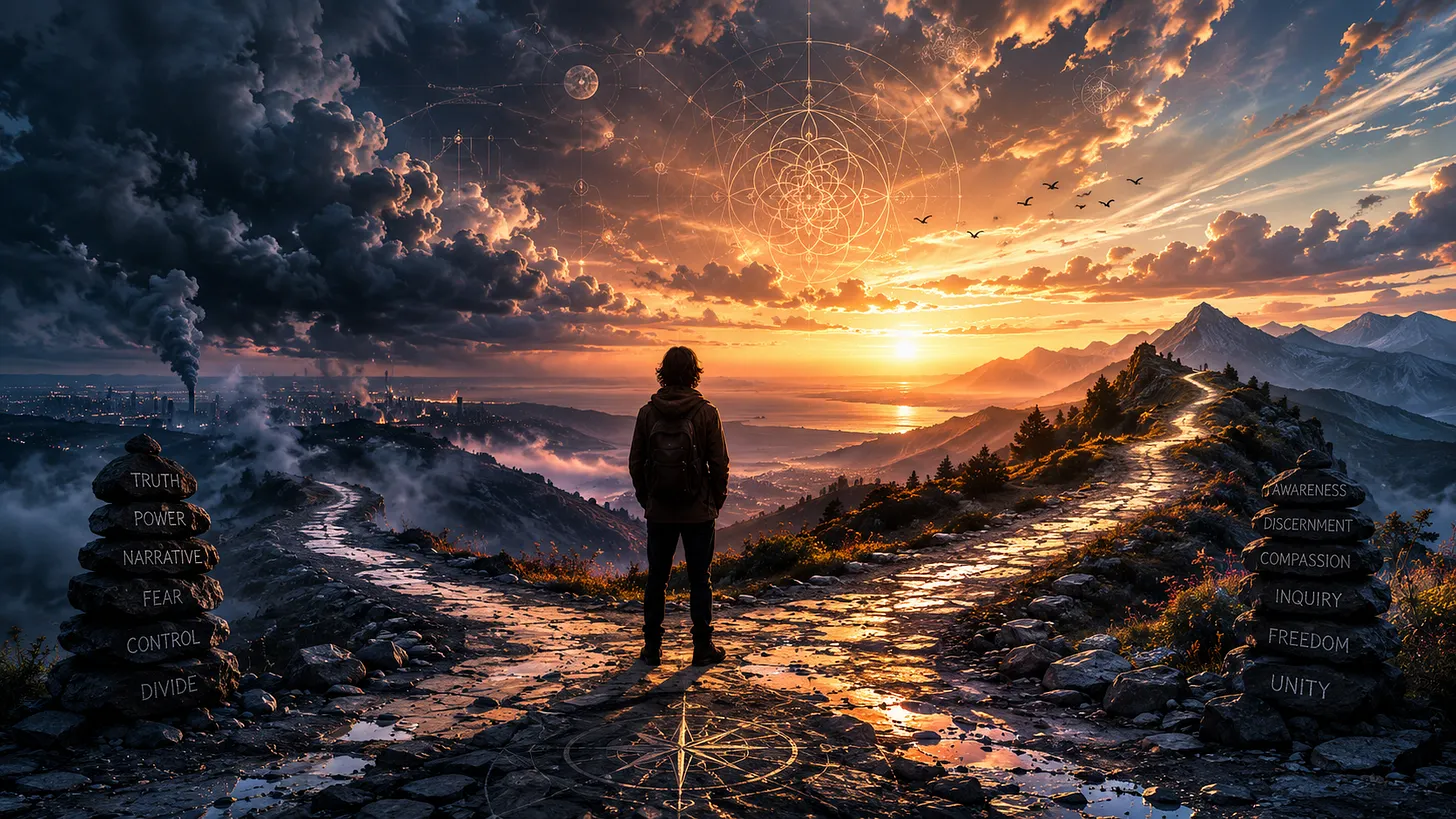
Every event carries more than its immediate consequences. Beyond the headlines, casualty counts, and official statements lies another layer of inquiry, one concerned less with certainty than with the frameworks through which we arrive at it. Whether the subject is a natural disaster, a political crisis, or a cultural moment, what we choose to believe often reveals as much about ourselves as it does the event before us. This conversation unfolded within that tension, exploring not only what happened, but how we decide what is true in the first place.

There’s a curious habit we’ve developed as a civilization. Faced with complexity, we instinctively reach for management, intervention, and control. We identify a problem, assign it a name, devise a solution, and rarely pause long enough to ask whether our understanding of the problem is complete. Sometimes the most revealing conversations begin not with answers, but with the assumptions we’ve forgotten to question.

The pace of technological change has always outstripped our ability to understand its consequences. Today, however, the challenge feels different. We are no longer simply adapting to new tools; we are navigating a world increasingly shaped by narratives, algorithms, and systems that ask us to trust them before we’ve had time to question them. Whether that trust is well placed remains an open question, and perhaps that’s precisely where our attention belongs.

There comes a point where the question is no longer whether a technology works, but what assumptions quietly accompany its adoption. We tend to celebrate new capabilities before asking what they require of us, what they ask us to surrender, or whose interests they ultimately serve. AI has become one of those technologies. The conversation below isn’t about rejecting innovation outright, but about examining the philosophical, social, and ethical foundations beneath its accelerating integration into everyday life.