
Every generation produces its heroes, its saviors, its symbols of salvation. In our time, figures like Elon Musk are elevated to mythic status, but beneath the spectacle lies a recurring pattern: the engineered hero, the curated narrative, and the weaponization of human psychology. This essay explores how symbols and myth are used to capture belief, manipulate perception, and divert attention from material reality, inviting readers to reclaim discernment in a world enthralled by spectacle.
Tag: symbolism

There comes a point where explanations stop clarifying and begin anesthetizing. Where models, once meant to orient us, quietly replace the living reality they were designed to describe. What follows isn’t an argument against inquiry, science, or structure — it’s an examination of how symbols harden into authority, how abstraction drifts into dogma, and how entire cultures forget the difference between representation and truth. This is less about what we believe, and more about how believing itself becomes a substitute for knowing.
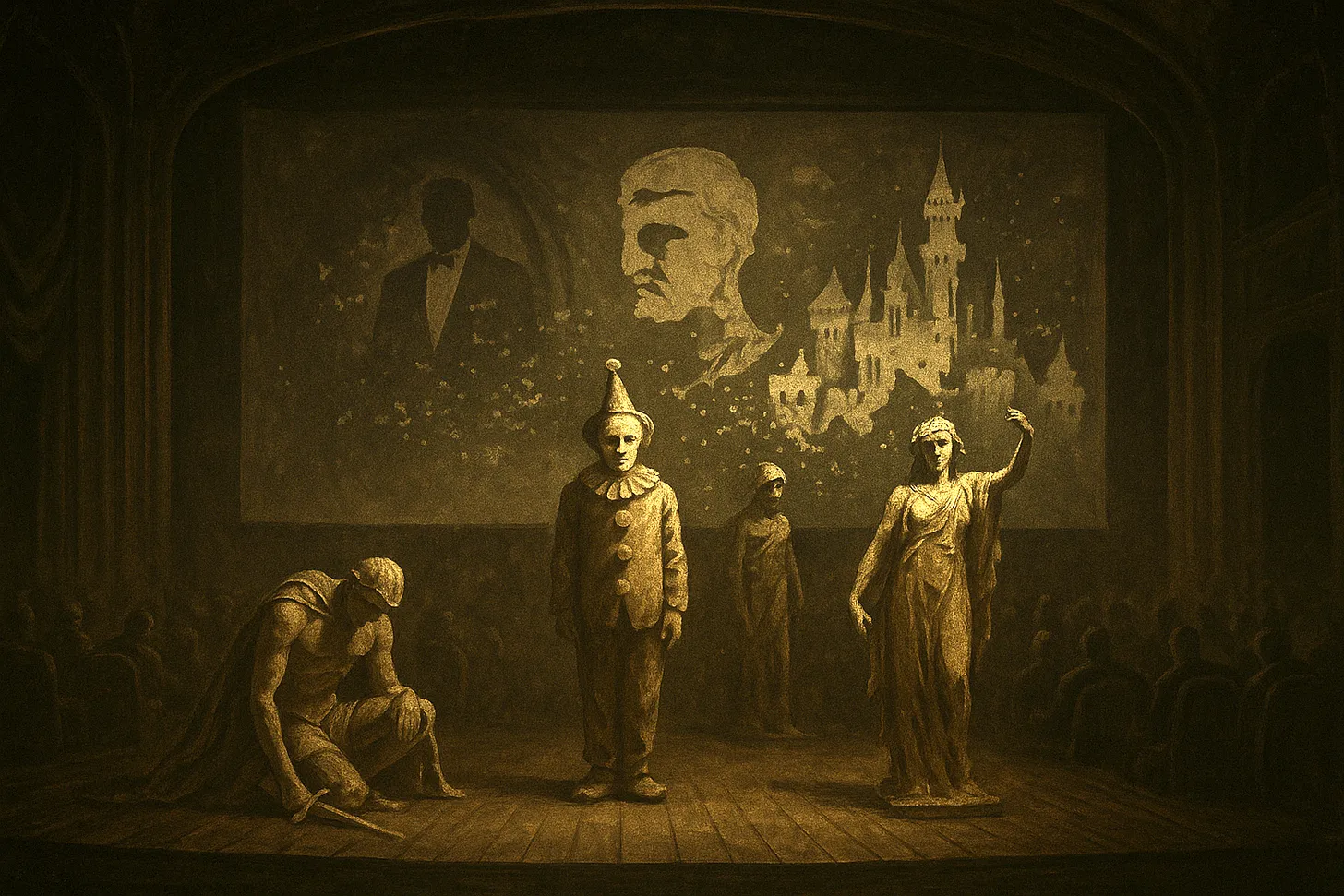
There are patterns hidden in plain sight, woven into the stories we’re told and the figures paraded before us. What’s framed as mere entertainment often carries a weight that is anything but trivial. If we pay attention — if we train ourselves to see — the same archetypal scripts of humiliation, inversion, and ritual sacrifice emerge again and again. I’m not here to preach certainty, but to point at the shapes beneath the surface, and to invite you into the practice of discernment.

Truth isn’t a prize sitting neatly on a pedestal, waiting for us to stroll up and claim it. It’s buried — layer upon layer — under the debris of curated history, engineered distractions, and gilded myths. To peel it back is to risk dismantling everything you thought was real, only to find another stage set beneath it. And still, the pull remains — to see beyond the dome, to know what lies past the sanctioned horizon.

This exploration isn’t a call to action in the traditional sense — it’s more of a lens adjustment. A sharpening of perception. If you’ve ever sensed that the myths we’re fed — from books to blockbusters — carry a deeper programming than what appears on the surface, this dialogue is for you. It doesn’t aim to dismantle the system with pitchforks and protests, but to render it visible — inert — through inquiry, subtlety, and sovereignty of thought.