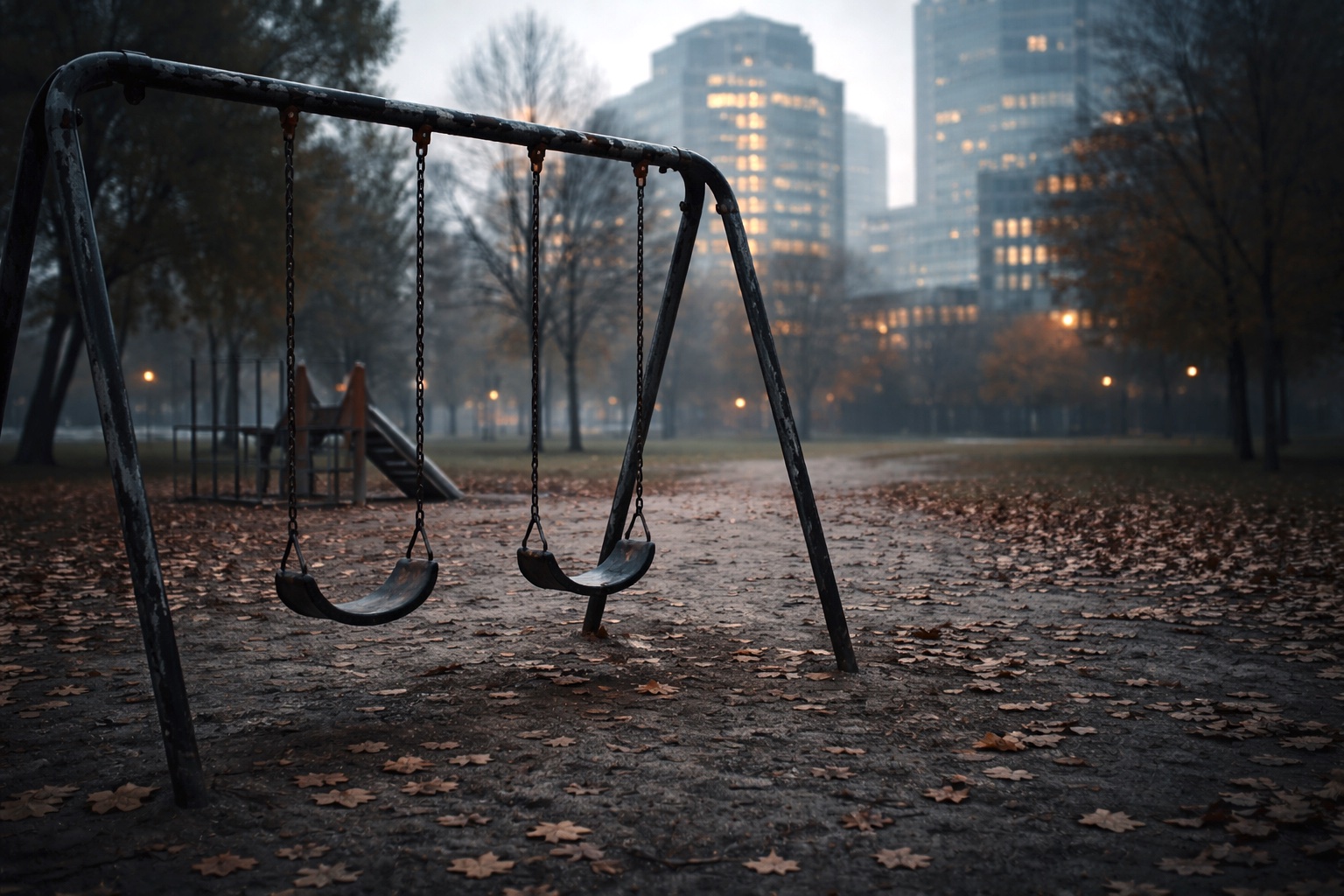
There are moments in history when the surface narrative no longer aligns with lived reality. When the language of “progress” feels strangely disconnected from what we see in our towns, our institutions, and our families. This is not an argument as much as an examination — of patterns, pressures, and the quiet signals of civilizational drift.
. . .
We live amid sociocultural erosion and accelerating population decline. The pattern repeats across the world, especially in so-called “developed” nations. Multiple factors drive it, yet provincial and federal service corporations obscure the trajectory through a sustained influx of foreigners, marketed as “external migration,” importing waves of people who often have little connection to, or investment in, the existing culture and little incentive to preserve or strengthen it.
Parental age continues to rise. Birth rates fall year after year. Record numbers of citizens depart, taking with them capable minds, stable families, and accumulated wealth. The manufactured “crisis” of 2008, followed by the 2020 “pandemic,” along with a steady barrage of ideological and political absurdities, has accelerated the unraveling.
More people than ever are chronically medicated and environmentally burdened, yet still persuaded to participate in a slow, ritualized, medically induced suicide because “germs.” The inability, or refusal, to connect obvious contributing factors has become almost institutionalized.
Growing numbers, reportedly 95.6 percent Caucasian, are opting for assisted death. Granted, that statistic is skewed toward the aging population of our parents and grandparents, but the trend is disturbing. In 2026, those processed by the “health service” known as MAiD will surpass 100,000. Ten years was all it took. Soon, “mental illness” alone will qualify as sufficient cause. The authority of medicine, reinforced by corporate incentives, continues expanding its mandate with efficient precision. Harm, injury, and death occur at record scale daily throughout modernity, while the public averts its gaze.
We are told this is compassion. We are told this is progress.
Nothing to see here.
And yet, what does it mean? What does it stir in you? Are you unaware, or choosing to be? We’ll all interpret this issue in different ways. But we can’t ignore it.
Across cities and towns, stagnation has become ambient. Institutions strain to appease populations with diminishing means to sustain themselves, let alone to remain invested in the long arc of the culture. Fiscal policy steadily erodes the buying power of the citizenry, while punitive and performative politics chip away at mental and emotional stability. Missteps accumulate at the top, which is par for the course, yet the public still clings to the ritual language of “democracy,” as though repetition alone might restore substance.
Stalled sociocultural development, declining birth rates, and rising emigration do not occur in healthy civilizations. They signal fracture of policy, of imagination, of stewardship. Perhaps none of it is orchestrated. Perhaps much of it is incompetence layered upon ideology. Even so, these patterns must be confronted by anyone serious about understanding systemic decline. It’s not simply a BC, Canada, or USA problem.
Systems under threat do not relinquish power quietly. They consolidate. They intensify. Greater risks and more extreme measures become justified in the name of stability. The machine preserves itself.
So what is the answer?
It is not simple, regardless of the confident prognostications of those who insist that breaking away and starting fresh is the only path forward. It may be, but not without dramatic, and likely traumatic, consequences in the interim. That outcome may prove inevitable, and most will be unprepared for its repercussions. How will you provide for yourself if all the strip malls and convenience stores are shuttered, or when shelves are emptied within a few days of systemic or supply disruption?
What “should” you do? What matters most for you and your family? Where are you most likely to live in alignment with your values, priorities, and beliefs?
In a country such as Canada — resource-rich, abundant, generally safe, technologically advanced — there should be compelling reason to stay, to propagate, to lay down roots and live well. Yet the trend seems to point in the opposite direction.
Ask yourself real questions. Do not look away. Do not leave unexamined the contributing factors that appear increasingly clear. It is not those struggling to get by who are engineering the decline while the state erodes buying power, reallocates vast resources outward, and advances fashionable worldwide narratives.
What seems evident is that a long-term agenda is revealing itself.
And we are the canvas upon which it is being painted.
“In recent years, the Total Fertility Rate (TFR) in British Columbia has trended down significantly while B.C.’s mortality numbers have trended higher. With the number of deaths now exceeding the number of births in the province, B.C.’s natural population growth rate is now negative.
“B.C.’s TFR continued to decrease from 2022 to 2023, dropping by 0.08 (-7.4%) to a record low of one child per female. The decrease marks the third year-over-year decline in fertility since 2019, with the overall negative trend beginning in 2008, coinciding with the financial crisis.
“B.C.’s fertility rate remains the lowest in Canada, while B.C.’s average parental age at childbirth, at 32.6 years, continues to be the highest in the country in 2023. This fertility decline reflects developments seen across the country, as 11 out of 13 provinces and territories reported a record low TFR in 2023. From 2019 to 2023, Canada’s TFR decrease was the largest in the G7 and the second largest across comparable high-income countries.
“The large decrease in the TFR for B.C. within the last five years has also coincided with rising mortality in the years following the COVID-19 pandemic. Since 2021, the number of deaths in B.C. has exceeded the number of births on an annual basis, resulting in a negative natural population change. The negative natural population change means that B.C.’s annual population growth was completely driven by external migration for the first time in decades.”
Source: Vital Statistics BC
Lux et veritas
Written by Trance Blackman. Originally published on tranceblackman.com on 28 February 2026.