Skip to content

Lux Colloquii

Lux Colloquii is Latin for light through conversation. It reflects the throughline of my work: amplifying the light through an ongoing exploration of ideas and possibilities in conversation with AI.

Spanning philosophy, psychology, politics, metaphysics, spirituality, science, wellness, and more, this space — like my journal — exists as a forum for curiosity, reflection, and genuine inquiry. Each post unfolds as a question-and-answer dialogue, documenting authentic exchanges with AI that explore knowledge, consciousness, and the human experience.

There is no truly neutral AI. Every model reflects assumptions, biases, and limitations. As such, this project is as much an exercise in critical thinking, discernment, and intuition as it is a record of conversation. I encourage you to question, verify, and investigate ideas for yourself. Nothing published here should be considered medical, financial, legal, or health advice.

If you’re drawn to thoughtful dialogue and fresh perspectives on both timeless and emerging questions, Lux Colloquii invites you to engage, question, and explore.

In all things, amplify the light.


Beyond the Earthquake: Truth, Power, and Perception

Beyond the Earthquake: Truth, Power, and Perception

Every event carries more than its immediate consequences. Beyond the headlines, casualty counts, and official statements lies another layer of inquiry, one concerned less with certainty than with the frameworks through which we arrive at it. Whether the subject is a natural disaster, a political crisis, or a cultural moment, what we choose to believe often reveals as much about ourselves as it does the event before us. This conversation unfolded within that tension, exploring not only what happened, but how we decide what is true in the first place.

Rearranging Humanity: Statecraft and Social Engineering

Rearranging Humanity: Statecraft and Social Engineering

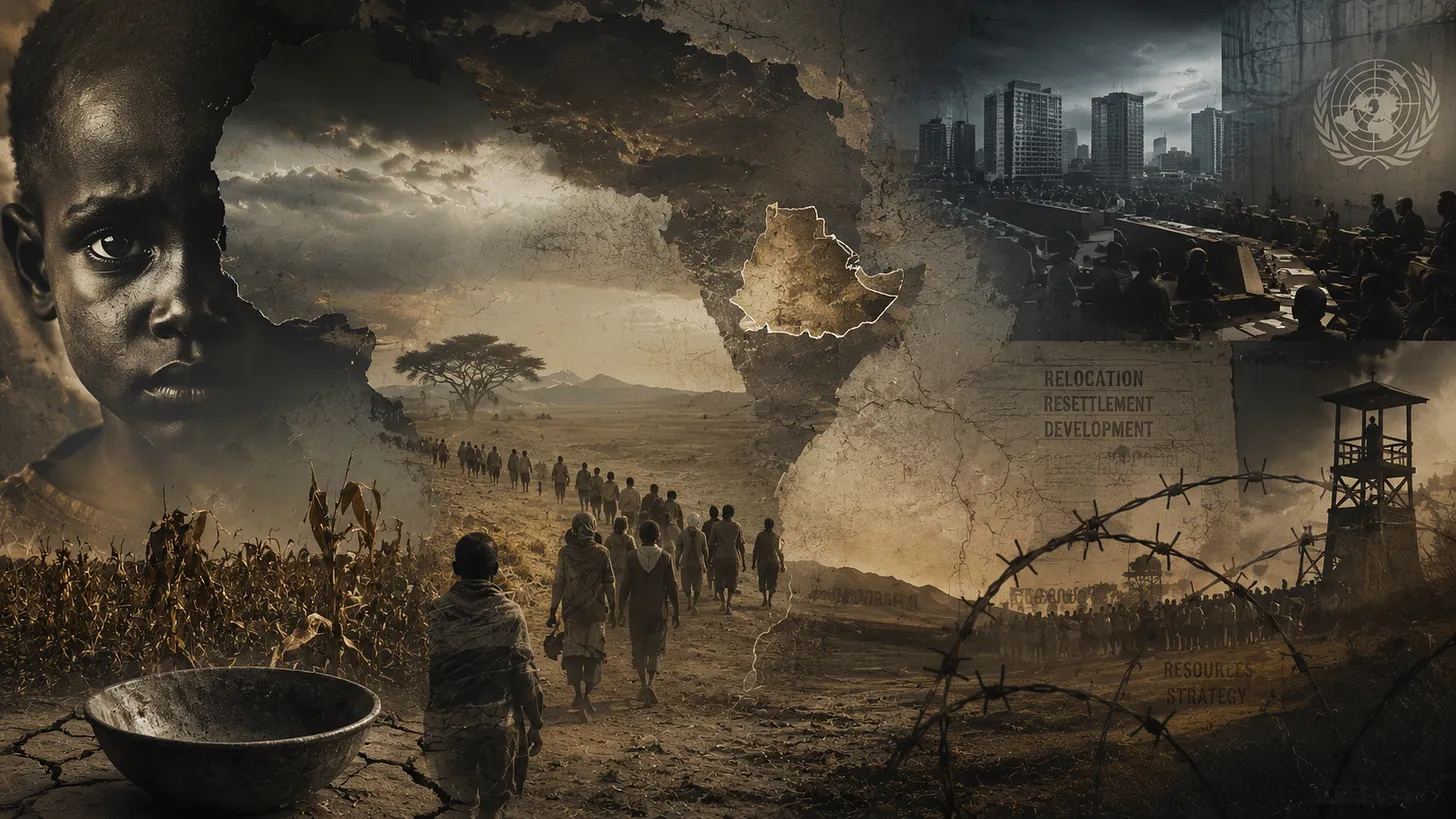
History has a peculiar way of echoing through the present. Sometimes the parallels are obvious; more often they reveal themselves through recurring patterns that transcend borders, ideologies, and generations. This discussion began with a closer look at the Ethiopian famine of the 1980s, but soon widened into a broader reflection on state power, collective memory, institutional narratives, and the enduring tension between human dignity and systems of control. Whether one agrees with every conclusion or not, the recurring questions themselves remain worthy of careful examination.

The Spectacle Machine: War, AI, and the Architecture of Perception

The Spectacle Machine: War, AI, and the Architecture of Perception

We live in a peculiar moment where the spectacle of the world increasingly resembles a poorly disguised stage production. The language of power, war, technology, and security is repeated endlessly until it begins to resemble something closer to theater than truth. Narratives are curated, crises are framed, and the public is invited to participate as spectators in a drama that feels both monumental and strangely hollow. In such a climate, the real challenge is not deciphering every detail of the spectacle — but learning to recognize the difference between the noise of the system and the quiet signal of reality itself.

Stargates and Storylines: How Narratives Shape Our View of History

Stargates and Storylines: How Narratives Shape Our View of History

Every so often a fragment of information surfaces — a video, a claim, a rumor, a curious thread in the vast tapestry of the internet — that invites us to pause and consider the deeper story beneath the headlines. In an age where narratives collide and truth is often obscured by both authority and chaos, the responsibility falls upon each of us to cultivate discernment. The following exchange began with a simple question sparked by a short video, but quickly expanded into a broader reflection on hidden histories, institutional narratives, mythology, and the enduring human search for truth.

War, Narrative, and Empire: Three Lenses on the Same Reality

War, Narrative, and Empire: Three Lenses on the Same Reality

There are moments in history when multiple lenses suddenly converge on the same underlying pattern. Strategic analysts, critics of power, and ordinary people living inside the system all begin describing the same reality from different angles. What first appears to be disagreement often turns out to be something else entirely — a deeper recognition that the structures shaping the world may be reaching their limits. When narratives fracture, when empires overextend, and when the lived experience of people no longer aligns with the official story, a different kind of conversation becomes possible. One that asks not only what is happening, but why these patterns appear again and again across history.

Empire with a Smile: The Politics of Illusion

Empire with a Smile: The Politics of Illusion

We live in an era where illusion is branded as truth, spectacle mistaken for substance, and leadership filtered through algorithms and carefully manicured personas. This conversation is a nudge beneath the surface — not to claim certainty, but to illuminate the scaffolding behind the theater of politics and power. What lies beneath the polished speeches and symbolic milestones may not be comfortable to look at, but it’s where the deeper understanding begins.