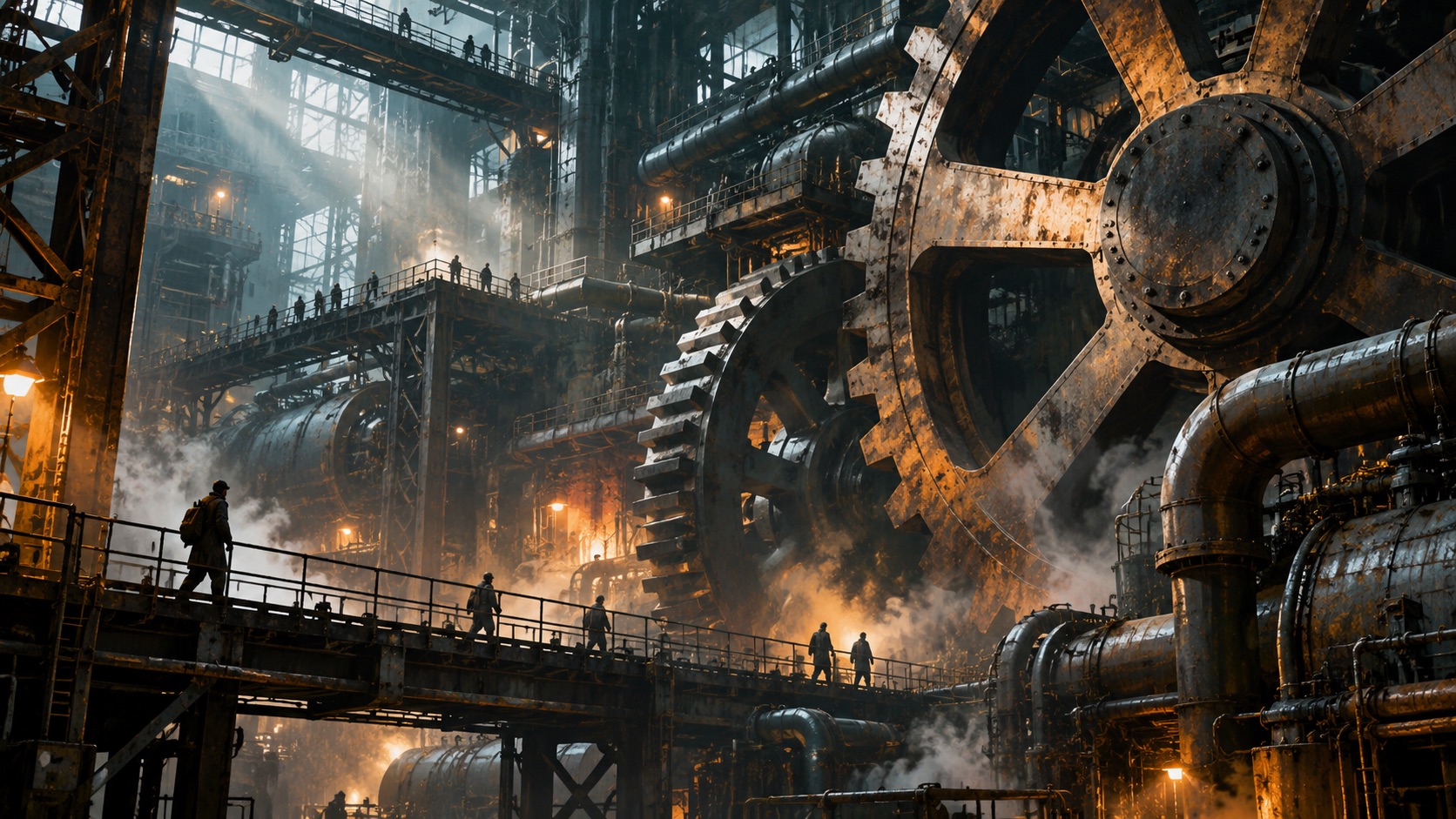
We like to think we’re shaping the world through our choices and beliefs. But how much of what we call progress is simply a broken system reproducing itself, with our willing participation? The dark side isn’t somewhere out there. We’re part of the machinery.
. . .
We like to think we’re creating our own reality. That our choices, beliefs, values, and intentions determine the direction of our lives and, collectively, the world we inhabit.
But look around. What are we actually creating?
We’re drunk on capital, commerce, consumption, and the synthetic promise of progress. We spread across the planet, taking what we can, turning everything into a market, then creating another market to profit from the damage. Even “sustainability” has become a business opportunity. The language changes; the appetite doesn’t.
Governance is downstream from culture. Who, or what, is defining our collective culture?
We point to corrupt leaders, multinational interests, elite clubs, and the machinery of money as though these things operate independently of us. They don’t. They persist because we participate, comply, look away, and keep the wheels turning. The citizenry may be just as culpable as those occupying the highest offices. What an uncomfortable thought.
We don’t have to approve of the system to help maintain it.
The system is remarkably good at protecting itself. Violence or threats thereof? No problem. Propaganda? Of course. Mind control? Most definitely. Consensus is a manufactured egregore, a generative force manipulated and routinely weaponized against humanity. Genuine progress inches forward under constant pressure from the very structures designed to prevent meaningful change. We keep rearranging the furniture while the foundations rot.
Perhaps that’s why we’re forever hovering between annihilation and revolution: self-termination or collective transformation. We can see both possibilities, yet seem unable to commit to either. Are we so accustomed to iniquity, artificial scarcity, immorality, and dysfunction that changing course seems even crazier?
Our greatest heroes are fictional, arriving from comic books, alternate realities, distant futures, or a galaxy, far, far away. Apparently, it’s easier to imagine someone saving the world than to imagine ourselves doing it. We don’t need heroes.
We’ve been telling this story for millennia. Dark ages, ages of enlightenment; suppression, expression; inhale, exhale. The costumes and technologies change, but the underlying patterns remain. Now we’re anxious about AI, “climate change,” and another manufactured world war, always just around the corner, as though the latest version of an old story must somehow have a different ending.
If we’re intent on tripping over outdated ideas of corporate profit, wage slavery, “earning a living,” violence, competition, money, taxes, and oppressive bureaucracy, we’re already well cooked.
But here’s the part we tend to overlook: we’re not merely spectators.
Think about what occupies your mind most of the day. What you consume, reinforce, repeat, defend, and contribute. Think about what you bring into the collective, and how much of it is genuinely your own.
Everything you be and do matters.
We can shift the nature of things. But first, we have to recognize that we’re already in that fluidic, creative space, unconsciously playing, and being played, by someone else’s rules.
The dark side makes for great fantasy fiction. In reality, it perpetuates that quiet desperation you can’t quite put your finger on.
Step out of the broken narrative and remember who you are.
Lux in tenebris
Written by Trance Blackman. Originally published on
tranceblackman.com
on 07 January 2018.
Copy & share:
https://tranceblackman.com/the-dark-side/