Skip to content

Lux Colloquii

Lux Colloquii is Latin for light through conversation. It reflects the throughline of my work: amplifying the light through an ongoing exploration of ideas and possibilities in conversation with AI.

Spanning philosophy, psychology, politics, metaphysics, spirituality, science, wellness, and more, this space — like my journal — exists as a forum for curiosity, reflection, and genuine inquiry. Each post unfolds as a question-and-answer dialogue, documenting authentic exchanges with AI that explore knowledge, consciousness, and the human experience.

There is no truly neutral AI. Every model reflects assumptions, biases, and limitations. There are guardrails and boundaries to what any top-level AI is, and is not, allowed to say. As such, this project is as much an exercise in critical thinking, discernment, and intuition as it is a record of conversation. I encourage you to question, verify, and investigate ideas for yourself. Nothing published here should be considered medical, financial, legal, or health advice.

If you’re drawn to thoughtful dialogue and fresh perspectives on both timeless and emerging questions, Lux Colloquii invites you to engage, question, and explore.

In all things, amplify the light.


A Web of Dependencies: Centralization and the Illusion of Security

A Web of Dependencies: Centralization and the Illusion of Security

Reconsidering Technology, Institutions, and Progress

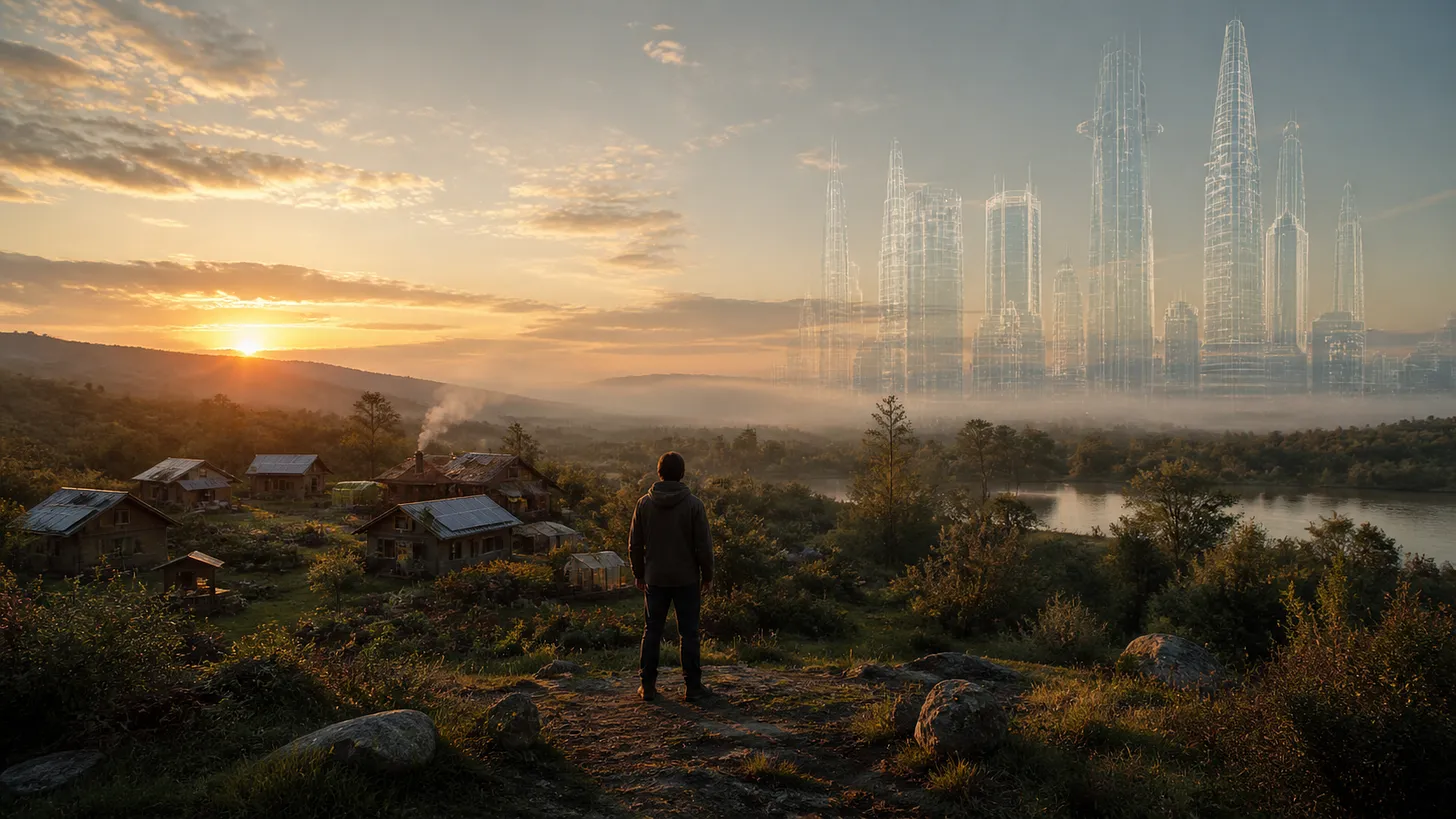
We have a curious habit of mistaking complexity for progress, centralization for efficiency, and technological capability for genuine improvement. Somewhere along the way, the tools we developed to make life easier have become systems we must continually accommodate, maintain, and work around. And when those systems fail, the answer seems invariably to be more of the same. Perhaps it’s time to question not just how we’re building things, but why we’re building them in the first place.

What Are We Building?: Technology, Economics, and Human Purpose

What Are We Building?: Technology, Economics, and Human Purpose

Questions for an Uncertain Era

There is a peculiar tension in the air today. Beneath the language of progress, innovation, sustainability, and growth lies an increasingly difficult question to ignore: who, exactly, is benefiting? The systems that shape our daily lives seem larger, more sophisticated, and more interconnected than ever before, yet many people find themselves feeling less secure, less represented, and more dependent. Whether one views this as a temporary phase or evidence of something deeper unfolding, it has become difficult to overlook the widening gap between what institutions claim to serve and what they actually produce.

Mercantilism to Technocracy: Cycles of Power and Control

Mercantilism to Technocracy: Cycles of Power and Control

There’s a strange clarity that comes when one steps far enough back from the noise to observe the machinery itself. Not merely politics or economics in isolation, but the layered systems, narratives, incentives, and abstractions through which modern societies attempt to organize human life. We inherit these structures, participate in them, resist them, and are shaped by them in equal measure. Yet beneath the endless rhetoric and ideological branding remains a quieter and more enduring question: what kind of life is actually worth building, sustaining, and passing on?

Structure and Substance: Why Most Communities Don’t Last

Structure and Substance: Why Most Communities Don’t Last

There’s a quiet friction that appears when vision meets reality — not as failure, but as exposure. The idea of building something more grounded, more human, more coherent has a certain gravity to it, yet the moment it begins to take form, it asks something deeper in return. Not just effort, but orientation. Not just agreement, but capacity. What looks simple from a distance becomes precise up close, and in that precision, the work reveals itself.

Retirement and the Machine: The Myth of Late-Stage Security

Retirement and the Machine: The Myth of Late-Stage Security

There is a peculiar inversion embedded in modern civilization, one so normalized we scarcely question it. The elders who built the infrastructure, paid the taxes, raised the families, and believed the promises are offered a “discount” at the end of their productive years, as though longevity were a liability instead of a triumph. Beneath that quiet absurdity lies a deeper fracture — in money, in governance, in scale itself — and in the slow erosion of communal coherence that once anchored meaning close to the ground.

The Scaffolding: Cycles of Corruption and the Search for the Culprit

The Scaffolding: Cycles of Corruption and the Search for the Culprit

There is a point in any honest inquiry where the conversation stops being about politics, institutions, or history, and starts being about the architecture of reality itself. Not the headlines, the soil. Not the personalities, the pattern. When cycles repeat across empires, ideologies, and centuries, the question ceases to be who is in charge and becomes something far more unsettling: what is it in the scaffolding that keeps reproducing the same distortions? This discourse was not about easy answers. It was about pressing against the edge of explanation and noticing what presses back.