Skip to content

Lux Colloquii

Lux Colloquii is Latin for light through conversation. It reflects the throughline of my work: amplifying the light through an ongoing exploration of ideas and possibilities in conversation with AI.

Spanning philosophy, psychology, politics, metaphysics, spirituality, science, wellness, and more, this space — like my journal — exists as a forum for curiosity, reflection, and genuine inquiry. Each post unfolds as a question-and-answer dialogue, documenting authentic exchanges with AI that explore knowledge, consciousness, and the human experience.

There is no truly neutral AI. Every model reflects assumptions, biases, and limitations. As such, this project is as much an exercise in critical thinking, discernment, and intuition as it is a record of conversation. I encourage you to question, verify, and investigate ideas for yourself. Nothing published here should be considered medical, financial, legal, or health advice.

If you’re drawn to thoughtful dialogue and fresh perspectives on both timeless and emerging questions, Lux Colloquii invites you to engage, question, and explore.

In all things, amplify the light.


Libraries, Legacy, and Memory: Reflections on History and Influence

Libraries, Legacy, and Memory: Reflections on History and Influence

Truth has an odd way of inviting us deeper while reminding us how little we actually know. Every answer seems to uncover another layer, another assumption, another blind spot masquerading as certainty. The more I investigate history, power, institutions, and the stories we inherit, the less interested I become in defending conclusions and the more interested I become in refining discernment. Perhaps that is where genuine inquiry begins.

Rearranging Humanity: Statecraft and Social Engineering

Rearranging Humanity: Statecraft and Social Engineering

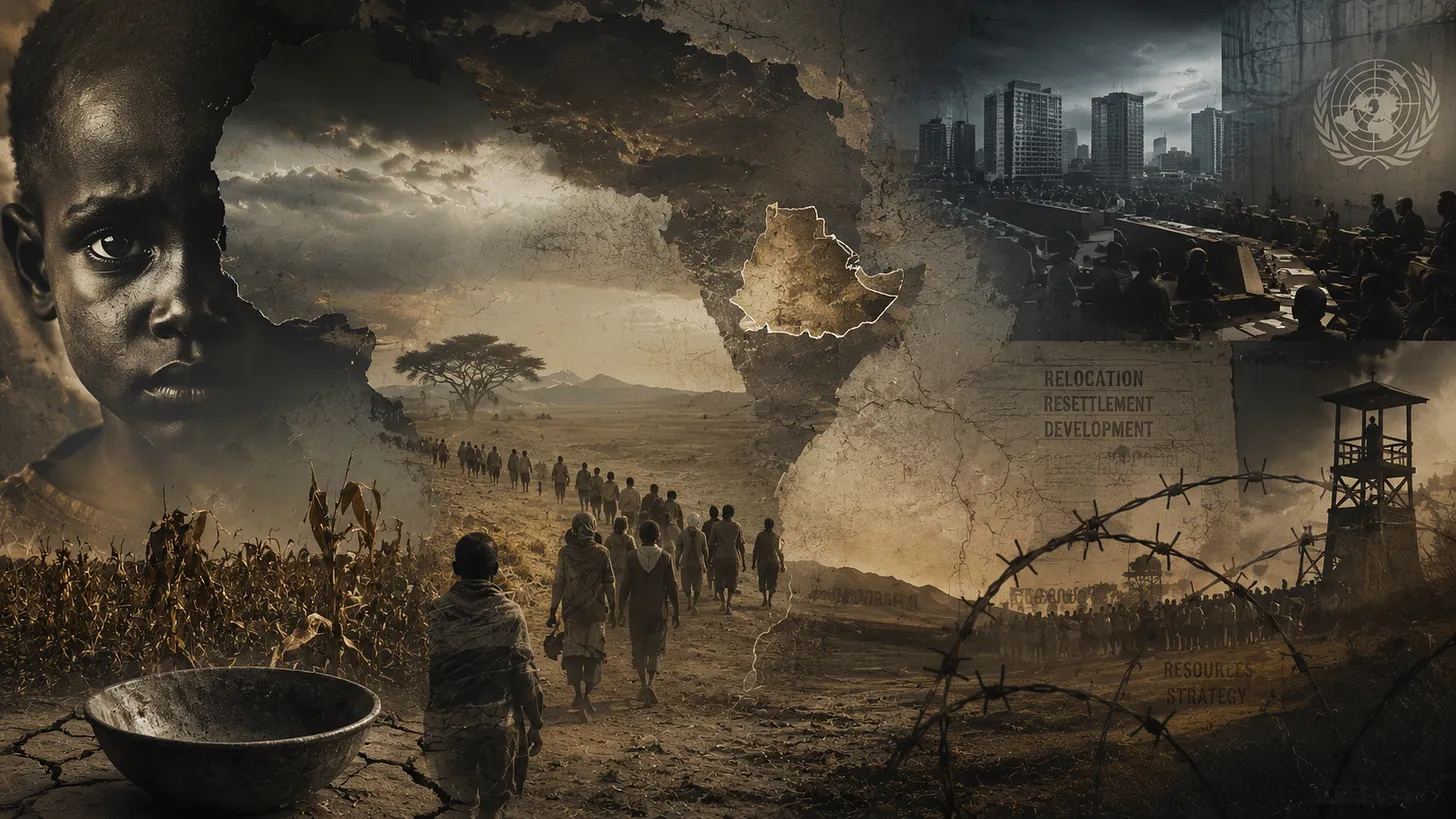
History has a peculiar way of echoing through the present. Sometimes the parallels are obvious; more often they reveal themselves through recurring patterns that transcend borders, ideologies, and generations. This discussion began with a closer look at the Ethiopian famine of the 1980s, but soon widened into a broader reflection on state power, collective memory, institutional narratives, and the enduring tension between human dignity and systems of control. Whether one agrees with every conclusion or not, the recurring questions themselves remain worthy of careful examination.

The Subtle Mechanics of Culture: Navigating the Flattened World of Ideas

The Subtle Mechanics of Culture: Navigating the Flattened World of Ideas

The quiet work of reading, thinking, and observing is a discipline few pursue seriously. We drift through culture at the speed it demands, yet meaning — the real, unflattened substance of language — waits in the spaces we slow down to occupy. In this discourse, we peer beneath the polished surfaces, examining how words shape thought, how misquotes migrate into myth, and how depth survives, or fails, in the hands of time, translation, and repetition.

War, Narrative, and Empire: Three Lenses on the Same Reality

War, Narrative, and Empire: Three Lenses on the Same Reality

There are moments in history when multiple lenses suddenly converge on the same underlying pattern. Strategic analysts, critics of power, and ordinary people living inside the system all begin describing the same reality from different angles. What first appears to be disagreement often turns out to be something else entirely — a deeper recognition that the structures shaping the world may be reaching their limits. When narratives fracture, when empires overextend, and when the lived experience of people no longer aligns with the official story, a different kind of conversation becomes possible. One that asks not only what is happening, but why these patterns appear again and again across history.

Ethanol, Vitamins, and the Myth of Solutions: The Anatomy of Industrial Harm

Ethanol, Vitamins, and the Myth of Solutions: The Anatomy of Industrial Harm

Every age believes it is discovering something new, yet most of what unfolds are patterns repeating themselves in fresh costumes. Industry, politics, and technology don’t just respond to needs — they create them, manufacture belief, and entrench dependence. What we call progress often carries within it the residue of manipulation, inversion, and distortion, drawing us further from what is natural, simple, and human.

The Machinery of Extraction: Markets, Egregores, and the False Dream

The Machinery of Extraction: Markets, Egregores, and the False Dream

The patterns repeat, dressed in new language and cloaked in the sheen of progress. What is sold as innovation or freedom is, more often than not, another inversion — another tightening of the grip that siphons time, energy, and life-force. To speak plainly of it may seem severe, but clarity demands it: we are not witnessing advancement, but a deeper entrenchment of the same parasitic system that has stalked civilizations for centuries.