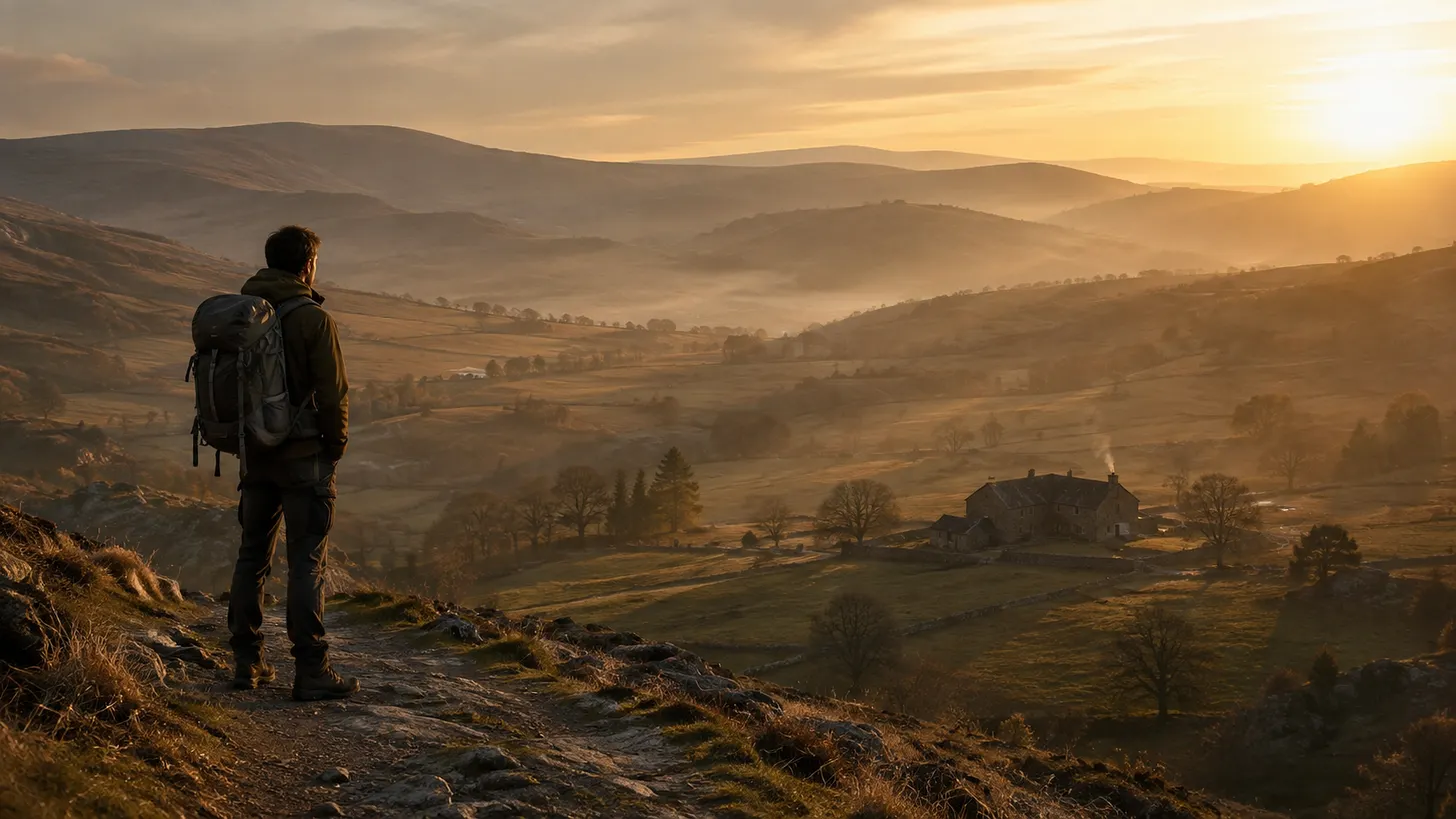
There are moments when another person’s choices expose something in us that we would rather not examine. Their willingness to risk, commit, uproot, rebuild, and begin again can become an uncomfortable mirror — not because we should imitate them, but because their movement reminds us of where we have remained still.
. . .
It’s interesting that people who are already taking an enormous risk by moving to a foreign country and taking on the responsibility of reclaiming a long-forgotten homestead must also contend with those who consider themselves perhaps nationalistic, culturally concerned, or simply wiser than this intrepid family — none of whom have likely ever considered doing anything so disruptive, challenging, or difficult in their own lives. Granted, not all of us choose to record every step, produce wonderful visuals, and share our adventures on YouTube for all the world to see, using it as a potential income stream that would, at least in part, support us along the way. Even fewer put themselves out there by directly inviting feedback, comments, and opinions, then proceed to read through them and respond in detail. There is a considerable generosity in opening the door that widely — something easily forgotten by those standing safely on the other side of it.
We tend to project our opinions, fears, worries, and ignorance onto those who are actually taking action, putting their plans in motion, walking the talk, and daring greatly in making things happen. Contrast this young family with the perpetual wanderers who can rarely sit still for too long. I’m not saying there’s anything wrong with that, as I myself have lived a solitary path for most of my life, but what are the real aims and motivations? Committing to a place, to a way of life, to a relationship, to a foreign culture, requires something more rooted, considerate, grounded, patient, and mature — something that much of our modern, forever-adolescent society struggles with in dramatic fashion, yet is only too happy to complain about in the comment sections of people they know nothing about.
When and how did it get so easy to be such a coward? It certainly didn’t happen overnight. “Social media” has been around since 2007. I think, by now, we know it wasn’t devised to better connect society in the ways that truly matter. Instead, it has served to hypersensitize and hyperstimulate, to cultivate deeply fractious social practices, erase privacy, reward performative judgment, and allow people to indulge opinions without ever having to bear the consequences of acting upon them. It has made spectatorship feel like participation and criticism feel like courage.
Rural areas — villages, towns, hamlets, farms, and homesteads — across the modern world have been fading, forgotten, and quite literally dying out for generations. Those who’ve drifted away, lured by the promise of convenience, fantasies of material wealth, an abundance of amenities, endless entertainment, and spectacle, are, it seems, increasingly venturing back, heading in search of something of substance after seeing and directly experiencing the futility of much of what “modern living” comprises. The promise was incomplete and misleading, if not altogether a lie. It’s a system that has grown more parasitic and predatory by the week, rapidly eating itself from the inside out, becoming increasingly hollow for the sake of the performative, the superficially functional, and the deceptively expensive.
If you’re honest with yourself, would you still be doing what you’re doing now, given the opportunity to pursue something truly and deeply transformative, grounding, and fulfilling — something whose value might outlast the latest trend of the week? It doesn’t have to mean uprooting your life and moving to another nation to begin again from scratch. But perhaps the more uncomfortable question is whether some part of your life is already asking to be uprooted.
Solvitur ambulando
Written by Trance Blackman. Originally published on tranceblackman.com on 22 August 2026. Revised 23 August 2026.
Copy & share: https://tranceblackman.com/the-spectator-and-the-builder/